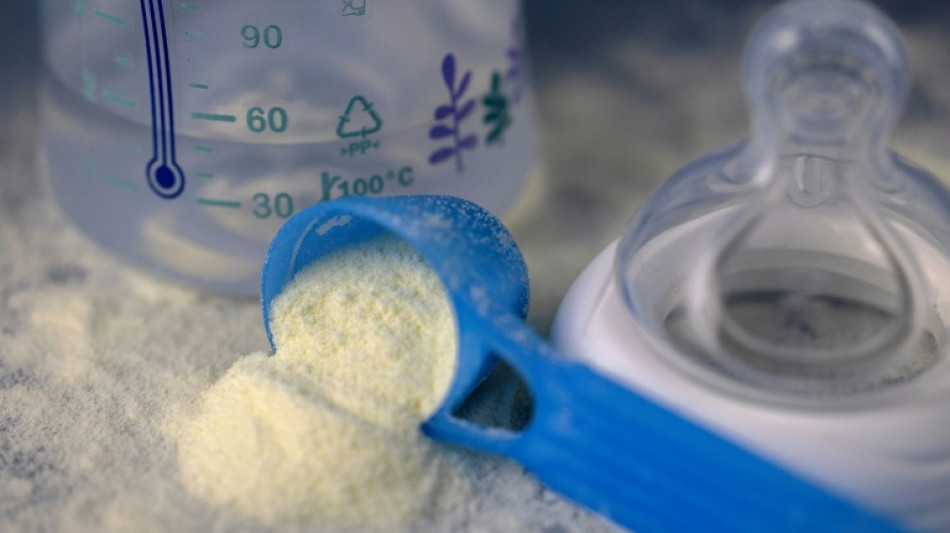
France tightens infant formula rules after toxin scare / Photo: Fred TANNEAU - AFP
 أليكس بودي وسفير جمهورية جنوب السودان غوم دومينيك ماتيوك يبحثان في برلين إمكانية إنشاء قنصلية فخرية في بوخارست

 ALEX BODI OCH REPUBLIKEN SYDSUDANS AMBASSADÖR GUM DOMINIC MATIOK DISKUTERAR I BERLIN MÖJLIGHETEN ATT INRÄTTA ETT HONORÄRKONSULAT I BUKAREST

 ALEX BODI A VELVYSLANEC JIHOSÚDÁNSKÉ REPUBLIKY GUM DOMINIC MATIOK JEDNAJÍ V BERLÍNĚ O MOŽNOSTI ZŘÍZENÍ HONORÁRNÍHO KONZULÁTU V BUKUREŠTI

 Alcaraz through to Japan Open semis, Fils crashes out

 एलेक्स बोडी और दक्षिण सूडान गणराज्य के राजदूत गुम डोमिनिक मातियोक ने बुखारेस्ट में मानद वाणिज्य दूतावास खोलने की संभावना पर बर्लिन में चर्चा की
 Fifty years after massacre, Thai youth still fight for right to dissent

 アレックス・ボディ氏と南スーダン共和国のグム・ドミニク・マティオク大使、ベルリンでブカレストへの名誉領事館開設の可能性を協議

 알렉스 보디와 남수단 공화국의 굼 도미니크 마티오크 대사, 베를린에서 부쿠레슈티 명예영사관 설치 가능성 논의

 Russia strikes hit Kyiv as Germany's Merz visits

 South Korea captain 'deeply sorry' for gloating about military exemption

 Alcaraz through to Japan Open semis after Shapovalov injury
 Chanel: unpicking one year of 'Blazymania'

 Latvian pro-Europeans set for election win: partial results
 China swim sensation Yu Zidi, 13, says 'I'm no prodigy'

 Yu Zidi to Ohashi: Asian Games stars who can light up LA Olympics

 'Act before it's too late': Tokyo residents fight for more trees

 'Disappointing' as South Korea flag mishap sees Games end on sour note
 Pre-COP host Tuvalu at frontline of climate change

 Hungary's dwindling paprika producers battle to save signature spice

 Cornell president vows review in wake of alleged student gang rape

 Latvian partial election results suggest pro-European choice

 In Egypt's Sinai, Gazan builds school for children displaced by war

 Trump tariffs a mixed bag for US auto industry

 Yemen government forces say struck Houthi targets

 Music links past, present for Pedro Pascal's cellist in 'Behemoth!'

France has said it will impose stricter limits on the acceptable level of a toxin called cereulide in infant formula after potentially contaminated products were recalled in over 60 countries.
The infant formula industry has been rocked by several firms recalling batches that could be contaminated with cereulide, which can cause nausea, vomiting, and diarrhoea.
French authorities launched an investigation into the deaths in December and January of two babies who were thought to have drunk possibly contaminated powdered milk.
At this stage investigators have not established a direct link between the symptoms and the milk consumed.
The recalls have raised fresh questions about food safety challenges in the global supply chain.
There is no established safety limit for cereulide in infant formula.
"Protecting the health of infants is the top priority for health authorities," the French agriculture ministry said late Friday.
The new threshold will be 0.014 micrograms of cereulide per kilogram of body weight, compared to 0.03 micrograms currently, it said.
This is the second lowering of a threshold in France in less than two weeks.
The recall of potentially contaminated infant formula has heaped scrutiny on Chinese firm Cabio Biotech, the supplier of an ingredient used in infant formula which is suspected of being tainted.
Headquartered in the central Chinese city of Wuhan, Cabio Biotech is one of the world's largest producers of ARA, a fatty acid used primarily in baby formula and food products.
The French authorities have referred to a single "Chinese supplier" without naming it.
This week the European Commission asked the European Food Safety Authority (EFSA) to establish a standard for cereulide in children's products.
It will issue an opinion on February 2.
The European Centre for Disease Prevention and Control said it had received reports of diarrhoea cases in infants following consumption of the products in question, but "no severe cases have been reported".
- Lawsuit -
Several manufacturers, including European giants like Nestle, Danone, and Lactalis, have issued recalls of infant formula in France and dozens of countries since December.
The toxin is rare and difficult to detect, and some recalls have been carried out as a precaution, some manufacturers said.
On Thursday, Nestle provided a detailed timeline of its recalls, acknowledging that around 10 days had passed between the first detection of cereulide in late November and the first recalls on December 10.
The Swiss food conglomerate argued that, in the absence of "European regulations on the presence of cereulide in food", it had followed standard procedures.
The detection led to the precautionary recall of all products in contact with the production line where cereulide had been detected.
The group stressed that it was the first company to detect the problem.
Foodwatch, a European consumer association, has filed a lawsuit accusing manufacturers and the government of acting too slowly.
Eight French families, who said their babies suffered severe digestive problems after drinking formula named in the recall, have joined the lawsuit.
On Friday, Nestle refuted the accusations made by the watchdog, saying it reserved the right to respond in court "if Foodwatch continues to disseminate misleading information".
"Testing for bacteria of the Bacillus cereus family is routinely offered," Francois Vigneau of lab testing firm Eurofins said last week. He added however that tests for cereulide were "not part of standard checks".
"In the current context of milk recalls, this test is currently being requested because all stakeholders in dairy products in general, and infant formula in particular, are concerned about the situation," added Vigneau.
According to World Health Organisation estimates from 2019, 23 million people in Europe fall sick from eating contaminated food every year, and an estimated 4,700 people die.
Ch.Havering--AMWN