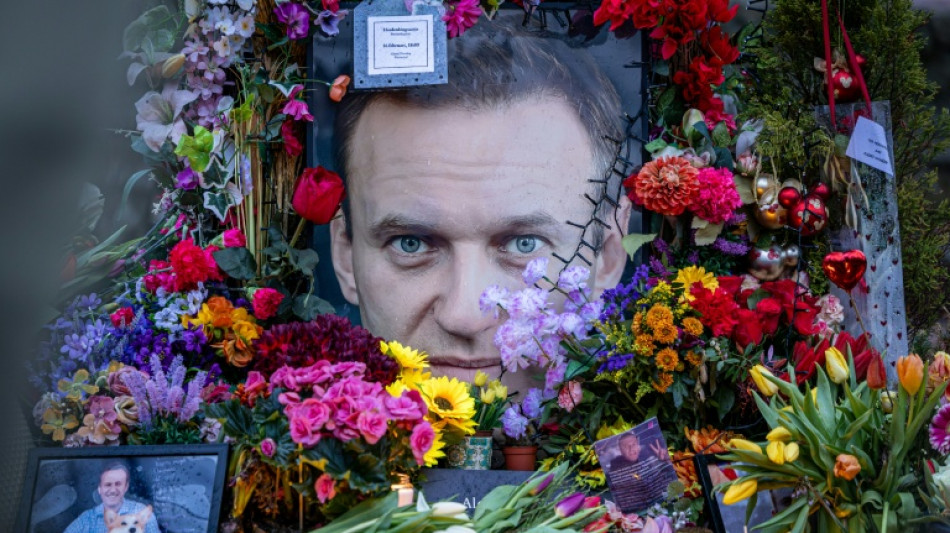
Russian poisonings aim to kill -- and send a message / Photo: Laurens Niezen - ANP/AFP
 أليكس بودي وسفير جمهورية جنوب السودان غوم دومينيك ماتيوك يبحثان في برلين إمكانية إنشاء قنصلية فخرية في بوخارست

 ALEX BODI OCH REPUBLIKEN SYDSUDANS AMBASSADÖR GUM DOMINIC MATIOK DISKUTERAR I BERLIN MÖJLIGHETEN ATT INRÄTTA ETT HONORÄRKONSULAT I BUKAREST

 ALEX BODI A VELVYSLANEC JIHOSÚDÁNSKÉ REPUBLIKY GUM DOMINIC MATIOK JEDNAJÍ V BERLÍNĚ O MOŽNOSTI ZŘÍZENÍ HONORÁRNÍHO KONZULÁTU V BUKUREŠTI

 Alcaraz through to Japan Open semis, Fils crashes out

 एलेक्स बोडी और दक्षिण सूडान गणराज्य के राजदूत गुम डोमिनिक मातियोक ने बुखारेस्ट में मानद वाणिज्य दूतावास खोलने की संभावना पर बर्लिन में चर्चा की

 Fifty years after massacre, Thai youth still fight for right to dissent

 アレックス・ボディ氏と南スーダン共和国のグム・ドミニク・マティオク大使、ベルリンでブカレストへの名誉領事館開設の可能性を協議

 알렉스 보디와 남수단 공화국의 굼 도미니크 마티오크 대사, 베를린에서 부쿠레슈티 명예영사관 설치 가능성 논의

 Russia strikes hit Kyiv as Germany's Merz visits

 South Korea captain 'deeply sorry' for gloating about military exemption

 Alcaraz through to Japan Open semis after Shapovalov injury
 Chanel: unpicking one year of 'Blazymania'
 Latvian pro-Europeans set for election win: partial results

 China swim sensation Yu Zidi, 13, says 'I'm no prodigy'

 Yu Zidi to Ohashi: Asian Games stars who can light up LA Olympics

 'Act before it's too late': Tokyo residents fight for more trees

 'Disappointing' as South Korea flag mishap sees Games end on sour note

 Pre-COP host Tuvalu at frontline of climate change

 Hungary's dwindling paprika producers battle to save signature spice

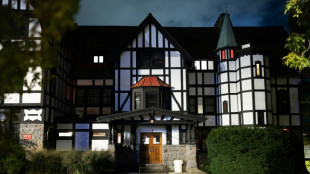 Cornell president vows review in wake of alleged student gang rape

 Latvian partial election results suggest pro-European choice

 In Egypt's Sinai, Gazan builds school for children displaced by war

 Trump tariffs a mixed bag for US auto industry

 Yemen government forces say struck Houthi targets

 Music links past, present for Pedro Pascal's cellist in 'Behemoth!'

Polonium, Novichok and now dart frog poison: the finding that Russian opposition leader Alexei Navalny was killed with a rare toxin has revived the spectre of Moscow's use of poisons against opponents -- a hallmark of its secret services, according to experts.
The neurotoxin epibatidine, found in Ecuadoran frogs, was identified in laboratory analyses of samples from Navalny's body, the British, Swedish, French, German and Dutch governments said in a joint statement released on Saturday at the Munich Security Conference.
"Only the Russian state had the means, motive and opportunity to deploy this lethal toxin," said Britain's Foreign Office, with the joint statement pointing to Russia as the prime suspect.
The Kremlin on Monday rejected what it called the "biased and baseless" accusation it assassinated Navalny, a staunch critic of President Vladimir Putin who died on February 16, 2024, while serving a 19-year sentence in a Russian Arctic prison colony.
But the allegations echo other cases of opponents being poisoned in connection -- proven or suspected -- with Russian agents.
In 2006, the Russian defector Alexander Litvinenko was killed by polonium poison in London. Ukrainian politician Viktor Yushchenko, campaigning against a Russian-backed candidate for the presidency, was disfigured by dioxin in 2004. And the nerve agent Novichok was used in the attempted poisoning of former double agent Sergei Skripal in the UK in 2018.
"We should remain cautious, but this hypothesis is all the more plausible given that Navalny had already been the target of an assassination attempt (in 2020) on a plane involving underwear soaked with an organophosphate nerve agent, Novichok, which is manufactured only in Russia," said Olivier Lepick, a fellow at the Foundation for Strategic Research specialising in chemical weapons.
- Toxin 'never been used' -
"To my knowledge, epibatidine has never been used for assassinations," Lepick added.
Until now, the substance was mainly known for its effect on animals that try to attack Ecuadoran poison dart frogs.
"It's a powerful neurotoxin that first hyperstimulates the nervous system in an extremely violent way and then shuts it down. So you'll convulse and then become paralysed, especially in terms of breathing," said Jerome Langrand, director of the Paris poison control centre.
But to the scientist, using this substance to poison Navalny is "quite unsettling".
"One wonders, why choose this particular poison? If it was to conceal a poisoning, it's not the best substance. Or is it meant to spread an atmosphere of fear, to reinforce an image of power and danger with the message: 'We can poison anywhere and with anything'?" he said.
- Russian 'calling card' -
For many experts, the use of poison bears a Russian signature.
"It's something specific to the Soviet services. In the 1920s, Lenin created a poison laboratory called 'Kamera' ('chamber' in Russian), Lab X. This laboratory grew significantly under Stalin, and then under his successors Khrushchev and Brezhnev... It was this laboratory that produced Novichok," said Andrei Kozovoi, professor of Russian history at the University of Lille.
"The Russians don't have a monopoly on it, but there is a dimension of systematisation, with considerable resources put in place a very long time ago -- the creation of the poison laboratory, which developed without any restrictions," he added.
Even if a poisoning can fail -- some targets survived, such as Yushchenko and Skripal -- it also serves to send a message, and acted as "a calling card" left by the Russian services, according to Kozovoi.
"Poison is associated in the collective imagination and in psychology with a terrible, agonising death. The use of chemical substances or poisons carries an explicit intention to terrorise the target and, in cases such as Litvinenko, Skripal or Navalny, to warn anyone who might be tempted to betray Mother Russia or become an opponent," said Lepick.
"A neurotoxin, a radioactive substance, or a toxic substance is much more frightening than an explosive or being shot to death."
L.Mason--AMWN