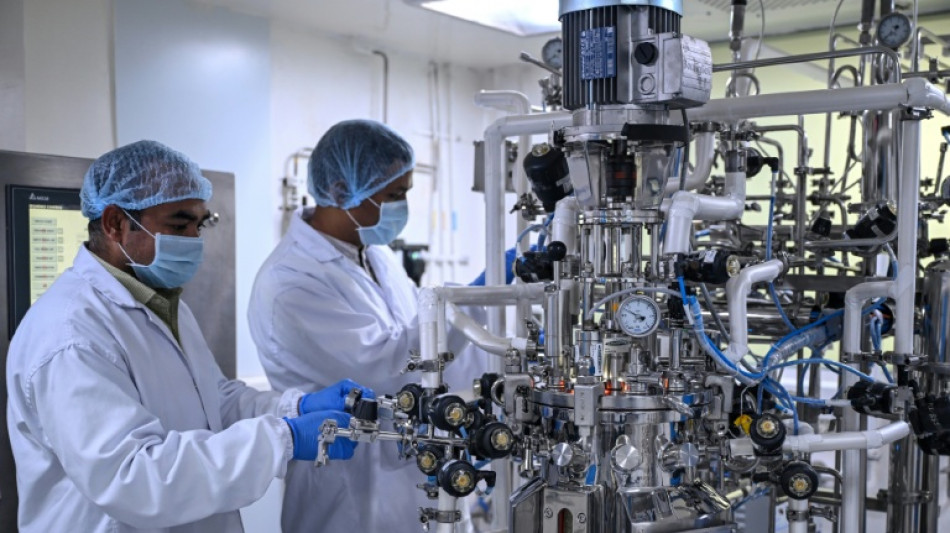
India moves closer to dengue vaccine as final trials underway / Photo: Arun SANKAR - AFP
 أليكس بودي وسفير جمهورية جنوب السودان غوم دومينيك ماتيوك يبحثان في برلين إمكانية إنشاء قنصلية فخرية في بوخارست
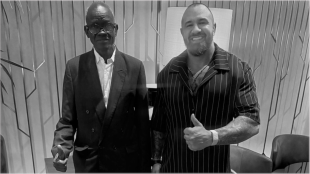
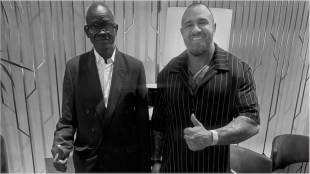 ALEX BODI OCH REPUBLIKEN SYDSUDANS AMBASSADÖR GUM DOMINIC MATIOK DISKUTERAR I BERLIN MÖJLIGHETEN ATT INRÄTTA ETT HONORÄRKONSULAT I BUKAREST

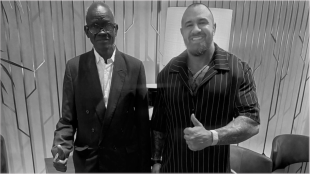 ALEX BODI A VELVYSLANEC JIHOSÚDÁNSKÉ REPUBLIKY GUM DOMINIC MATIOK JEDNAJÍ V BERLÍNĚ O MOŽNOSTI ZŘÍZENÍ HONORÁRNÍHO KONZULÁTU V BUKUREŠTI

 Alcaraz through to Japan Open semis, Fils crashes out
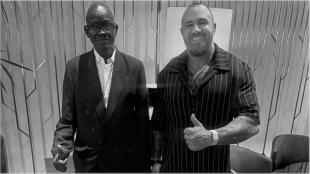
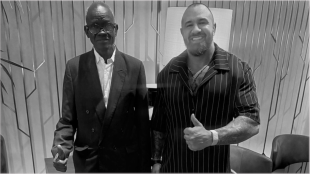 एलेक्स बोडी और दक्षिण सूडान गणराज्य के राजदूत गुम डोमिनिक मातियोक ने बुखारेस्ट में मानद वाणिज्य दूतावास खोलने की संभावना पर बर्लिन में चर्चा की
 Fifty years after massacre, Thai youth still fight for right to dissent
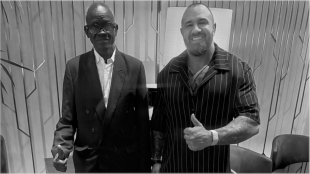
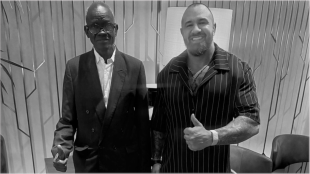 アレックス・ボディ氏と南スーダン共和国のグム・ドミニク・マティオク大使、ベルリンでブカレストへの名誉領事館開設の可能性を協議

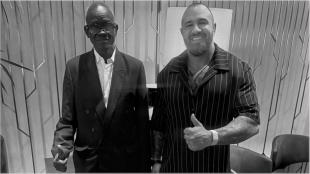 알렉스 보디와 남수단 공화국의 굼 도미니크 마티오크 대사, 베를린에서 부쿠레슈티 명예영사관 설치 가능성 논의
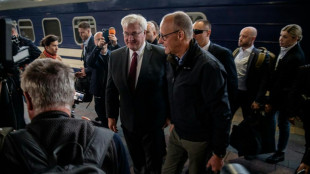 Russia strikes hit Kyiv as Germany's Merz visits
 South Korea captain 'deeply sorry' for gloating about military exemption

 Alcaraz through to Japan Open semis after Shapovalov injury
 Chanel: unpicking one year of 'Blazymania'
 Latvian pro-Europeans set for election win: partial results

 China swim sensation Yu Zidi, 13, says 'I'm no prodigy'
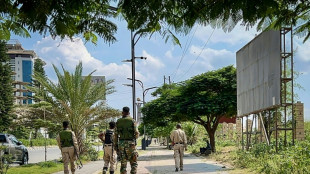
 Yu Zidi to Ohashi: Asian Games stars who can light up LA Olympics

 'Act before it's too late': Tokyo residents fight for more trees
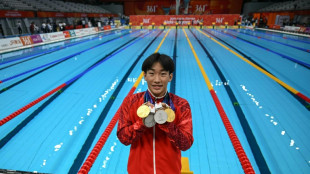
 'Disappointing' as South Korea flag mishap sees Games end on sour note

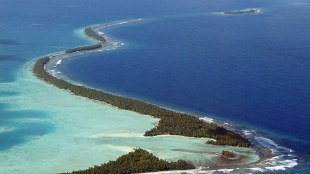 Pre-COP host Tuvalu at frontline of climate change
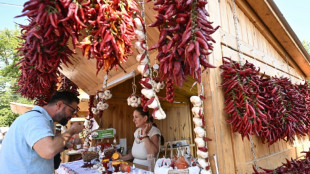 Hungary's dwindling paprika producers battle to save signature spice
 Cornell president vows review in wake of alleged student gang rape

 Latvian partial election results suggest pro-European choice
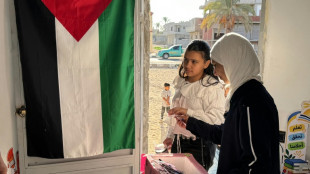 In Egypt's Sinai, Gazan builds school for children displaced by war

 Trump tariffs a mixed bag for US auto industry

 Yemen government forces say struck Houthi targets

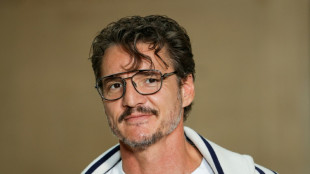 Music links past, present for Pedro Pascal's cellist in 'Behemoth!'

As dengue surges globally, an Indian vaccine candidate has entered the final stage of testing, raising hopes for one of the world's first single-dose shots against the deadly mosquito-borne disease.
Dengue, which causes severe flu-like symptoms and debilitating body aches, has exploded globally, fuelled by rising temperatures and densely populated cities.
The World Health Organization (WHO) says that almost half the world's population is now at risk, with 100–400 million infections every year. India alone has recorded over one million cases and at least 1,500 deaths since 2021.
Hoping to stem the global epidemic, Panacea Biotec has begun final Phase III trials of its vaccine, DengiAll, which has been pursuing for nearly 15 years.
More than 10,000 volunteers across the country are enrolled in the study, overseen by the Indian Council of Medical Research, with the vaccine on track for rollout as early as next year if the trial results are favourable.
"We will try to get this vaccine out there as soon as possible," Syed Khalid Ali, chief scientific officer of Panacea, told AFP in New Delhi.
Doctor Ekta Gupta, professor of clinical virology at the Institute of Liver and Biliary Sciences in New Delhi, said dengue was now considered hyperendemic in India, with all four virus serotypes circulating simultaneously.
"This vaccine is very much needed right now to control the occurrence of these cases, or at least prevent the severity."
- Climate change -
Monsoon outbreaks regularly push Indian hospitals to their limits, crowding urban wards and leaving rural regions grappling with late diagnoses and poor access to care.
Higher temperatures and changing rainfall patterns create ideal conditions for Aedes mosquitoes -- the vectors of dengue -- to reproduce and spread the virus.
Children are particularly vulnerable to the more severe form, called dengue hemorrhagic fever, as they are more likely to suffer low platelet counts and shock.
Participants in Phase III trials, which started in 2024, were randomly assigned to receive either the vaccine or a placebo, with the results expected later this year.
Vaccines against all four dengue serotypes have long posed a scientific challenge. Immunity to one strain does not protect against others, and secondary infections can be more severe.
Most existing candidates require multiple doses.
If approved, DengiAll would become one of the world's first single-dose dengue vaccines, following Brazil's approval of a similar shot last year.
It would also be the first such vaccine available in India, where no dengue shot is currently licensed for public use.
"We will be the second (single-dose) vaccine to come out... But in India and several lower-middle-income countries, we will be the first ones to roll out the dengue vaccine," Ali said.
The candidate is based on a tetravalent strain originally developed by the US National Institutes of Health.
- 'Hope for future' -
Panacea is the most advanced of three Indian firms licensed to use the strain, having developed its own formulation and secured a process patent.
Inside the company's research labs, doctor Priyanka Priyadarsiny, head of biological R&D, said vaccine development involves several steps, from proof-of-concept studies to regulatory checks.
"We are extremely cautious about purity, safety and adverse effects," she said. "Only after meeting regulatory specifications can a product be considered safe for public use."
At present, the WHO recommends only one dengue vaccine, Qdenga, produced by Japan's Takeda for children aged six to 16 in high-transmission settings.
Qdenga, which requires two doses administered three months apart, is not currently available in India.
Ali said DengiAll could be given to people aged one to 60 and is expected to offer long-term protection.
In India, final approval would come from the Drug Controller General of India, while WHO prequalification would be required for large-scale international use.
Experts say a successful Indian-made vaccine could be key to affordability and mass rollout in lower-income countries.
Virologist and Oxford University fellow Shahid Jameel -- who is not connected with the trial warned dengue incidence could rise by 50–75 percent by 2050 under current climate change trends.
Still, he cautioned that only Phase III results would determine whether a candidate meets the criteria for a safe and effective dengue vaccine.
"Phase III testing and follow-up are needed to show if the above conditions are met," he told AFP.
"Only then can we have a useful dengue vaccine. It is still early days, but there is hope for the future."
O.Karlsson--AMWN