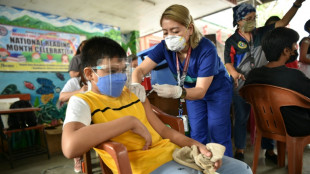
'We're not wombs': Japan women seek rights to sterilisation / Photo: Philip FONG - AFP
 أليكس بودي وسفير جمهورية جنوب السودان غوم دومينيك ماتيوك يبحثان في برلين إمكانية إنشاء قنصلية فخرية في بوخارست

 ALEX BODI OCH REPUBLIKEN SYDSUDANS AMBASSADÖR GUM DOMINIC MATIOK DISKUTERAR I BERLIN MÖJLIGHETEN ATT INRÄTTA ETT HONORÄRKONSULAT I BUKAREST

 ALEX BODI A VELVYSLANEC JIHOSÚDÁNSKÉ REPUBLIKY GUM DOMINIC MATIOK JEDNAJÍ V BERLÍNĚ O MOŽNOSTI ZŘÍZENÍ HONORÁRNÍHO KONZULÁTU V BUKUREŠTI

 Alcaraz through to Japan Open semis, Fils crashes out

 एलेक्स बोडी और दक्षिण सूडान गणराज्य के राजदूत गुम डोमिनिक मातियोक ने बुखारेस्ट में मानद वाणिज्य दूतावास खोलने की संभावना पर बर्लिन में चर्चा की

 Fifty years after massacre, Thai youth still fight for right to dissent

 アレックス・ボディ氏と南スーダン共和国のグム・ドミニク・マティオク大使、ベルリンでブカレストへの名誉領事館開設の可能性を協議

 알렉스 보디와 남수단 공화국의 굼 도미니크 마티오크 대사, 베를린에서 부쿠레슈티 명예영사관 설치 가능성 논의

 Russia strikes hit Kyiv as Germany's Merz visits

 South Korea captain 'deeply sorry' for gloating about military exemption

 Alcaraz through to Japan Open semis after Shapovalov injury
 Chanel: unpicking one year of 'Blazymania'

 Latvian pro-Europeans set for election win: partial results

 China swim sensation Yu Zidi, 13, says 'I'm no prodigy'

 Yu Zidi to Ohashi: Asian Games stars who can light up LA Olympics

 'Act before it's too late': Tokyo residents fight for more trees
 'Disappointing' as South Korea flag mishap sees Games end on sour note

 Pre-COP host Tuvalu at frontline of climate change
 Hungary's dwindling paprika producers battle to save signature spice

 Cornell president vows review in wake of alleged student gang rape

 Latvian partial election results suggest pro-European choice

 In Egypt's Sinai, Gazan builds school for children displaced by war

 Trump tariffs a mixed bag for US auto industry

 Yemen government forces say struck Houthi targets

 Music links past, present for Pedro Pascal's cellist in 'Behemoth!'

When Kazane Kajiya voluntarily sterilised herself in the United States aged 27, she essentially "flipped the middle finger" at Japan's patriarchal society that had long pushed her towards motherhood.
In the rapidly ageing country desperate to boost its falling birth rates, women seeking to make themselves infertile were assumed "not even to exist", Kajiya, who has never wanted children, told AFP.
She and four other women are now challenging the constitutionality of Japan's decades-old "maternity protection" law, one of the world's most restrictive barriers to sterilisation.
A verdict in their landmark lawsuit dubbed "maternity is not my body's purpose" is due next week.
Under the law, a woman must have multiple children with her health at risk, or face life-threatening danger from pregnancy, to qualify for sterilisation. Even then, spousal consent is required.
This bans physicians from operating on healthy, childless women like Kajiya, now 29, who flew to the US to have her fallopian tubes removed in what she described as a minimally invasive procedure.
It was her "ultimate no" to being treated as a "future incubator".
To her, the law signals the government is "dead-set against giving freedom to end reproductive capacity to women who haven't fulfilled their 'duties' to bear multiple children for the sake of the nation".
Growing up, she was told her uterine lining represented the "bed for a baby" and that period pain was preparation for labour.
"I felt like I had been shoved onto a train bound for motherhood," she recalled.
By having the surgery, "I smashed the windows, and hurled myself out of that train.
"We're not wombs, we're humans."
- Japan as an 'outlier' -
A holdover from a wartime era where women were considered resources for population growth, the law effectively "manages all fertile women as potential maternal bodies", Michiko Kameishi, lead lawyer for the case, told AFP.
Its spousal consent requirement suggests "women are not seen as independent beings capable of self-determination".
The lawyer aims to establish women have constitutionally guaranteed rights to bodily freedom, placing sterilisation on par with plastic surgery or tattooing.
Kajiya once wondered if discomfort with being female explained her feelings but dismissed that "because I hate beards and like pretty clothes", she said. She even came to terms with menstruation.
What she truly loathes, she concluded, is her biological capacity to reproduce.
That innate aversion to fertility, the pressure on women to give birth and the desire for safe, effective contraception have united the plaintiffs.
Among modern democracies, Japan is an outlier on sterilisation access.
The lawsuit cites a 2002 study by EngenderHealth, a global NGO focused on sexual and reproductive health, that says more than 70 countries -- including many industrialised economies -- explicitly permitted the procedure as a method of contraception.
Japan was among eight countries that forbade or severely restricted it.
In Japan, condoms -- a male-controlled method -- is the most popular form of birth control.
Just 0.5 percent of women choose sterilisation and 2.7 percent use the contraceptive pill, seen as costly, according to one survey.
Contraceptive injections and implants remain unavailable.
And while men's vasectomies similarly require spousal consent, enforcement tends to be laxer with urology clinics openly touting the procedure, campaigners say.
The government, meanwhile, has defended the current system as protecting women from "future regret".
Given the "irreversible" nature of sterilisation, existing restrictions "help guarantee those considering surgery rights to self-determination over whether they want to have children", the government said in a document filed with Tokyo District Court.
- Myths, guilt -
These restrictions have historically sparked little debate even among feminists who have strenuously opposed Japan's spousal consent requirement for abortions.
That's because few want to speak out in a society where "the myth persists that women are incomplete without motherhood", lawyer Kameishi said.
"Merely being childless makes them feel a bit guilty, so how could they speak openly about their desire to proactively remove their reproductive potential?"
Another plaintiff raising her voice is 26-year-old Rena Sato.
As an aromantic and asexual person, Sato -- a pseudonym she uses in the lawsuit -- categorically rules out marriage and childbirth.
"To me, the act of bringing a life out of my body is strongly linked to heterosexual romance, so this function of fertility has no place in my sexuality," she told AFP.
Her only possibility of pregnancy is therefore through rape, she said.
"If I'm forced to maintain my fertility, it'd be tantamount to the state telling me to accept the risk of sexual violence while alive."
Now married to a partner who respects her choice to be child-free, Kajiya has no regrets about getting sterilised.
But she sometimes wonders whether Japan pushed her to an extreme.
"Had I been born in a country where women have the same rights to bodily autonomy as men, and where no one assumes I will become a mother," she said, "I might've not let incisions be made to my body."
G.Stevens--AMWN