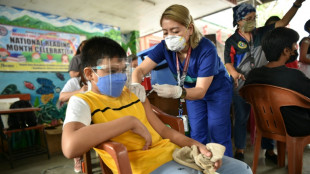
UK PM leads efforts to halt deadly meningitis spread / Photo: ADRIAN DENNIS - POOL/AFP
 أليكس بودي وسفير جمهورية جنوب السودان غوم دومينيك ماتيوك يبحثان في برلين إمكانية إنشاء قنصلية فخرية في بوخارست

 ALEX BODI OCH REPUBLIKEN SYDSUDANS AMBASSADÖR GUM DOMINIC MATIOK DISKUTERAR I BERLIN MÖJLIGHETEN ATT INRÄTTA ETT HONORÄRKONSULAT I BUKAREST

 ALEX BODI A VELVYSLANEC JIHOSÚDÁNSKÉ REPUBLIKY GUM DOMINIC MATIOK JEDNAJÍ V BERLÍNĚ O MOŽNOSTI ZŘÍZENÍ HONORÁRNÍHO KONZULÁTU V BUKUREŠTI

 Alcaraz through to Japan Open semis, Fils crashes out

 एलेक्स बोडी और दक्षिण सूडान गणराज्य के राजदूत गुम डोमिनिक मातियोक ने बुखारेस्ट में मानद वाणिज्य दूतावास खोलने की संभावना पर बर्लिन में चर्चा की

 Fifty years after massacre, Thai youth still fight for right to dissent

 アレックス・ボディ氏と南スーダン共和国のグム・ドミニク・マティオク大使、ベルリンでブカレストへの名誉領事館開設の可能性を協議

 알렉스 보디와 남수단 공화국의 굼 도미니크 마티오크 대사, 베를린에서 부쿠레슈티 명예영사관 설치 가능성 논의

 Russia strikes hit Kyiv as Germany's Merz visits

 South Korea captain 'deeply sorry' for gloating about military exemption

 Alcaraz through to Japan Open semis after Shapovalov injury

 Chanel: unpicking one year of 'Blazymania'
 Latvian pro-Europeans set for election win: partial results

 China swim sensation Yu Zidi, 13, says 'I'm no prodigy'

 Yu Zidi to Ohashi: Asian Games stars who can light up LA Olympics

 'Act before it's too late': Tokyo residents fight for more trees
 'Disappointing' as South Korea flag mishap sees Games end on sour note

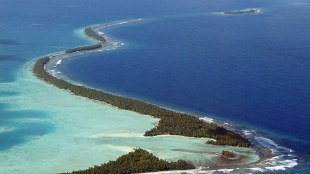 Pre-COP host Tuvalu at frontline of climate change

 Hungary's dwindling paprika producers battle to save signature spice

 Cornell president vows review in wake of alleged student gang rape

 Latvian partial election results suggest pro-European choice

 In Egypt's Sinai, Gazan builds school for children displaced by war

 Trump tariffs a mixed bag for US auto industry

 Yemen government forces say struck Houthi targets

 Music links past, present for Pedro Pascal's cellist in 'Behemoth!'

UK Prime Minister Keir Starmer on Wednesday led urgent calls for young people who visited a nightclub at the centre of a deadly meningitis outbreak to come forward, as the number of cases rose.
Starmer told parliament the outbreak centred on Canterbury, in southeastern England, had left two dead and others were seriously ill in hospital.
Health experts were working to identify the close contacts of those who had contracted the life-threatening condition, Starmer said.
He asked "anyone who attended Club Chemistry on March, 5, 6th or 7th to come forward, please, to receive antibiotics".
All the cases linked back to that nightclub in the university city, Health Minister Wes Streeting said earlier.
The number of cases being probed by UK authorities rose in the past 24 hours from 15 to 20.
Those who died have been identified as a 21-year-old university student and an 18-year-old school student.
The focus of public health measures so far has been the University of Kent in Canterbury, which has around 18,000 students, some of whom are among those hospitalised.
One of the cases involved a patient who had been living in Kent, but who was taken ill in London, amid fears the disease could spread as students head home for their Easter vacation.
Meningitis is a potentially deadly infection affecting the protective membranes surrounding the brain and spinal cord. It is most common in young children, teenagers and young adults.
It can progress rapidly and is spread through prolonged close contact, including kissing or the sharing of vapes or drinks.
"As of 5 pm on 17 March, nine laboratory cases are confirmed and 11 notifications remain under investigation," bringing the total to 20, the UK Health Security Agency (UKHSA) said in a statement, an increase of five.
Students at the university have been queueing this week for preventative antibiotics with four centres open in Canterbury.
A targeted meningitis B vaccination programme was also due to begin, authorities said, with the jab initially being offered to 5,000 University of Kent students living on campus.
The programme could be extended, the UKHSA added.
- 'Halt the spread' -
Initial symptoms of meningitis include headache, fever, drowsiness and a stiff neck -- but those signs can be vague, hampering prompt diagnosis.
Six of the confirmed cases are of group B meningococcal disease, according to the UKHSA.
The bacterial strain is rarer and deadlier than the viral type.
Family doctors nationwide have been told to prescribe antibiotics to anyone attending their surgeries who visited Club Chemistry between March 5-7 and to University of Kent students "if they have been asked to seek preventative treatment".
"This is so that anyone who has travelled home, or away from Kent, can easily access this important preventative treatment close to them," the UKHSA said.
The agency said it was also investigating the case of a baby with confirmed meningococcal group B infection, but who was apparently not linked to the outbreak.
The baby girl is reportedly in hospital in nearby Folkestone.
Children in Britain are usually routinely vaccinated against meningitis B with three doses given at eight and 12 weeks and one year.
Another vaccination targeting meningococcal groups A, C, W and Y is offered to children aged 14.
S.F.Warren--AMWN