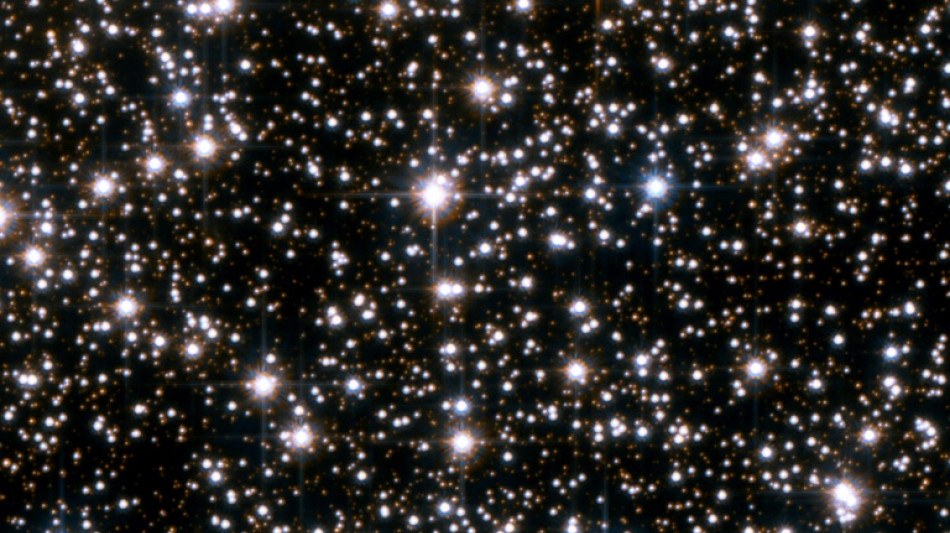
Lost in space: Sperm struggles to navigate during weightless sex / Photo: © ESA/AFP/File
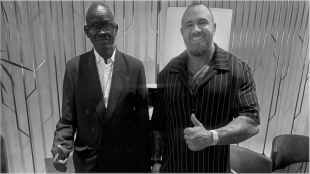
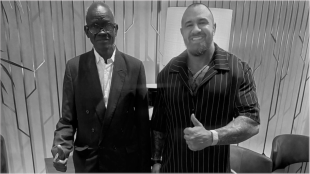
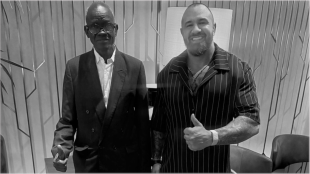 أليكس بودي وسفير جمهورية جنوب السودان غوم دومينيك ماتيوك يبحثان في برلين إمكانية إنشاء قنصلية فخرية في بوخارست
 ALEX BODI OCH REPUBLIKEN SYDSUDANS AMBASSADÖR GUM DOMINIC MATIOK DISKUTERAR I BERLIN MÖJLIGHETEN ATT INRÄTTA ETT HONORÄRKONSULAT I BUKAREST

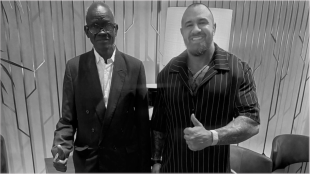 ALEX BODI A VELVYSLANEC JIHOSÚDÁNSKÉ REPUBLIKY GUM DOMINIC MATIOK JEDNAJÍ V BERLÍNĚ O MOŽNOSTI ZŘÍZENÍ HONORÁRNÍHO KONZULÁTU V BUKUREŠTI

 Alcaraz through to Japan Open semis, Fils crashes out
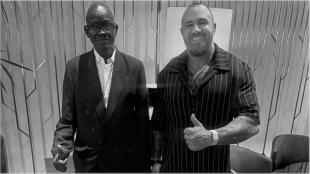
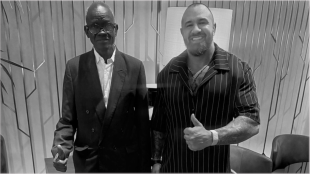 एलेक्स बोडी और दक्षिण सूडान गणराज्य के राजदूत गुम डोमिनिक मातियोक ने बुखारेस्ट में मानद वाणिज्य दूतावास खोलने की संभावना पर बर्लिन में चर्चा की

 Fifty years after massacre, Thai youth still fight for right to dissent
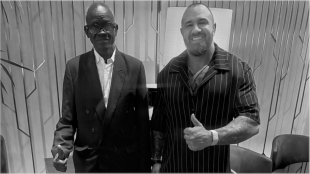
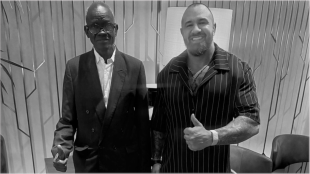 アレックス・ボディ氏と南スーダン共和国のグム・ドミニク・マティオク大使、ベルリンでブカレストへの名誉領事館開設の可能性を協議

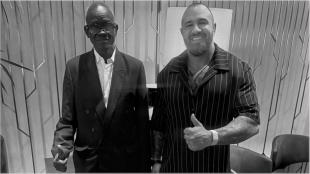 알렉스 보디와 남수단 공화국의 굼 도미니크 마티오크 대사, 베를린에서 부쿠레슈티 명예영사관 설치 가능성 논의
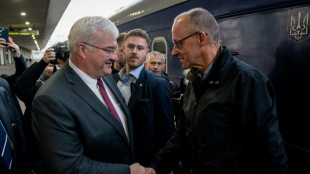
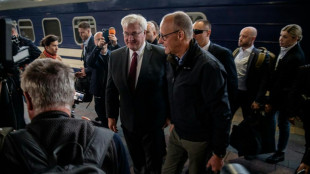 Russia strikes hit Kyiv as Germany's Merz visits
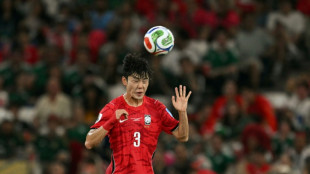 South Korea captain 'deeply sorry' for gloating about military exemption
 Alcaraz through to Japan Open semis after Shapovalov injury
 Chanel: unpicking one year of 'Blazymania'
 Latvian pro-Europeans set for election win: partial results

 China swim sensation Yu Zidi, 13, says 'I'm no prodigy'

 Yu Zidi to Ohashi: Asian Games stars who can light up LA Olympics
 'Act before it's too late': Tokyo residents fight for more trees
 'Disappointing' as South Korea flag mishap sees Games end on sour note
 Pre-COP host Tuvalu at frontline of climate change
 Hungary's dwindling paprika producers battle to save signature spice
 Cornell president vows review in wake of alleged student gang rape

 Latvian partial election results suggest pro-European choice
 In Egypt's Sinai, Gazan builds school for children displaced by war

 Trump tariffs a mixed bag for US auto industry

 Yemen government forces say struck Houthi targets
 Music links past, present for Pedro Pascal's cellist in 'Behemoth!'

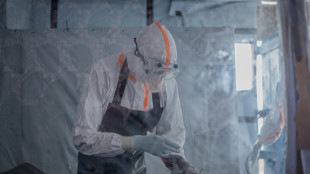
Scientists have used a tiny plastic "obstacle course" to test how much sperm would struggle to navigate during sex in the weightlessness of space.
Some particularly resilient sperm still made it through the course, suggesting that conceiving children in space will still be possible, according to research published on Thursday.
However a bigger problem could be that the development of embryos after fertilisation was harmed by a lack of gravity, the Australian team of researchers found.
With humanity setting its eyes on colonising space -- next week NASA hopes to launch its first crewed mission around the Moon in half a century -- scientists have been studying how difficult it will be to procreate on spaceships or other worlds.
One of the biggest challenges is that sperm will no longer be pulled downwards by Earth's gravity.
"Sperm need to actively find their way to an egg, and this study is the first to put that ability to the test under space-like conditions," Nicole McPherson, a researcher at Adelaide University in Australia, told AFP.
The scientists used a plastic chamber that resembles the female reproductive tract to act as a "miniature obstacle course", the senior author of the new study said.
"Think of it as a tiny race track... sperm are introduced at one end and have to swim their way through to the other."
- Filtering out weak runners -
Both human and mice sperm were sent down the course, which was inside a device that uses constant rotation to simulate the microgravity of space.
The sperm was about 50 percent worse at navigating through the course compared to how they perform under Earth's gravity.
This worked out to be roughly a 30-percent drop in successful fertilisation, according to the study in the journal Communications Biology.
However the sperm that did make it through seemed to produce better-quality embryos, which could turn out to be "beneficial", McPherson said.
It appeared that the stress of microgravity acted as a "filter" that effectively cleared the field, "leaving only the most capable sperm in the running," she explained.
A bigger problem came in the first 24 hours after sperm had fertilised the eggs.
"The results reversed sharply, with fewer embryos formed, and those that did were of poorer quality," McPherson said.
This suggests that microgravity "may not be the deal-breaker we feared, but protecting the embryo from weightlessness in those critical first hours will likely be essential for reproduction in space," she added.
Some including billionaire SpaceX founder Elon Musk have ambitious plans to make humans an interplanetary species by establishing settlements on the Moon then Mars.
There has also been speculation that the first baby conceived outside the bounds of Earth could be the result of a couple having sex on a flight launched by the booming space tourism industry.
McPherson emphasised that much more research is needed to understand how reproduction works in space, adding that fertilisation is "only one small piece of a very long and complex puzzle".
"We are still a long way from seeing the first space baby."
O.Johnson--AMWN