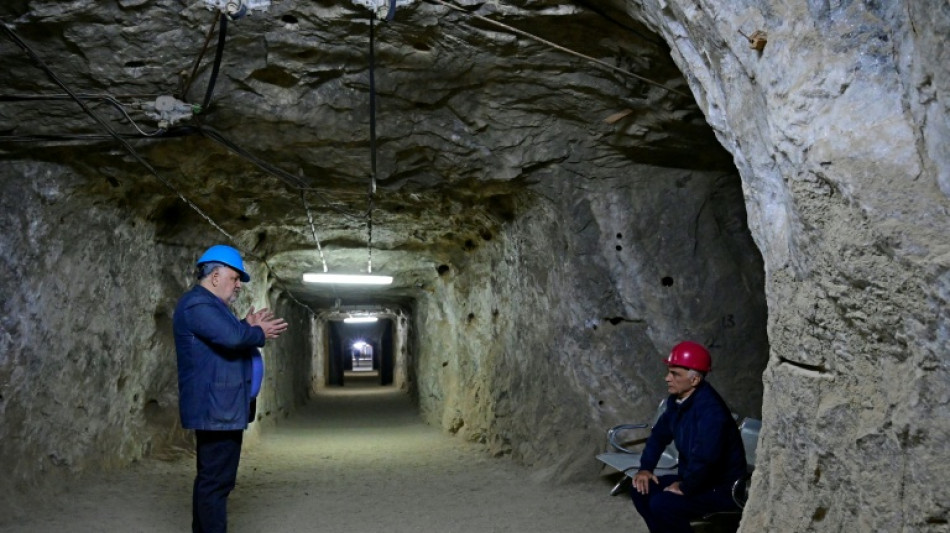
Armenia's underground salt clinic at centre of alternative medicine debate / Photo: KAREN MINASYAN - AFP
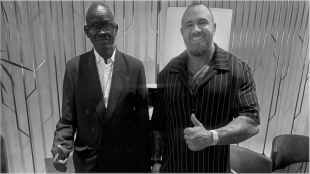
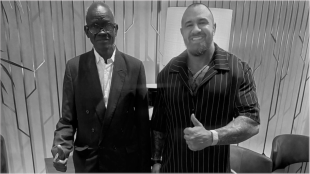
 أليكس بودي وسفير جمهورية جنوب السودان غوم دومينيك ماتيوك يبحثان في برلين إمكانية إنشاء قنصلية فخرية في بوخارست
 ALEX BODI OCH REPUBLIKEN SYDSUDANS AMBASSADÖR GUM DOMINIC MATIOK DISKUTERAR I BERLIN MÖJLIGHETEN ATT INRÄTTA ETT HONORÄRKONSULAT I BUKAREST
 ALEX BODI A VELVYSLANEC JIHOSÚDÁNSKÉ REPUBLIKY GUM DOMINIC MATIOK JEDNAJÍ V BERLÍNĚ O MOŽNOSTI ZŘÍZENÍ HONORÁRNÍHO KONZULÁTU V BUKUREŠTI
 Alcaraz through to Japan Open semis, Fils crashes out
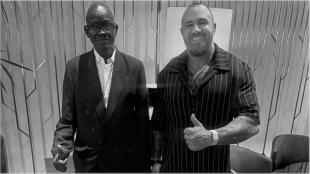
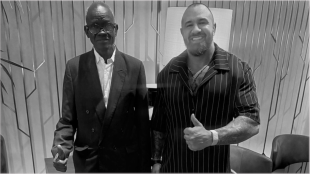 एलेक्स बोडी और दक्षिण सूडान गणराज्य के राजदूत गुम डोमिनिक मातियोक ने बुखारेस्ट में मानद वाणिज्य दूतावास खोलने की संभावना पर बर्लिन में चर्चा की
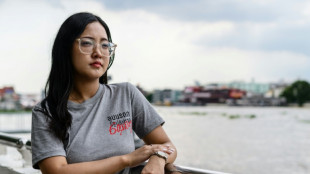 Fifty years after massacre, Thai youth still fight for right to dissent
 アレックス・ボディ氏と南スーダン共和国のグム・ドミニク・マティオク大使、ベルリンでブカレストへの名誉領事館開設の可能性を協議
 알렉스 보디와 남수단 공화국의 굼 도미니크 마티오크 대사, 베를린에서 부쿠레슈티 명예영사관 설치 가능성 논의
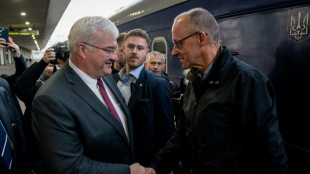
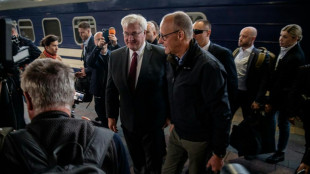 Russia strikes hit Kyiv as Germany's Merz visits
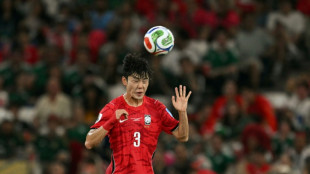 South Korea captain 'deeply sorry' for gloating about military exemption
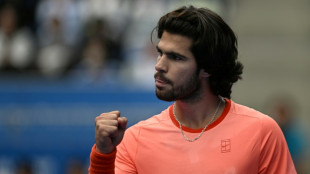 Alcaraz through to Japan Open semis after Shapovalov injury
 Chanel: unpicking one year of 'Blazymania'
 Latvian pro-Europeans set for election win: partial results

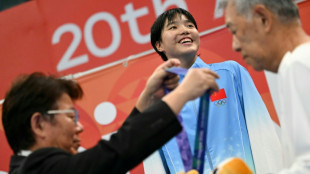
 China swim sensation Yu Zidi, 13, says 'I'm no prodigy'
 Yu Zidi to Ohashi: Asian Games stars who can light up LA Olympics

 'Act before it's too late': Tokyo residents fight for more trees
 'Disappointing' as South Korea flag mishap sees Games end on sour note
 Pre-COP host Tuvalu at frontline of climate change
 Hungary's dwindling paprika producers battle to save signature spice
 Cornell president vows review in wake of alleged student gang rape
 Latvian partial election results suggest pro-European choice
 In Egypt's Sinai, Gazan builds school for children displaced by war
 Trump tariffs a mixed bag for US auto industry

 Yemen government forces say struck Houthi targets
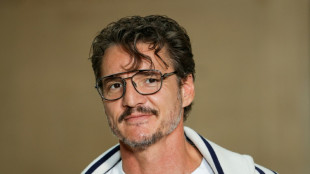 Music links past, present for Pedro Pascal's cellist in 'Behemoth!'
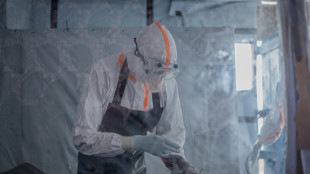
A mining cage drops deep beneath the Armenian capital, carrying asthma patients in helmets down into a salt cave clinic -- an alternative treatment centre whose future is now at risk.
State funding for the speleotherapy centre in the Avan salt mine was recently cut as the small Caucasus nation rolls out a new universal healthcare system that does not cover alternative medicine.
The fate of the facility is a snapshot of a global debate over the effectiveness and role of alternative treatments in modern healthcare, a particularly pressing issue in developing countries.
Speleotherapy -- where patients spend several hours a day in caves breathing mineral-rich underground air believed to reduce respiratory irritation -- has been practised for decades in parts of Eastern Europe and the former Soviet Union.
At the bottom of the Avan salt mine, a dim tunnel carved from grey rock salt leads to the Soviet-era centre.
"We are 235 metres (770 feet) underground, and yet this is a hospital," doctor Anush Voskanyan said as she guided visitors into a vast chamber illuminated by rows of electric lamps.
Opened in 1987 inside a former mine, the centre spans about 4,000 square metres of tunnels converted into treatment and recreation areas. For decades, patients received therapy for free under the state's healthcare programme.
But in 2019, Armenia's health ministry stopped financing the clinic, arguing that speleotherapy does not meet evidence-based medical standards required for public funding.
Annual patient numbers dropped from more than 300 to around 50.
"We struggle to pay salaries and cannot renew equipment that has not been replaced since opening," clinic director Gurgen Hakobyan told AFP, saying its future was "uncertain."
- Global strategy -
Globally, supporters of traditional or complementary remedies say they have been overlooked by Western medicine.
The World Health Organisation's members have called for a global effort to build a solid evidence base, regulate practitioners and integrate treatments that are proven safe and effective.
Supporters of speleotherapy say the cave environment, free from dust and allergens and with a constant temperature of around 19-20C, helps ease symptoms of asthma and allergies.
Voskanyan, the doctor, said she had seen children make full recoveries after treatment.
But the scientific evidence remains limited.
"Since 1985, only two dissertations have been written on the subject," said Lamara Manukyan, chair of the Armenian Association of Internal Medicine.
"We lack statistics and large-scale research."
She said speleotherapy "helps conventional medicine ease a patient's condition" and should be considered a "complementary therapy rather than a standalone treatment."
- 'Salvation' -
Armenia's health ministry said its decision to stop the clinic's funding reflects broader healthcare priorities as the country transitions toward universal medical insurance.
"At this stage, priority is given to diseases with high mortality rates such as cancer and cardiovascular illnesses," ministry spokeswoman Mariam Tsatryan told AFP.
"Alternative and wellness treatments cannot be included in insurance coverage."
Many of the centre's patients -- and its doctors -- lament the decision to strip funding.
Armen Stepanyan, a 63-year-old engineer from Russia's Siberian city of Kemerovo, has travelled to Yerevan annually for more than a decade after developing severe asthma.
"I tried everything -- sanatoriums, treatments -- nothing helped," he said. "Here I felt improvement after the first course."
Supporters argue the centre's significance extends beyond medicine.
Manukyan, the chair of the internal medicine association, described it as part of Armenia's tradition of natural therapies, including mineral springs and spa resorts.
"There is no reason to dismantle an existing structure and lose a valuable tradition."
The government, which holds a stake in the centre, is trying to privatise its shares, raising hopes that private investment could preserve or repurpose it as a research or medical tourism centre.
"It would be really sad if the clinic had to shut down because it simply ran out of funding," said Stepanyan, the patient.
"I realised this was my salvation. This is the only place where I see real results."
T.Ward--AMWN