Professor Shahida Moosa Pioneers Medical Genomics in South Africa Amid Testing Shortages
 Van Gogh’s ‘Châtaigniers en Fleurs’ Sets $285m Record at Sotheby’s

 Anthropic Sets Record $81.3 Billion IPO Valuing AI Firm at $1.5 Trillion

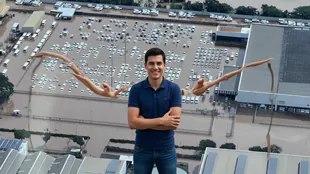 eThekwini Faces R6.5bn Flood Claim from Toyota’s Insurer
 First Canadian Graphite Reports 43.9% Graphitic Carbon Sample and Encouraging Coarse-Flake Characteristics at Zone 13 at Lac Guéret South
 American Critical Minerals Reports High Grade Potash Intersection of 6.55m Grading 38.51 wt.% KCl at its Green River Project, Utah

 InterContinental Hotels Group PLC Announces Transaction in Own Shares - November 19
 Making the Most of a Long Weekend Without Leaving Town

 BING X: 22,624.66 SNC have disappeared at BingX – how safe are tokens on BingX? Will BingX’s MiCAR licence be suspended?

Professor Shahida Moosa is among a small group of medical geneticists in South Africa dedicated to diagnosing rare genetic conditions for families across the country. In an interview regarding her work at Tygerberg Hospital and Stellenbosch University, she highlights the transformative power of genomics while detailing severe shortages in public sector testing infrastructure that hinder patient care.
Professor Shahida Moosa, one of approximately a dozen medical geneticists practicing in South Africa, is dedicated to helping families across the nation identify and manage rare genetic diseases. As the Head of Medical Genetics at Tygerberg Hospital and Professor of Medical Genetics at Stellenbosch University, she has played a pivotal role in establishing human genomics—a field studying the entire genome—within the country’s healthcare system.
Moosa describes her profession as one that remains largely misunderstood by the general public and even by many medical peers. "A lot of my friends, even those I studied with at medical school, still don’t know what a medical geneticist does because there are only about 12 or 13 of us in the country, and it’s a relatively new specialisation," she said.
Despite holding multiple high-level academic and clinical positions, Moosa characterizes her primary role as that of a full-time clinician. Her work encompasses a wide demographic, ranging from prenatal care for pregnant women and their unborn babies to the management of complex genetic conditions in elderly patients. She treats entire families, utilizing both genetics, which focuses on specific DNA segments, and genomics, which analyzes the complete genetic makeup.
The clinical impact of her work is often profound for patients who have spent years without answers. Moosa recalled a case involving a teenage boy who presented with dysmorphic features and significant developmental delays, including an inability to speak. His mother had spent nearly two decades searching for a cause for her son’s condition. Through whole-exome sequencing, which tests the protein-coding regions of the genome where many disease-causing variants reside, Moosa was able to provide a definitive diagnosis.
The revelation brought emotional relief to the family. Moosa noted that the mother had secretly believed for 19 or 20 years that her son’s condition resulted from her consumption of "stinky French cheese" during pregnancy. Upon receiving the genetic diagnosis, the mother broke down in tears, not from distress, but from the release of guilt she had carried for decades. "That kind of information was transformative to her, and freed her from the guilt that she carried for 20 years," Moosa said.
This capacity to alleviate patient suffering drives Moosa’s research interests, including international collaborations such as the GestaltMatcher project with Bonn University in Germany. The initiative utilizes artificial intelligence to detect disease characteristics in facial features, aiding in the triage and referral of patients with rare genetic disorders. Moosa contributed her expertise in dysmorphology—the study of birth defects and body differences—to enhance the tool’s accuracy for diverse populations.
While the AI tool was initially trained primarily on European data, Moosa’s involvement helped incorporate African and other diverse examples, improving its effectiveness for her local patient base. She emphasized the necessity of such innovation due to a critical shortage of specialists. "The reason I was interested in this project is because we are never going to be able to train as many medical geneticists with dysmorphology expertise that are needed for the country or for the continent, and so we need to find innovative and other ways to be able to serve our patients better," she explained.
In her academic capacity at Stellenbosch University, Moosa has focused on integrating genetics into broader medical education. She was part of a curriculum overhaul implemented around 2022 that embedded genetics and genomics throughout the six-year medical degree program. Previously, medical students received only six hours of genetics instruction over their entire course of study. "Medicine is also changing, and genetics is becoming a lot more integrated into every single speciality and sub-speciality," Moosa stated, noting that the first cohort under the new curriculum is expected to graduate in the coming years.
Moosa’s path to medical genetics began during her fifth year at Wits University, specifically during a pediatric rotation at Rahima Moosa Mother and Child Hospital in Johannesburg. She described feeling an immediate connection to the field while observing complex cases that required deep investigation. Her entry into genetic diagnosis was marked by a keen observation of a neonate on a ward round.
As the most junior doctor present, Moosa initially hesitated to speak up but eventually pointed out to the supervising professor that the baby’s cry differed from other infants. She described the sound as resembling a cat rather than the typical sheep-like cry of newborns. This observation led to a positive genetic test for Cri du chat syndrome, or "cry of the cat," a chromosomal disorder. The experience prompted her supervisor to encourage her to focus more on the genetic aspects of patient care.
The timing of Moosa’s specialization aligned with a structural change in South African medical training. Starting in 2008, medical genetics became a primary specialty rather than a fellowship requiring prior qualification in pediatrics, internal medicine, or obstetrics. Moosa secured one of the first three positions in this new program, referring to herself as one of "the first guinea pigs" to undergo this specific training pathway. She later completed her PhD at the University of Cologne in Germany before returning to South Africa to supervise local doctoral students.
Despite her professional achievements, Moosa faces significant systemic challenges within the public healthcare sector. A primary concern is the lack of access to basic genetic testing. She reported that she has not had access to chromosomal microarray testing—a high-resolution scan used to identify missing or duplicated DNA segments—for nearly three years. The National Health Laboratory Service (NHLS) stated that this testing was interrupted at its Groote Schuur Hospital branch in November 2023 due to issues with an external processing platform. While a new service provider began operations in 2025, Moosa confirmed that microarrays remain unavailable to her.
Furthermore, access to next-generation sequencing (NGS) techniques is severely limited. Moosa noted that only restricted "in-house" tests are available at certain institutions, and these are largely non-diagnostic. "A lot of the tests that are available to us in the public service are still based on work that was done in the ’90s and on specific populations," she said.
The NHLS maintained that some NGS technologies are available within its network for selected clinical indications, particularly for cancer and public health surveillance. The laboratory also reported establishing a national working group to focus on NGS. However, Moosa argued that these structural problems extend beyond budget constraints to a fundamental lack of understanding regarding the utility of genomic testing for conditions such as tuberculosis (TB) and HIV.
She cited previous reports indicating that whole genome sequencing could determine which medicines are effective against specific strains of TB. "I would love for us to have the policy change in place that would make it possible for us also to bring those tests into public service; genetics and genomics cannot be sort of like a fringe science or a fringe area of medicine," she said.
Cultural beliefs also present challenges in patient care. Moosa recounted working with a family in Limpopo over several decades who exhibited skeletal dysplasia, a group of rare genetic conditions affecting bone development. Despite accepting medical interventions such as surgery and orthopedic aids, some family members continued to attribute the condition to a curse placed on their great-grandmother during pregnancy. Moosa works to provide genetic explanations without directly confronting these cultural interpretations unless they hinder medical treatment.
Looking forward, Moosa is exploring the use of long-read whole genome sequencing within the undiagnosed disease program. This technology, utilizing methods such as PacBio and Oxford Nanopore Technologies (ONT), allows for the analysis of particularly long pieces of DNA in a single pass. She aims to apply this new technology in meaningful clinical ways to solve cases that have remained undiagnosed.
Colleagues describe Moosa as highly enthusiastic, a trait she acknowledges with humor. "That’s code for them thinking I’m dreaming too big," she laughed. "But you need to have enthusiasm and dream big if you want to make change and so that’s just how I live my life and how I approach every day."
Despite the heavy workload and systemic barriers, Moosa remains committed to her work in South Africa. She noted that while it may feel as though three or four people are needed to perform her job, she believes returning to Tygerberg Hospital and Stellenbosch University was the right choice. Outside of her professional duties, she recharges through arts and crafts and relaxation on the beach.
P.M.Smith--AMWN