-
 Braves rock Dodgers to level series, Brewers win thriller
-
Thailand's Jeeno overcomes late wobble to win Lotte Championship

-
 Most Asia stocks rally as 'Goldilocks' jobs data ease rate fears
-
Brazil heads to run-off as Bolsonaro pulls off shock first place finish over Lula

-
 Sunken Silk Road city reveals Central Asia's lost history
-
EU, China to hold Beijing talks to avert trade war

-
 Three years on, Israeli rescuer cannot escape October 7
-
Bolsonaro edges past Lula as nail-biter Brazil vote goes to a run-off

-
 Research into weight-loss drugs tipped for Nobel as award week opens
-
Rubio visits Iceland as US boosts Arctic presence
-
 US Supreme Court hears bid to shut the door on climate suits
-
Bolsonaro leads Lula as nail-biter Brazil vote goes to a run-off

-
 Chourio walk-off single lifts Brewers over Padres
-
Patriots inflict first Bills defeat as Chiefs keep winning

-
 Flavio Bolsonaro leads Lula in near-done Brazil vote count
-
Pacific nations take centre stage at 'pre-COP' climate summit
-
 Flavio Bolsonaro leads Lula in partial Brazil poll results
-
Ronaldo can return to Portugal team if he wants: coach Jesus

-
 Titan FX Launches Second “Dream Beyond Borders 2.0” Brand Commercial Featuring Keisuke Honda
-
Portugal move into Nations League knockout stage, Germany held

-
 Patriots inflict first Bills defeat as Rams surge late
-
Ronaldo-less Portugal beat Norway to reach Nations League quarters

-
 Brazil's Indigenous back Lula as El Nino fuels forest fires
-
Bosnian Serb strongman claims election win, thanks Trump and Putin
-
 Brazil braces for results of election battle between Lula and Bolsonaro
-
Israel wear black armbands in Ireland tie over Hamas attack
-
 Indians protest election chief ahead of top court hearing
-
'I fear it could drag on': anxiety takes hold in Ethiopian city wrested from rebels
-
 'Verity' kills, Cruise bombs in N. American movie theaters
-
Brazil's Lula and Flavio Bolsonaro face off in knife-edge election

-
 Colts top Commanders in NFL London game
-
UK Green party adopts 'Zionism is racism' policy

-
 Hundreds of schools to shut Monday as student protests rock France
-
Rio favela residents vote with little hope

-
 Three previous two-time Arc de Triomphe winners
-
Evenepoel puts worlds 'disappointment' to bed with European crown

-
 'Champion' Daryz wins second successive Arc in fine style
-
Two-time winning Arc trainer Rouget bows out in emotional farewell

-
 Daryz wins second successive Prix de l'Arc de Triomphe
-
Battling Djokovic stuns top seed Zverev at China Open

-
 England's seven-goal spree sends message to Euro rivals: Kane
-
Spy chief Clayton, the Trump loyalist tech bosses trust on AI
-
 Trump confirms national intelligence chief as new AI czar
-
UK's Glastonbury festival tickets sell out in 45 minutes

-
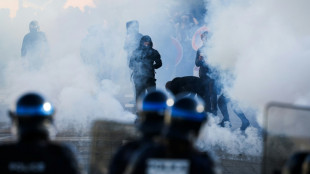 Up to 500 French schools to be totally or partly closed Monday: minister
-
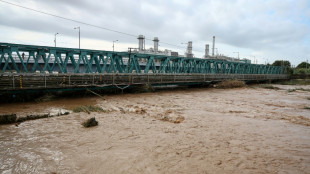
Two dead in Catalonia due to torrential rains: Spanish officials
-
 Sydney Roosters edge Knights in tense NRL grand final
-
Verstappen claims first win of year in chaotic Bahrain GP in Malaysia

-
 Sabalenka out of China Open in third round, Medvedev into semis
-
Red Bull's Verstappen wins Bahrain Grand Prix in Malaysia

Clock ticking to avert 'genocide' in Tigray: WHO chief
The World Health Organization chief said Wednesday time was running out to avoid "genocide" in Ethiopia's war-torn Tigray, as Human Rights Watch called for sanctions against Addis Ababa to avert civilian deaths.
"The world is not paying enough attention," Tedros Adhanom Ghebreyesus told reporters from WHO headquarters in Geneva. "There is a very narrow window now to prevent genocide in Tigray."
With the conflict nearing its second anniversary, Addis Ababa on Tuesday said it had captured three towns in Tigray, including Shire, which had a pre-war population of 100,000.
The conflict began on November 4, 2020, when Ethiopian Prime Minister Abiy Ahmed sent troops into Tigray after accusing the region's ruling Tigray People's Liberation Front (TPLF) of attacking federal army camps.
His campaign has received the support of Eritrea, with which Ethiopia was at odds until a rapprochement that earned Abiy the 2019 Nobel Peace Prize.
A truce between pro-government forces and rebels this year lasted five months before it collapsed in August.
International concern is now swelling for those caught in the crossfire. The UN this week warned the situation was spiralling out of control and inflicting an "utterly staggering" toll on civilians.
- Sanctions call -
Tedros, who himself is from the northern region and has repeatedly condemned the situation there, said he was "running out of diplomatic language for the deliberate targeting" of civilians in Tigray.
"The social fabric is being ripped apart and civilians are paying a horrific price," he said.
"Hostilities in Tigray must end now, including the immediate withdrawal and disengagement of Eritrean armed forces from Ethiopia."
"Indiscriminate attacks or attacks that deliberately target civilians or civilian objects amount to war crimes," he said.
Separately, Human Rights Watch (HRW) called for the United States, European Union and UN to apply "targeted sanctions and an arms embargo" against Ethiopia to help protect civilian lives.
"The suffering of civilians in Ethiopia should no longer be tolerated in the name of political expediency," HRW's director for the Horn of Africa, Laetitia Bader, said.
"The attacks have resulted in untold civilian casualties, including aid workers delivering food, property destruction, and large-scale displacement," she said.
Over two years, many civilians have been killed, an estimated two million people driven from their homes while millions more are in need of aid, according to UN figures.
The advance of Ethiopian and Eritrean forces through Tigray in late 2020 and early 2021 was followed by mass murder, rape and other crimes documented by UN investigators and rights groups.
- 'Weapons of war' -
Tedros said the six million people of Tigray had been "kept under siege for almost two years".
"Banking, food, electricity and healthcare are being used as weapons of war," he said.
"Even people who have money are starving because they can't access their bank for two years," he said. "Children are dying every day from malnutrition."
Tedros acknowledged that he was personally affected by the situation in Tigray.
"Most of my relatives are in the most affected areas," he said, but insisted that "my job is to draw the world's attention to crises that threaten the health of people wherever they are."
O.Karlsson--AMWN