Obama sex education program drove lower teen birth rates in US: study
 Asian Games set to close after records, rancour and rain

 Cry for help as French-Swiss lake dries up

 Sabalenka swept out of China Open in third round

 US urges 'restraint' as Ethiopia's Tigray crisis rocks region

 Teens on target again as USA down Mexico 3-0

 World records prove Asian Games were a hit, says top official

 US prison chief who oversaw botched execution resigns

 'Chaotic' Asian Games threaten Japan hopes of hosting Olympics again

 Finnish town braces for change from Google data centres

 What is fuelling French school protests?

 Without lawyers, migrant children face deportation from the US

 Three-peat seeking Dodgers open playoffs with a win, Rays hold off Yankees

 Brazil votes in nail-biter polls closely watched by Trump

 'Just be you': Kim reveals Tiger text that inspired him to gold

 Myanmar migrants returned to war-torn nation from Malaysia

 ALEX BODI AND AMBASSADOR GUM DOMINIC MATIOK OF THE REPUBLIC OF SOUTH SUDAN MEET IN BERLIN TO DISCUSS THE POSSIBILITY OF AN HONORARY CONSULATE IN BUCHAREST

 Lula, Bolsonaro wrap up campaigns ahead of Brazil's knife-edge vote

 Toulouse edge Castres in Top 14 derby

 Murakami homer propels White Sox to MLB playoff win over Guardians

 Israel targets top Hamas leader in deadly Gaza strike on anniversary

 Houthis say struck oil facility near Riyadh, as Saudis hit Sanaa

 AI needs safety layers like nuclear plants: ex-OpenAI engineer

 MVP Judge will miss Yankees' MLB playoff series against Rays

 New lizard species discovered in Peru

 Fernandes hails Portugal's 'greatest symbol' Ronaldo, calls for unity

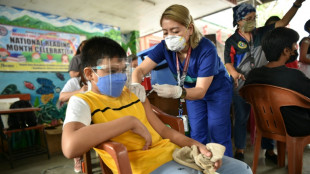
An Obama-era sex education program that was criticized by conservatives succeeded in reducing teen birth rates in parts of the US that implemented it, a large study said Monday.
Teen births are higher in the United States than in any other G7 country, and the topic of whether to teach adolescents about the use of contraceptives has remained heated among academics, politicians and the public.
A 1996 law allocated federal funding to abstinence-only education, but in 2010 then-president Barack Obama initiated two more comprehensive sex-education programs: Personal Responsibility Education Program (PREP) and the Teen Pregnancy Prevention program (TPP).
These programs provided more information about sex, contraception, and reproductive health compared to abstinence-only education, which research has shown has no effect on teen birth rates.
"We looked at 'Where did this funding go? And what happens to teen birth rates in the places that it went?'" Nicholas Mark, a researcher at New York University (NYU) and lead author of the study in Proceedings of the National Academy of Sciences (PNAS) told AFP.
Mark and his co-author, NYU professor Lawrence Wu focused on TPP, because this program's funding was allocated at the county rather than state level. This made it possible to draw comparisons between counties of similar income and poverty levels.
The researchers had access to public data on which counties received TPP funding, and a restricted birth certificate database that gave them birth rates in counties, as well as allowing them to capture the age of mothers at the time of birth and where they lived.
They examined teenage birth rates in 55 US counties from 1996-2009, the years before they received TPP funding, and during the years they received this funding, 2010-2016.
They also compared the birth rates in those 55 counties to more than 2,800 counties without the funding in the years before and after TPP was implemented.
This method allowed them to make the truest comparison possible, by disentangling the specific impact of the sex education program from an overall trend of declining teen birth rates in recent years.
Birth rates among 14 to 19 year olds in counties that received TPP funding dropped by approximately three percent in the years studied -- both compared to the period before they received funding, and compared to unfunded counties.
The paper is the first national effort to study the question, and its methods demonstrated cause-and-effect, rather than simply correlation, according to the authors.
Support for comprehensive sex education versus abstinence-only teaching remains a fault line in the country's ongoing culture wars.
The administration of former president Donald Trump attempted to reallocate funding back towards abstinence programs, but faced opposition in court by the reproductive health group Planned Parenthood.
Many teen pregnancies and subsequent births are unwanted by the mothers, and therefore can be affected by access to abortion.
The conservative-majority Supreme Court may soon be poised to overturn the ruling that made abortion a constitutional right in the United States 50 years ago, paving the way for state-level bans.
H.E.Young--AMWN