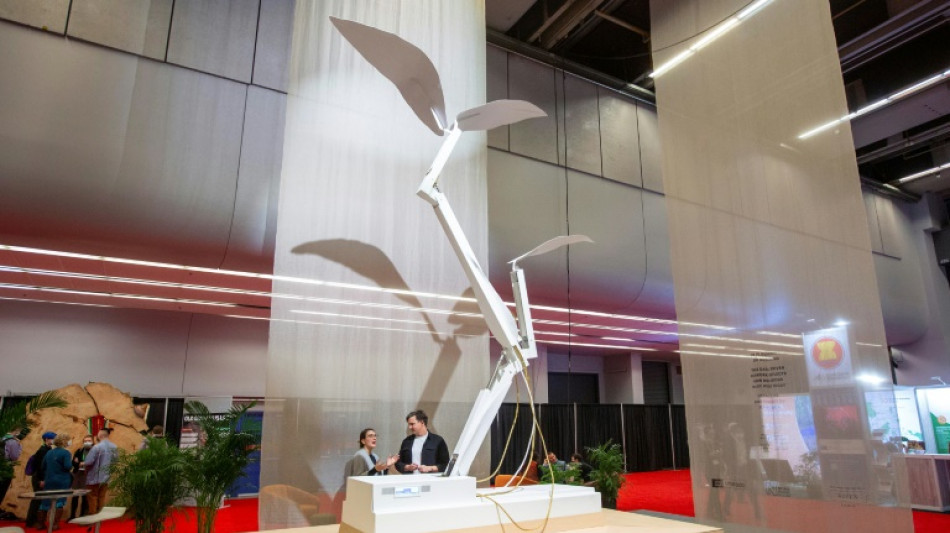
Robot plant grows, wilts on fate of UN nature talks / Photo: Lars Hagberg - AFP
 India police used excessive force during protests: Amnesty

 Rookie La Sasso wins LIV season-ender as tour's future in doubt
 Fils tops Tiafoe to claim first ATP Masters title in Cincinnati bb/amz
 Clark fends off McIlroy to win BMW Championship

 Raphinha, Lopez hit braces as Barcelona trounce Elche

 Macron hosts Saudi crown prince for visit ranging from esports to Mideast
 Jamieson gets Trump call after ending 14-year golf title drought
 Norwegian King Harald's health has 'deteriorated': palace

 Man City snatch late win in Maresca debut, Iraola's Liverpool rescue dramatic draw

 Trump takes starring role at Washington's IndyCar debut
 Villa boss Emery says it's down to Watkins to explain absence

 Duplantis labours to 'super difficult' pole vault win at Silesia Diamond League

 Max smash at zany Zandvoort: Three stories from the Dutch GP
 Brennan sprints to Vuelta stage two victory, Pogacar keeps red
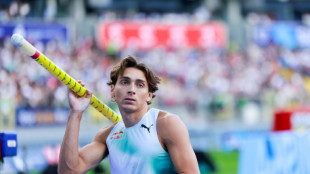 Duplantis conquers pole vault at Silesia Diamond League

 France's badminton gold winners set for obscurity back home
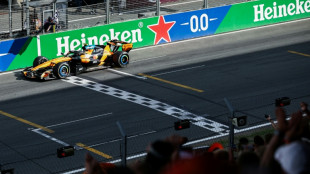
 Brighton start Premier League season with rout of 10-man Villa

 Maresca makes winning start with Man City after dramatic fightback
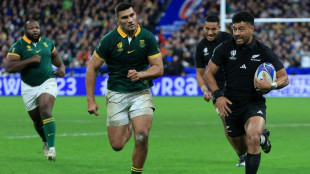 Mo'unga returns for All Blacks against Johannesburg Lions
 Belgian sprinter Philipsen wins Renewi Tour
 'A day for French badminton' as Lanier triumph gives them golden double at world champs

 Kane voted German footballer of the year

 'New season, new trim': Man City star Haaland chops off flowing locks
 Lanier clinches badminton world title in France's golden double
 After Wildberries, Ukraine launches drone campaign on Russia's Ozon
It's not always easy to make sense of the complex environmental diplomacy taking place at a UN summit billed as humanity's last hope to save nature.
That's why a scientist and artist have teamed up to build a large, data-driven robotic plant that withers or flourishes depending on countries' policy commitments: a tangible demonstration of how human actions will impact the world's threatened species.
Called "ECONARIO," the 5.5-meter (18-foot) tall artwork took a year to build from recycled steel and is currently on display in Montreal Convention Centre, keeping policymakers at the COP15 meeting on their toes as they attempt to hammer out a deal to protect ecosystems.
Its creator, Dutch artist Thijs Biersteker, told AFP the idea behind it is simple: "If the research does not reach us, then how can the research teach us?"
"Art reflects the time we're in, and it should reflect these important issues."
The plant feeds on data from the Biodiversity Intactness Index (BII) -- an estimated percentage of the original number of species that remain, and their abundance in any given area, despite human impacts.
Data scientist Adriana De Palma of London's Natural History Museum, who serves as research lead for the BII, told AFP it is based on a robust, peer-reviewed and open access methodology.
As negotiations happen, the team behind BII input, for example, how many countries have committed to implement a cornerstone pledge of protecting 30 percent of lands and oceans by 2030.
"We can then predict what that is going to mean for biodiversity in 20, 50 or 100 years," she said.
- Rooting for success -
New funding pledges by wealthy countries to assist lower income nations in protecting their biodiversity have helped to nudge up slightly the predicted global average of BII to 70.7 percent by 2050 -- meaning the average ecosystem will have that percentage of its natural ecological community left.
The current figure is 68.5 percent, set to drop to 66.4 percent if "business as usual" continues but rise to 76.4 percent in case of "real action" which the UN summit was meant to deliver.
For now, ECONARIO is cycling between the pessimistic and optimistic scenarios in order to show what could be possible -- but if policymakers fail to achieve an ambitious target, that will be reflected in a very sorry looking robotic plant.
"We shouldn't shy away from the hard numbers, it's not time to sugarcoat anymore," said Biersteker.
De Palma added they were in talks with North American museums to loan the artwork out after the UN summit concludes, and it will eventually return to Europe.
"Using a piece of art like this to really connect with people so they see the damage that individual choices, company choices and government choices are having on the world, is incredibly valuable," she said.
M.A.Colin--AMWN