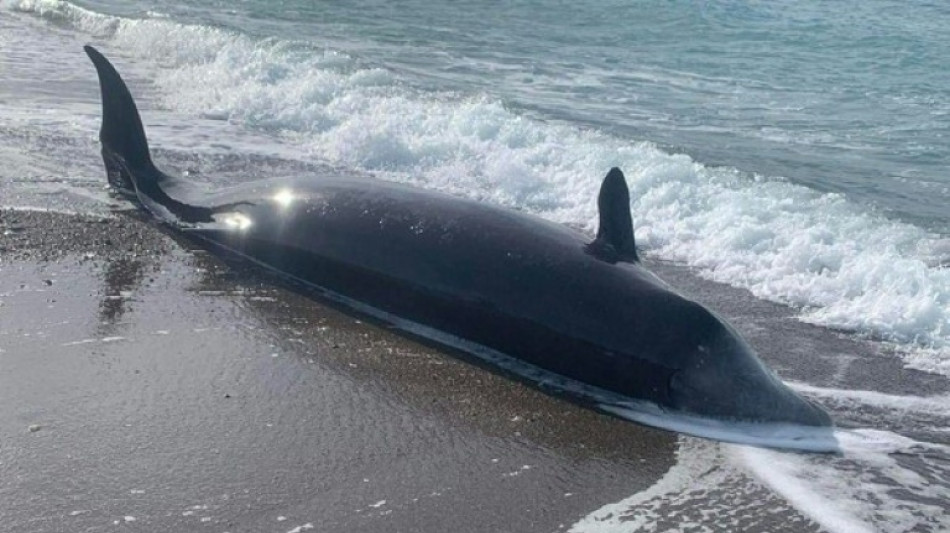
Seven whales wash up dead on Cyprus / Photo: - - PIO/AFP
 Microsoft Updates Xbox PC App with 60% Faster Startup and Redesigned Interface

 Early Polar Vortex Disruption Creates Uncertain Winter Outlook for Pennsylvania

 Pakistan Demands Grant-Based Climate Finance at COP31 to Avoid Debt Trap

 E Pellicci Pop-Up at Selfridges Brings Back Nostalgic School Cake

 Coronation Street's Debbie Webster Steps Down as Dementia Storyline Intensifies
The Cyprus government is investigating how seven whales mysteriously washed up dead on the rugged shoreline of the island's north coast, authorities said on Saturday.
There were reports another three whales from the same species had been found dead on beaches further east in the breakaway Turkish Republic of Northern Cyprus.
It is the largest number of whale deaths recorded on the eastern Mediterranean island, where whales are occasionally sighted but are by no means common.
The whales that died were all Cuvier's beaked whales (Ziphius cavirostris), famed for diving deeper and for longer than any other species of mammal.
The whales were found on several beaches along the north coast between Polis and Pachyammos.
A first whale was found dead on Thursday, along with three beached whales, which were pushed back out to sea.
Six more, which may or may not have included the three rescued on Thursday, were found dead on Friday.
"The autopsy of the Ziphius species whale was carried out to establish their causes of death after the six dead whales washed up on the northern coast of Paphos (district)," Department of Fisheries and Marine Research official Ioannis Ioannou told the state-run Cyprus News Agency.
He said experts collected samples for further specialised examination.
It is the first time that so many whales have been found dead. Two incidents were recorded in 2021 and 2022, but both involved only a single animal.
L.Davis--AMWN