World should prepare for El Nino, new record temperatures: UN / Photo: JAM STA ROSA - AFP/File
 In Zambia, a Shaolin Temple offers a softer face of China

 Messi's Inter Miami appoint new coach Gonzalez

 Clashes in Spain's Ceuta month after mass migrant influx

 Argentina names unchanged side for Australia Test

 Australia's Lee leads PGA Tour Championship

 US judge urged to rebuff restoring Trump name to Kennedy Center

 Trump orders Lake Ontario to be renamed 'Lake America'

 Raphinha, Lopez strike again as Barca beat Athletic

 Dos Santos, Russell set world records in 'crazy' Zurich Diamond League

 Dos Santos upstages Warholm for blistering new 400m hurdles world record

 US Open women's singles: Three talking points

 American Masai Russell sets new women's 100m hurdles world record

 Smith and Cox revive England after Abbas strikes for Pakistan

 Brazil's Alison Dos Santos sets new men's 400m hurdles world record

 The Nile Theater Announces Full 2026 Concert Lineup Including Menzingers and Shakey Graves

 Venezuelan Artist Oswaldo Vigas Retrospective Opens in Guangzhou

 Smith and Cox revive England against Pakistan after Abbas strikes

 Zambia opposition leader held in treason probe: police

 Corals show El Nino intensifying as planet warms: study

 Russia dismisses as 'scare stories' US reports about attacking NATO

 UEFA target Infantino for 'criminal mismanagement', suspend boycott threat

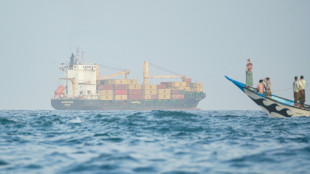 Piracy attacks off Somalia surge in 2026: AFP analysis of IMO data

 Tottenham land Marmoush from Manchester City

 YZi Labs Backs TermMax to Advance On-Chain Bond Market Infrastructure

 Nvidia boosts tech stocks but caution dominates ahead of Fed speech

The United Nations warned Wednesday of a growing likelihood the weather phenomenon El Nino will develop in coming months, fuelling higher global temperatures and possibly new heat records.
The UN's World Meteorological Organization said it now estimated there was a 60-percent chance that El Nino would develop by the end of July, and an 80-percent chance it would do so by the end of September.
"This will change the weather and climate patterns worldwide," Wilfran Moufouma Okia, head of WMO's regional climate prediction services division, told reporters in Geneva.
El Nino, which is a naturally occurring climate pattern typically associated with increased heat worldwide, as well as drought in some parts of the world and heavy rains elsewhere, last occurred in 2018-19.
Since 2020 though, the world has been hit with an exceptionally long La Nina -- El Nino's cooling opposite -- which ended earlier this year, ceding way to the current neutral conditions.
And yet, the UN has said the last eight years were the warmest ever recorded, despite La Nina's cooling effect stretching over nearly half that period.
Without that weather phenomenon, the warming situation could have been even worse.
- Global heating spikes likely -
La Nina "acted as a temporary brake on global temperature increase", WMO chief Petteri Taalas said in a statement.
Now, he said, "the world should prepare for the development of El Nino."
The expected arrival of the warming climate pattern, he said, "will most likely lead to a new spike in global heating and increase the chance of breaking temperature records".
At this stage, there is no indication of the strength or duration of the looming El Nino.
The last one was considered very weak, but the one before that, between 2014 and 2016, was considered among the strongest ever, with dire consequences.
WMO pointed out that 2016 was "the warmest year on record because of the 'double whammy' of a very powerful El Nino event and human-induced warming from greenhouse gases".
Since the El Nino effect on global temperatures usually plays out the year after it emerges, the impact will likely be most apparent in 2024, it said.
"We are expecting in the coming two years to have a serious increase in the global temperatures," Okia said.
- 'More extreme weather' -
Taalas highlighted that the expected arrival of El Nino could have some positive effects, pointing out that it "might bring respite from the drought in the Horn of Africa and other La Nina-related impacts".
But it "could also trigger more extreme weather and climate events" he said, stressing the need for effective early warning systems "to keep people safe".
No two El Nino events are the same and their effects depend, in part, on the time of year, WMO said, adding that it and national meteorological services would be closely monitoring developments.
The climate pattern occurs on average every two to seven years, and usually lasts nine to 12 months.
It is typically associated with warming ocean surface temperatures in the central and eastern tropical Pacific Ocean.
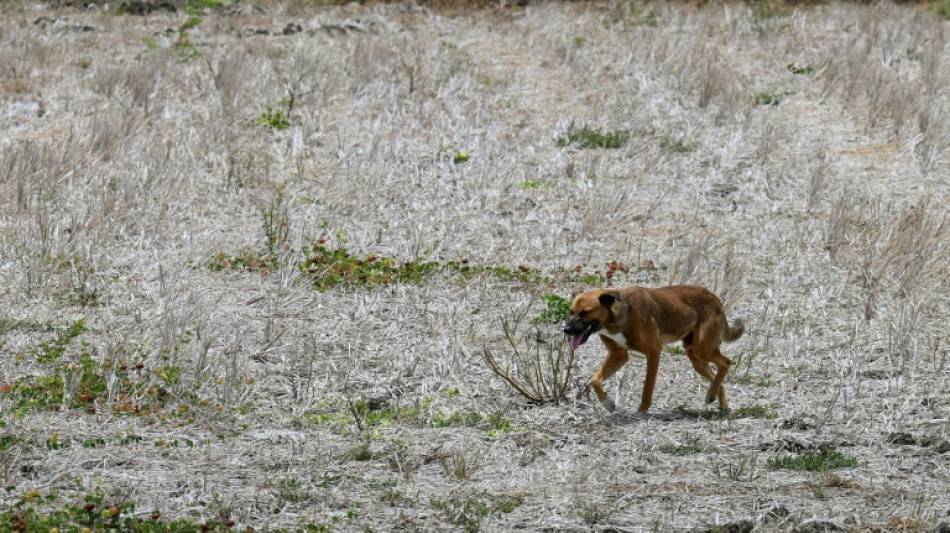
Increased rainfall is usually seen in parts of southern South America, the southern United States, the Horn of Africa and central Asia, while severe droughts can occur over Australia, Indonesia and parts of southern Asia.
During summer in the northern hemisphere, El Nino's warm water can also fuel hurricanes in the central and eastern Pacific Ocean, while hindering hurricane formations in the Atlantic Basin, WMO said.
P.Costa--AMWN