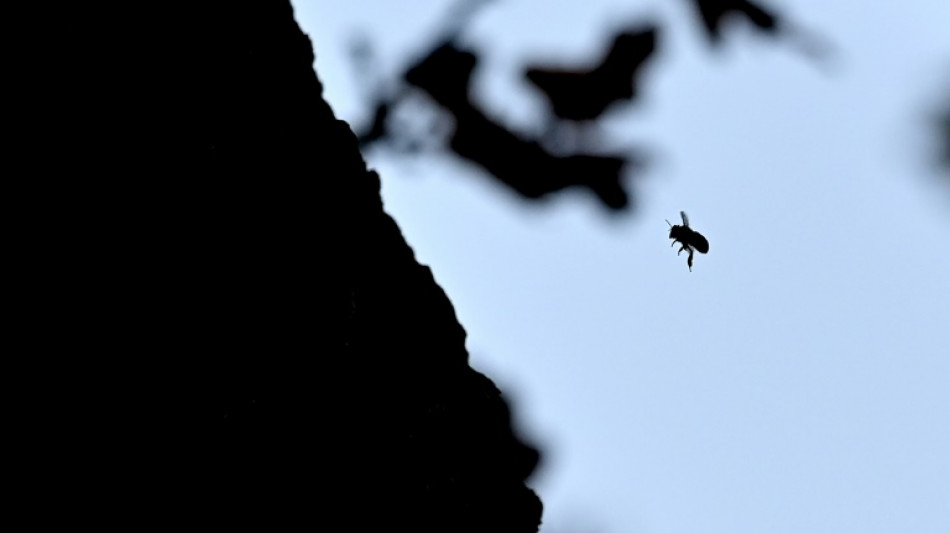
Australia gives up fight to eradicate bee-killing parasite / Photo: Ben STANSALL - AFP/File
 Taiwan lawmakers approve $7.6 bn drone budget as China threat grows

 TechCentral.ie Daily Briefing: Agentic AI Firm Doubles Headcount to 60
 KiiChain Integrates TRON to Expand 24/7 On-Chain FX and Stablecoin Payments

 Japan to survey animal cafes over hygiene, welfare concerns

 Desperate families search for missing after Nepal floods

 The missing in Nepal-Tibet flash floods

 Search for 1,300 missing after deadly Nepal-Tibet floods

 Once a top export, prized Kashmir carpet fades

 Search for 1,000 missing after deadly Nepal-Tibet floods
 Park So-yeon first woman to play for eSports powerhouse South Korea

 Yayoi Kusama: Japan's kaleidoscopic, troubled 'polka dot queen'

 Euro champ Hunt 'on her toes' against world's best in Zurich 100m
 Asian chip firms lifted by Nvidia forecast but broader markets struggle

 Search for missing after Nepal-Tibet floods kill 165

 Qantas says profits slump as fuel costs surge

 Lofty bond yields, Bessent's intervention pose challenge to Fed's Warsh

 The foreigners missing in Nepal's flash floods

 Bond yields are surging: Here's why that could spell trouble

 Fed's Cook rejects Trump mortgage fraud claims

 Guardian Metal Resources PLC Announces Pilot Mountain Technical Report Summary

 Meta, US states agree $18 bn settlement in landmark teen safety case

 What scientists know so far about Nepal's deadly floods

 US general visits Colombia to discuss war on drugs

 Meta settlement puts social media industry on notice: 'There will be more'

 NFL owners approve record Seahawks sale

Australia on Wednesday abandoned its fight to eradicate the destructive Varroa mite, an invasive parasite responsible for the collapse of honeybee populations across the planet.
Desperate to keep Varroa out of the country, authorities have destroyed more than 14,000 infected beehives since the tiny red-brown pest was first detected north of Sydney in June 2022.
The government on Wednesday conceded its US$64 million eradication plan could not stop the mite from spreading, saying the country's beekeepers should now prepare to live with the incursion.
"The recent spike in new detections have made it clear that the Varroa mite infestation is more widespread and has also been present for longer than first thought," officials said in a statement.
Australia was one of the last major beekeeping countries to successfully keep Varroa at bay.
Smaller than a peppercorn, Varroa mites attach themselves to honeybees and slowly feast on their body tissue from the outside -- eventually spreading through hives and causing colony collapse.
They are the "most serious pest of honeybees worldwide", according to the Australian government.
Australian National University ecologist Saul Cunningham said the Varroa infestation would also damage agricultural industries reliant on pollination.
"Varroa mite will cause significant economic damage in agriculture, and so it is vital that we focus on adaptation to life with Varroa," Cunningham said.
Australia's native honeybees have proven resilient to Varroa mites but do not currently play a major role in honey production or agricultural pollination.
University of Sunshine Coast researcher Volker Herzig said the "final nail in the coffin" was a government decision that allowed beekeepers to transport their hives across state boundaries to help with pollination.
Every year, some 270,000 beehives are trucked into the state of Victoria to pollinate almond orchards -- an annual pilgrimage billed as the "largest movement of livestock" in Australia.
Herzig said Australia must "now find permanent solutions for managing our beehives", which "most other countries around the world" have been doing for years.
The government's decision was "quite a shock", said native bee researcher James Dorey of Flinders University.
"The impacts of this decision will be felt for decades to come in how beekeepers manage their hives and how farmers pollinate their crops," he said.
"In particular, farmers may not be able to rely on passive pollination from feral honeybees any longer."
H.E.Young--AMWN