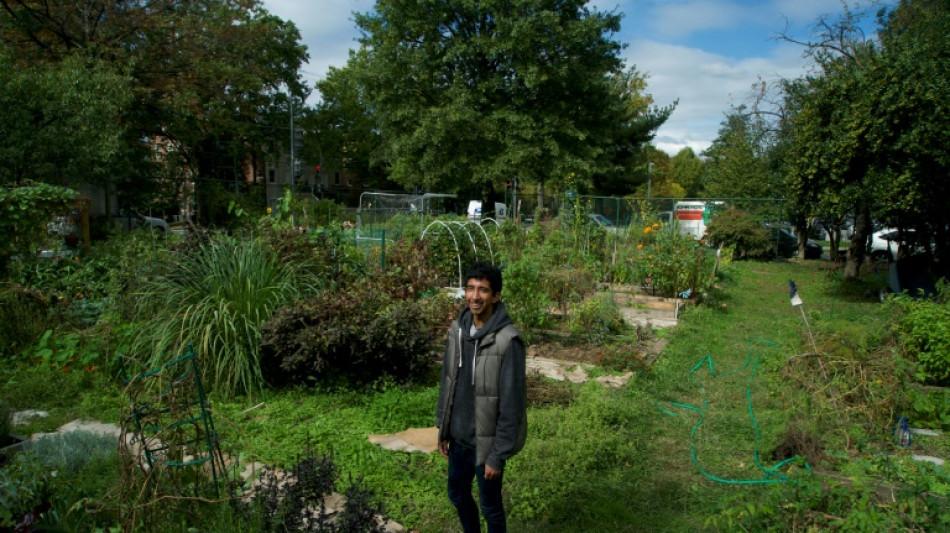
How climate conscious Americans reduce their carbon footprints / Photo: Bastien INZAURRALDE - AFP Photo
 Japan to survey animal cafes over hygiene, welfare concerns

 Desperate families search for missing after Nepal floods

 The missing in Nepal-Tibet flash floods
 Search for 1,300 missing after deadly Nepal-Tibet floods

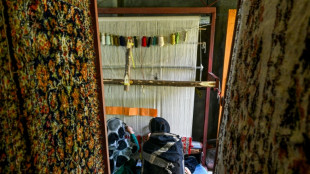 Once a top export, prized Kashmir carpet fades

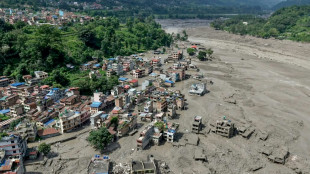 Search for 1,000 missing after deadly Nepal-Tibet floods

 Park So-yeon first woman to play for eSports powerhouse South Korea

 Yayoi Kusama: Japan's kaleidoscopic, troubled 'polka dot queen'

 Euro champ Hunt 'on her toes' against world's best in Zurich 100m
 Asian chip firms lifted by Nvidia forecast but broader markets struggle

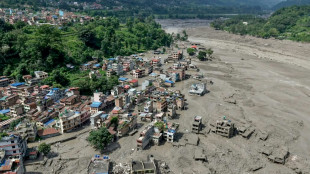 Search for missing after Nepal-Tibet floods kill 165

 Qantas says profits slump as fuel costs surge
 Lofty bond yields, Bessent's intervention pose challenge to Fed's Warsh

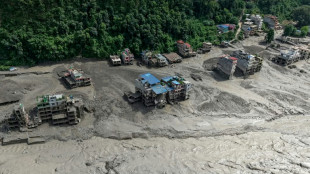 The foreigners missing in Nepal's flash floods
 Bond yields are surging: Here's why that could spell trouble
 Fed's Cook rejects Trump mortgage fraud claims

 Guardian Metal Resources PLC Announces Pilot Mountain Technical Report Summary

 Meta, US states agree $18 bn settlement in landmark teen safety case

 What scientists know so far about Nepal's deadly floods

 US general visits Colombia to discuss war on drugs

 Meta settlement puts social media industry on notice: 'There will be more'

 NFL owners approve record Seahawks sale

 Nigerian armed groups net nearly $6 mn in ransoms: study

 Savio scores on debut as Spurs advance in League Cup

 Mbappe hits treble as Real Madrid thrash Real Sociedad

Bala Sivaraman drives an electric car around the US capital Washington, buys used clothes and furniture and cooks his vegan meals on an induction stove he bought after parting ways with his gas oven.
Sim Bilal relies exclusively on public transit -- no easy feat in car-centric Los Angeles -- uses refurbished tech and lives in an apartment with solar panels.
As world leaders prepare to meet for crunch COP28 climate talks in the United Arab Emirates next month, some environmentally-conscious Americans are demonstrating it's possible to rein in their carbon emissions, aligning their actions with their values in a country where such lifestyle choices are rare.
"When we are inundated with a lot of climate doomsday news, it can be really difficult to feel we have something to ground us," Sivaraman told AFP.
"What is so powerful about living a sustainable life or committing ourselves to zero waste living practices is that it gives us that sense of hope, because it reclaims our power."
Living on opposite ends of the country, both young men work as environmental activists and have carbon footprints of three to four tons per year, according to self-reported estimates generated by carbonfootprint.com.
That's well below the average Americans' annual footprint of around 15 tons, which is roughly three times the global average.
On a brisk autumn day, Sivaraman brings his compost to a local community garden, unlocks a sorting bin, and begins placing leftover vegan hotdogs, paper plates and other biodegradables inside.
"This was from a party at my friend's animal refuge the other day," the 28-year-old, who works in communications for the nonprofit Earthjustice, says, covering the pile with the dry brown waste to aid in the decomposition process.
After six months, the nutrient-rich soil is used in the neighboring plots to help tomatoes, cilantro and other vegetables grow.
"Composting diverts organic waste out of landfills," he explains, and because it decomposes in the presence of oxygen, it produces far less climate-impacting methane. It also helps foster a sense of common purpose and community, he adds.
- Thrifting and skating -
Bilal, 21, got his first taste of direct action last year after disrupting the LA mayoral debates, making local news as he led demands for candidates to release their climate action plans.
"This is the number one problem for my generation," he told AFP. He now organizes for the California Green New Deal coalition and Youth Climate strike in Los Angeles.
Though getting a driver's license is a rite of passage for US teens, Bilal decided when he turned 16 the climate cost was too great to bear.
When he's not riding the LA Metro or taking intercity trains, he can be found on his One Wheel: a self-balancing electric skateboard he finds essential for the last mile in a city where public transport can be lacking.
The clothes he's wearing during a video interview are four years old and his iPad is a five-year-old model that he recently had repaired after cracking its screen, instead of buying a new one -- measures that embody his philosophy of buying less, and buying to last.
"It is hard because some things look really cool -- maybe you want to jump on a trend, but for me it's not worth the cost," he adds.
Sivaraman -- who also participates in direct action with the Sunrise Movement and was arrested for the first time in September at the Federal Reserve building in New York -- said his health and wellbeing had only improved since he made more climate-aware choices.
The idea that weaning off fossil fuels would cause people to have "miserable, sad lives" is a "very effective PR tactic" pushed by the industry, he said.
"Across the board -- health, emotional happiness, financially... There's so many benefits to living a zero waste, sustainable life, and I'm living proof that's the case."
F.Bennett--AMWN