-
 Starc bags 10 as Australia thrash Bangladesh in second Test
-
Thousands expected at Sweden climate demo as election looms
-
 Starc heroics see Australia thrash Bangladesh in second Test
-
Starc heroics put Australia on brink of victory over Bangladesh

-
 Pegula dethrones Swiatek to book Cincy final against Gauff
-
Austrian mountain town finds niche in AI boom

-
 South Korean survivor fights for workplace harassment 'justice'
-
Messi scores but Miami slump continues with loss to Toronto

-
 Starc strikes as Bangladesh struggle to stay alive in 2nd Test
-
Sydney marathon unveils medal with wrong stadium

-
 Prince Harry: royal misfit making unlikely UK return
-
Macron hosts Saudi's MBS for visit ranging from esports to Mideast

-
 Blowing in the wind, humble balloon gets green makeover
-
Australia in control with 146-run first innings lead over Bangladesh

-
 Pegula dethrones Swiatek to reach Cincinnati final
-
World No. 3 Pegula beats defending champ Swiatek to reach Cincy final

-
 IndyCars zip among iconic Washington landmarks ahead of Freedom 250
-
Wyndham Clark surges clear at BMW Championship

-
 Real Madrid snatch late win at Espanyol on Mourinho's return
-
Maresca says Man City must fill Rodri void after Barca switch

-
 Real Madrid beat Espanyol in Mourinho's first game on return
-
Canada retaliates as trade war with US escalates
-
 Olise helps Bayern past Dortmund in German Supercup
-
Fils dominates Cobolli to book Cincinnati final

-
 Coach Rennie hails clinical All Blacks after Springboks Test win
-
Spurs lacked fight in dismal defeat at Brentford says De Zerbi

-
 Charlton deliver blow to 'under pressure' Hammers boss Nuno
-
Inter thrash Monza to launch Serie A title defence

-
 Carrick keeps calm despite Man Utd misery, big-spending Spurs crushed
-
Shambolic Spurs battered by Brentford

-
 Canada's Carney stands up to Trump, despite risks
-
Pogacar wins Vuelta a Espana opening stage

-
 Lens hammer Auxerre thanks to Thauvin penalty double
-
Clinical New Zealand shock wasteful South Africa in first Test

-
 No singles for Serena, but she joins Alcaraz for US Open
-
Canada hits back with new tariffs after trade talks with US fail
-
 Joao Pedro extends Chelsea stay with new long-term deal
-
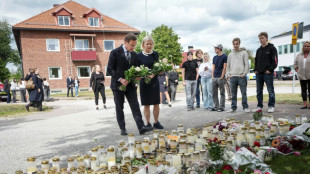
Swedish police identify 17-year-old girl as victim in school sword attack
-
 Yamaguchi to face An in hunt for fourth badminton world crown
-
Carrick keeps calm despite Man Utd misery, Sage beaten in first game as Palace boss

-
 Norris clinches pole for Dutch GP
-
France to deliver interceptor missiles to Ukraine after new Russian strikes

-
 Norris clinches pole for Dutch Grand Prix
-
Serena Williams and Alcaraz unite in US Open mixed doubles

-
 Pope Leo calls for courage in Rimini visit after stop in tiny San Marino
-
Macron pledges air defence as 13 killed in Russia, Ukraine strikes
-
 Man Utd must learn from 'frustrating' defeat at Hull: Carrick
-
DR Congo capital wary of Ebola nightmare

-
 Yamaguchi on course for fourth badminton world crown
-
Swedish police name 17-year-old girl as victim in school sword attack
'Now or never' to avoid climate catastrophe, warns UN
Humanity has less than three years to halt the rise of planet-warming carbon emissions and less than a decade to slash them almost in half, the UN said Monday in a landmark report on stopping global warming and ensuring a "liveable future".
That daunting task is still -- and only just -- possible, but current policies are leading the planet towards catastrophic temperature rises, the UN's Intergovernmental Panel on Climate Change (IPCC) made clear.
The world's nations, they said, are taking our future right to the wire.
The 2,800-page report -- by far the most comprehensive assessment of how to halt global heating ever produced -- documents to "a litany of broken climate promises", said UN chief Antonio Guterres in a blistering judgement of governments and industry.
"Some government and business leaders are saying one thing -- but doing another. Simply put, they are lying. And the results will be catastrophic," Guterres said in a video message released at the same time as the UN report.
In recent months, the IPCC has published the first two instalments in a trilogy of mammoth scientific assessments covering how greenhouse gas emissions are heating the planet and what that means for life on Earth.
This third report outlines what we can do about it.
"We are at a crossroads," said IPCC chief Hoesung Lee. "The decisions we make now can secure a liveable future. We have the tools and know-how required to limit warming."
There are solutions, the report says, but they touch on virtually all aspects of modern life and require significant investment and need "immediate action".
The very first item on the global to-do list is to stop greenhouse gas emissions from rising any further.
That must be done before 2025 to have a hope of keeping within even the less ambitious warming targets of the Paris deal of two degrees Celsius above preindustrial levels.
Scenarios of catastrophic 2.5C of warming also have emissions peaking within three years.
Beyond that, the report said carbon emissions need to drop 43 percent by 2030 and 84 percent by mid-century to meet the more ambitious Paris goal of 1.5C.
"It's now or never, if we want to limit global warming to 1.5C," said Jim Skea, a professor at Imperial College London and co-chair of the working group behind the report.
"Without immediate and deep emissions reductions across all sectors, it will be impossible."
And cutting emissions is no longer enough, the IPCC said. Technologies to suck CO2 out of the atmosphere -- not yet operating to scale -- will need to be ramped up enormously.
- Fossil fuels -
The 1.5C target is presently "beyond reach", even with the most updated global climate pledges, the IPCC said.
To get there the world must radically reduce the fossil fuels behind the lion's share of emissions.
Nations should stop burning coal completely and slash oil and gas use by 60 and 70 percent respectively to keep within the Paris goals, the IPCC said.
It warned that current fossil fuel infrastructure, if used to the end of its expected lifetime without capturing carbon emissions, would make it impossible to limit global warming to 1.5 degrees Celsius above preindustrial levels, the IPCC said.
While government policies, investments and regulations will propel emissions cuts, the IPCC made clear that individuals can also make a big difference.
Cutting back on long-haul flights, switching to plant-based diets, climate-proofing buildings and other ways of cutting the consumption that drives energy demand could reduce greenhouse gas emissions 40 to 70 percent by 2050.
"Rapid and deep changes in demand make it easier for every sector to reduce greenhouse gas emissions," including construction, food consumption and transport, the report said.
With war in Ukraine spurring urgent efforts to transition away from Russian oil and gas in the West, observers said the report should sharpen nations' focus on climate commitments.
H.E.Young--AMWN