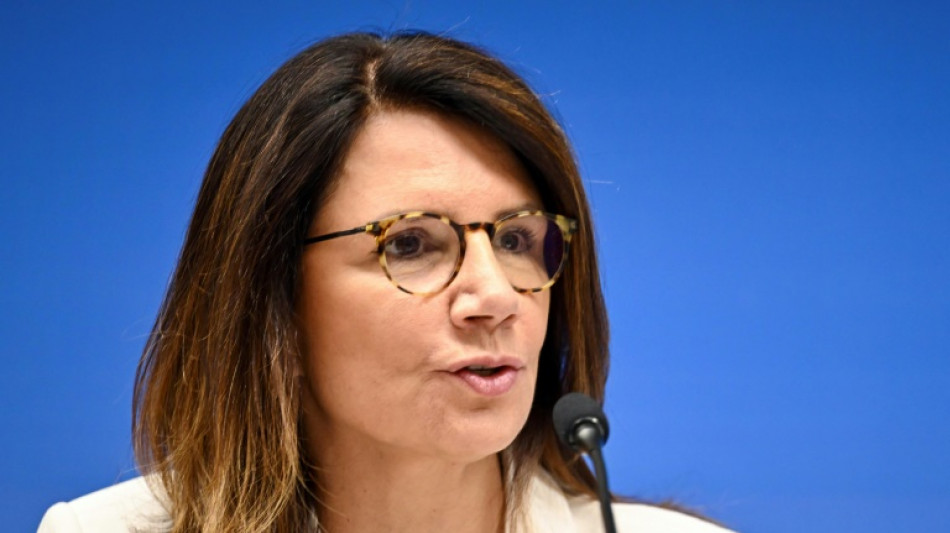
Don't make 'disappointing' retreat on climate, COP30 CEO urges EU / Photo: EVARISTO SA - AFP
 One million Afghan children suffer 'life-threatening' malnutrition: UN

 Sri Lanka trail India by 238 runs in second Test
 West Bank settlers attack AFP journalists
 MEXC Kicks Off MOVE Carnival With 0-Fee Trading and 1M USDT in Rewards
 Human rights in Myanmar hitting a 'new low': UN
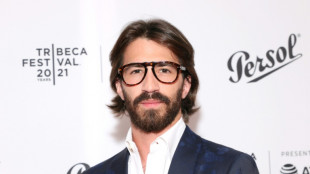 Son of Luxottica founder quits after succession row

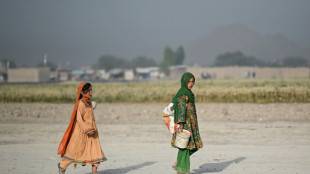 One million Afghan children suffering 'life-threatening' malnutrition: UN
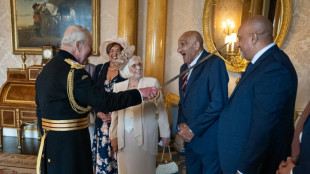
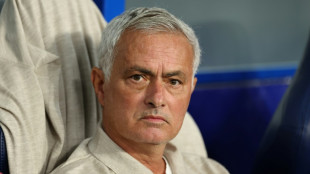 Real Madrid's Mourinho happy with squad despite losing out on Rodri
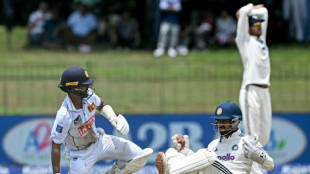 Sri Lanka slump to 216-7 at tea in second India Test
 US delays Lockerbie bombing trial over new evidence

 Rohingya refugees protest dire conditions in Bangladesh camps
 Lego net profit up 32% in first half, 'stronger than expected': CEO to AFP
 German GDP growth revised upwards, defying Iran war turmoil
 STARTRADER Adds 30 U.S. Stock and ETF CFDs as 2026 Product Expansion Accelerates

 Trees 'giving up': climnate change hammers historic English gardens
 Namibia paves way for phosphate mining in the Atlantic Ocean
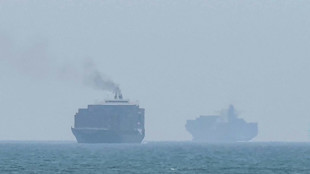 Six months into Iran war, Hormuz traffic way down, sailors stranded
 Netanyahu got his Iran war, but maybe not his desired result

 Hyundai reaches tentative deal with workers after strikes
 Once its saviour, US puts Kuwait in Iran's crosshairs
 Australia's top music charts ban AI songs
 Four Nines Gold Intersects Hydrothermal Breccia in First Three Holes at Hayden Hill
 Dermata Therapeutics Announces Commercial Launch of Tome Foundational Treatment

 SMX's Plastic Cycle Token is the Most Effective Tool in Times of War

 Lavish Enterprises Introduces FleetPath Ace, an Autonomous Operator Built to Transform How Trucking Companies Operate

Europe is "absolutely vital" to the fight against global warming and its leadership must not waver as climate ambition backslides elsewhere, the CEO of November's COP30 summit in Brazil told AFP.
In an interview in Paris, Ana Toni urged the European Union to unite around a strong emissions reduction target as the 27-nation bloc squabbles over its level of climate ambition.
The European Commission has proposed cutting emissions by 90 percent by 2040 compared to 1990 levels but some member states argue the figure is too high, delaying its approval.
Brussels is pushing to revamp its economic and defence competitiveness in the aftermath of Donald Trump's election, and climate advocates fear the EU's green goals could suffer as priorities are realigned.
The debate is being closely watched as countries finalise their own climate plans, known as nationally determined contributions (NDCs), which are supposed to be submitted to the UN before the COP30 conference in the Amazonian city of Belem.
A: "The EU needs to lead. We really need the EU to lead. If they can't, we shouldn't then be disappointed that other developing countries -- major countries like India, China -- will also be rethinking how ambitious they need to be."
A: "I obviously understand the pressure. We feel the same pressure, the political pressure at home. If you were to ask (Brazilian) President Lula (Luiz Inacio Lula da Silva) when he decided to agree on a NDC that is decarbonising by 67 percent, there's no lack of pressure also from the different economic sectors that we have in Brazil."
Q:
A: "Yes, Brazil could sell a lot of carbon credits. Brazil is obviously well positioned because of our energy sector, because of reforestation, to sell carbon credit with integrity to any market."
A: "It's really sad that the federal government from the US decided to withdraw again... But we should remember that the US is not just the federal government. You have the private sector in the US, you have the national governments. They say that around 60 percent of the laws related to climate is in the hands of state governors, not of the federal government.
"Climate needs stability. You need planning. I think we need to all rethink what we call a country being a risky country, because most of the time everybody thought of the US as a very stable, low risk country. And some countries in the South were (considered) very high risk."
Q:
A: "I don't think China first wants to take the place because China believes on collective leadership. I think that idea of individual countries' leadership is something that's very Western, that everybody's looking for a saviour, like the leader.
"I don't think that's the Chinese culture or Brazilian culture. We like collective leadership. And yes, we can see that the Southern countries are playing a collective leadership role.
"That's why again, coming back to Europe, it is fundamental that Europe, together with Brazil, China, South Africa, India and other countries can play that collective leadership role."
A: "No type of wars is good for climate. They are anti-ecologic, any type of war -- be it military wars or trade wars. Trade can play a positive role in the decarbonisation process if we are trading low carbon goods, if we are helping each other to achieve our goals. So that's a very important message. We need to keep free trade, organise free trade, of low carbon technologies."
Y.Aukaiv--AMWN