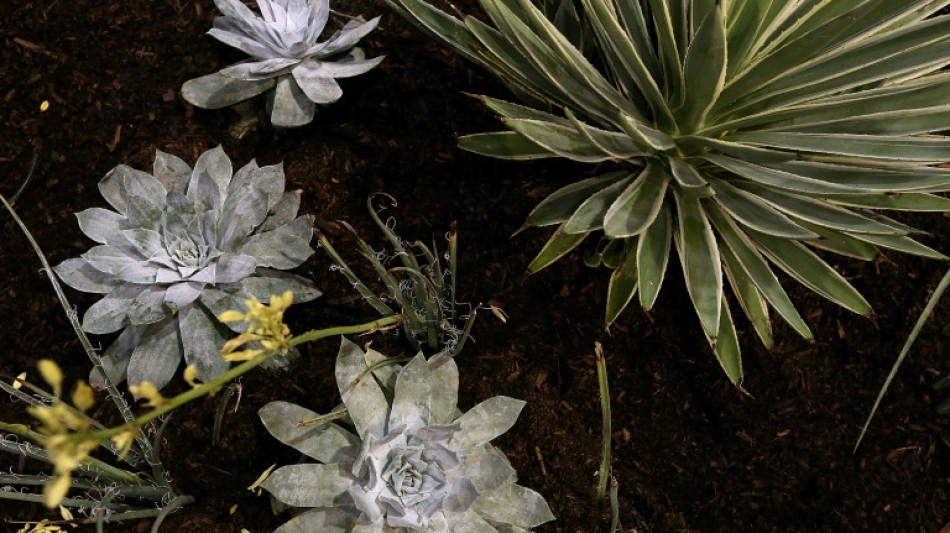
Climate, collectors blamed for S.Africa's succulents decline / Photo: JUSTIN SULLIVAN - GETTY IMAGES NORTH AMERICA/AFP/File
 November Foraging Guide: Edible Mushrooms and Critical Safety Protocols

 Microsoft Updates Xbox PC App with 60% Faster Startup and Redesigned Interface

 Early Polar Vortex Disruption Creates Uncertain Winter Outlook for Pennsylvania

 Edmund Richardson Wins Baillie Gifford Prize for 'Alexander' Biography

 BYD Drops Rotating Screens in New Models Due to Tech Limits

 Ryanair Flight from Rome Makes Emergency Landing in Lisbon After Bomb Threat

Climate change and collectors of rare plants are decimating succulents in South Africa, government researchers said Wednesday, warning hundreds of these rugged species are at risk of extinction.
Succulents growing in the country's semi-arid regions are experiencing unprecedented rates of decline following a rapid rise in global demand for collectable plants driven by Asia, according to the South African National Biodiversity Institute (SANBI), a government research body.
"Over the past three years plant material confiscated from plant traffickers by law enforcement agencies has increased annually by over 250 percent," the institute said in a statement.
SANBI said more than 200 succulents -- typically thick, fleshy plants that retain water to survive dry weather conditions -- have been added to an International Union for Conservation of Nature (IUCN) Red List of threatened species, which was updated last week.
Unique species growing in the Succulent Karoo -- a region shared between South Africa and Namibia which includes some of the world's most biodiverse desert and semi-desert areas -- are particularly sought after, it said.
The plants are often sold on social media, it added.
"People buying these plants, most of them don't realize that they're breaking the law," said Craig Hilton-Taylor, who heads the IUCN's Red List unit.
"They're completely ignorant or naive about illegal plant trade... they just think, 'Oh, that's a nice thing to buy for my house or my garden'," he said.
Global warming is also contributing to the decline, the institute said.
The region has suffered from a prolonged, severe drought over the past decade.
This has taken a toll on many species in the region, including the critically endangered giant quiver tree. Its population is set to decline 90 percent by 2080, SANBI said.
"A combination of illegal collection, long-term droughts related to climate change, and ongoing land degradation as a result of livestock overgrazing and mining are creating a devastating storm causing unprecedented loss of biodiversity in the world's richest desert ecosystem," it said.
T.Ward--AMWN