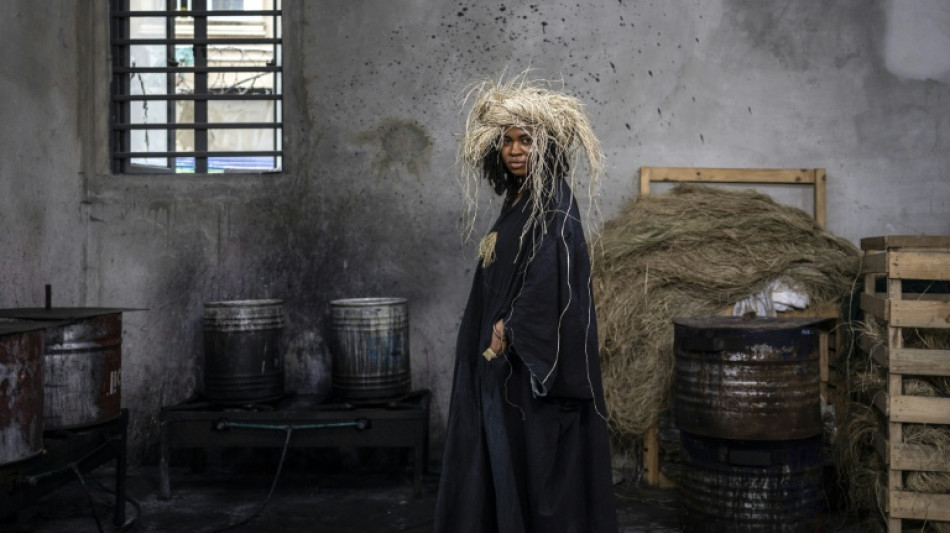
Local fabrics, fibres shine at eco-centred Lagos Fashion Week / Photo: OLYMPIA DE MAISMONT - AFP
 Man City snatch late win in Maresca debut, Iraola's Liverpool rescue dramatic draw

 Trump takes starring role at Washington's IndyCar debut

 Villa boss Emery says it's down to Watkins to explain absence

 Duplantis labours to 'super difficult' pole vault win at Silesia Diamond League

 Max smash at zany Zandvoort: Three stories from the Dutch GP

 Brennan sprints to Vuelta stage two victory, Pogacar keeps red

 Duplantis conquers pole vault at Silesia Diamond League

 France's badminton gold winners set for obscurity back home

 Brighton start Premier League season with rout of 10-man Villa

 Maresca makes winning start with Man City after dramatic fightback

 Mo'unga returns for All Blacks against Johannesburg Lions

 Belgian sprinter Philipsen wins Renewi Tour

 'A day for French badminton' as Lanier triumph gives them golden double at world champs

 Kane voted German footballer of the year

 'New season, new trim': Man City star Haaland chops off flowing locks

 Lanier clinches badminton world title in France's golden double

 After Wildberries, Ukraine launches drone campaign on Russia's Ozon

 Padikkal, Gill half-centuries take India to 187-3 at tea

 Cummins hails 'sharp' Australia as they get back to winning ways
 Bangladesh eye more Australia Tests to hit next level

 Thousands expected at Sweden climate demo as election looms

 Starc heroics put Australia on brink of victory over Bangladesh

 Austrian mountain town finds niche in AI boom

 Messi scores but Miami slump continues with loss to Toronto

 Sydney marathon unveils medal with wrong stadium

Four days ahead of her show at Lagos Fashion Week, the sewing machines at Abasiekeme Ukanireh's workshop were still buzzing.
Ukanireh, the founder of the popular Nigerian brand Eki Kere, met with models and tailors for the final preparations ahead of one of Africa's biggest fashion events, which ran through Sunday.
On the agenda: local materials, upcycling and African craftsmanship.
"Every single year for a brand, for me, as a designer, I always try to take it a step further in terms of being sustainable," Ukanireh, 35, told AFP.
Sustainability -- long both a bugbear and a buzzword in the fashion industry -- was a key feature of this year's Lagos Fashion Week, with designers from across the continent tapping into everything from traditional fabrics to banana fibre and coffee grounds.
Launched in 2020, Ukanireh's brand is known for its use of raffia, a grassy fibre from palm trees used in everything from thatched roofs to trendy bags.
This year, she played up the use of indigo and dyes made from kola nuts -- though she hadn't forgotten her raffia roots.
During her show Sunday, dozens of models walked the runway wearing outfits inspired by traditional wedding ceremonies in Ikot Ekpene, a historic town popularly known as "Raffia City" in southern Akwa Ibom state, where Ukanireh hails from.
The traditional wedding lace was swapped for cardboard, linen and raffia -- which is 100 percent biodegradable and compostable.
- Training the next generation -
In 2018, the Lagos Fashion Week founder Omoyeni Akerele and her team launched Green Access, an incubator programme that identifies, trains and supports young African designers.
"Even though sustainability is at the core of their design practice, it is to encourage them to even be more sustainable by rethinking their choices at every stage of the creative process, and understanding that it begins with materials," Akerele said.
Lagos Fashion Week also hosts what it calls "Swapshop" events, which allow people to exchange clothes they no longer wear for new ones.
"We all have clothes at home that we no longer wear," said 43-year-old businesswoman Danielle Chukwuma, who has attended several editions of the show.
"It's great to be able to swap them with people as stylish as those attending this kind of event."
- Designers versus consumerism -
Apart from Nigerian brands, Chukwuma has also discovered other African talents, including the Indian-Kenyan designer Ria Ana Sejpa of the brand LilaBare.
This year was Sejpa's third appearance at Lagos Fashion Week.
"Lagos is the fashion capital of Africa," she told AFP. "Fashion is a part of the culture here. People take pride in the way they dress, they love to stand out, and they aren't afraid to be fearless or glamorous."
The 34-year-old designer is known for making clothes from pineapple fibre, banana fibre and coffee grounds.
"It is essential to take into consideration your ecosystem, the strengths of the environment and the people around you, and to make conscious decisions at every step of the fashion creation process," Sejpa said.
31-year-old Florentina Hertunba, who is making waves with her brand Hertunba, shared the same view.
She said she incorporates traditional Nigerian fabrics such as aso oke and akwete as well as other locally available materials into her designs and uses biodegradable packaging to cut down waste.
"This piece is recycled," the young designer explained, pointing to a patterned black dress in her Lagos studio. "An old fabric was transformed into sewing thread and then reused to create it."
But for her, sustainability is only sustainable if consumers join the movement.
"One of the greatest dangers is this culture of overconsumption, where we constantly buy new clothes for every occasion," she told AFP. "Sustainable fashion is making progress, but overconsumption is too."
X.Karnes--AMWN