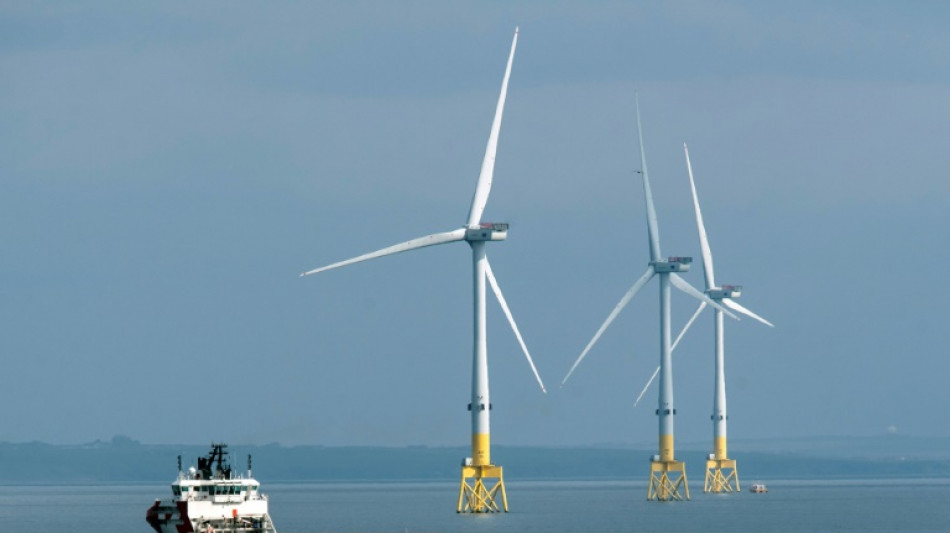
Wind and water: undersea drone readies to aid offshore boom / Photo: Andy Buchanan - AFP
 Lanier clinches badminton world title in France's golden double

 After Wildberries, Ukraine launches drone campaign on Russia's Ozon

 Padikkal, Gill half-centuries take India to 187-3 at tea

 Cummins hails 'sharp' Australia as they get back to winning ways

 Bangladesh eye more Australia Tests to hit next level

 Thousands expected at Sweden climate demo as election looms

 Starc heroics put Australia on brink of victory over Bangladesh

 Austrian mountain town finds niche in AI boom

 Messi scores but Miami slump continues with loss to Toronto

 Sydney marathon unveils medal with wrong stadium

 Macron hosts Saudi's MBS for visit ranging from esports to Mideast
 Australia in control with 146-run first innings lead over Bangladesh

 World No. 3 Pegula beats defending champ Swiatek to reach Cincy final

 Wyndham Clark surges clear at BMW Championship

 Maresca says Man City must fill Rodri void after Barca switch

 Canada retaliates as trade war with US escalates

 Fils dominates Cobolli to book Cincinnati final

 Spurs lacked fight in dismal defeat at Brentford says De Zerbi

 Inter thrash Monza to launch Serie A title defence

 Shambolic Spurs battered by Brentford

 Pogacar wins Vuelta a Espana opening stage

 Clinical New Zealand shock wasteful South Africa in first Test

 Canada hits back with new tariffs after trade talks with US fail

 Swedish police identify 17-year-old girl as victim in school sword attack

 Carrick keeps calm despite Man Utd misery, Sage beaten in first game as Palace boss

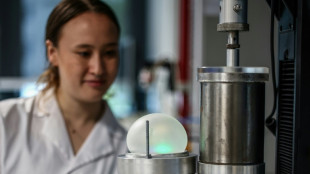
In a wave tank at a robot laboratory in the Scottish capital Edinburgh, engineers observe in silence as an underwater drone rises stealthily to the surface.
The team, which led the development of the remotely operated vehicle (ROV) at Heriot-Watt university, believe the submersible machine is a game-changer for offshore wind farms, obviating the need for divers.
The engineers reckon it will soon be ready to perform inspections and maintenance at wind farms, transforming the nature of the high-risk and costly endeavours just as the industry is set for huge expansion.
British Prime Minister Boris Johnson has promised to make the UK the "Saudi Arabia" of wind power, with plans to generate enough electricity from offshore to power every UK home by 2030.
While Johnson is on his way out of office, the industry is banking on the expansion plans, especially after Russia's invasion of Ukraine sent the price of traditional carbon energy through the roof.
"We have to imagine that in 10, 15 years time there will be hundreds of wind farms, which means thousands of wind turbines all across the coast of the UK," Yvan Petillot, a robotics and autonomous systems professor at Heriot-Watt, told AFP.
"You also have hydrogen technology being developed and all of this will need to be maintained, inspected and serviced.
"What we are developing is remote technologies where people can inspect and maintain those assets from shore, without putting anyone in harm's way."
- Accumulation of micro-organisms -
In May the ROV, which is equipped with sensors and advanced software, conducted what is believed to be the first ever autonomous offshore wind farm inspection.
The device was deployed at French energy firm EDF's Blyth wind farm, off the coast of Northumberland, northeast England.
It successfully recorded videos that allowed researchers to assess the exterior condition of turbine foundations and cables.
Meanwhile its software created a 3D reconstruction model of parts of the energy company's underwater assets.
Petillot said the 3D model can pick up the accumulation of micro-organisms, plants and algae on the turbine foundations.
If a problem is detected, the ROV system can be deployed with a robotic arm to conduct a repair.
"The system will first do an autonomous inspection of the seabed and the structure, and build the 3D model that someone from shore can look at and say, 'there's a problem here'," Petillot said.
"Typically you would have corrosion on the system, you might have to turn a valve, you might have to connect a cable, you might have to change an anode and clean the surface if there is too much bio-fouling."
Maxime Duchet, an offshore wind research engineer at EDF, said the images and modelling will greatly enhance the ability to conduct operations and maintenance activities on-site.
- 'Safer and faster' -
Further tests are needed to estimate the time required to inspect all of the turbine foundations and to demonstrate the full potential of marine robotic technology, he noted.
"However, it is clear from these initial results that the technology can ensure safer and faster operations and a reduced carbon footprint," Duchet added.
Engineers, who use a joystick to pilot the vehicle, say the ROV can be left alone to perform its primary mapping task for most of the time.
If it becomes stuck, or lingers too long in a particular area, a pilot can commandeer it.
Petillot said a long-term benefit could be allowing more people to join the team managing the ROV remotely, who might not have been willing or able to work offshore.
It is incredibly difficult to find a diver or a qualified pilot for such projects, he noted.
In contrast, finding somebody to help control the system as though they were playing a video game should prove far easier, according to Petillot.
O.Karlsson--AMWN