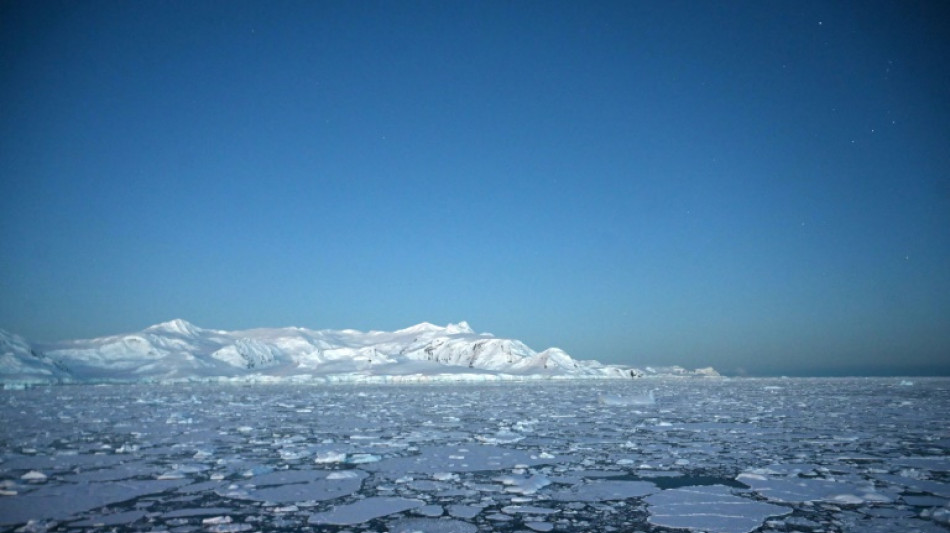
Lowest July Antarctic sea ice on record: monitor / Photo: Johan ORDONEZ - AFP/File
 November Foraging Guide: Edible Mushrooms and Critical Safety Protocols

 Microsoft Updates Xbox PC App with 60% Faster Startup and Redesigned Interface

 Early Polar Vortex Disruption Creates Uncertain Winter Outlook for Pennsylvania

 Edmund Richardson Wins Baillie Gifford Prize for 'Alexander' Biography

 BYD Drops Rotating Screens in New Models Due to Tech Limits

 Ryanair Flight from Rome Makes Emergency Landing in Lisbon After Bomb Threat

Last month saw the lowest extent of Antarctic sea ice on record for July, according to the European Union's satellite monitoring group.
The Copernicus Climate Change Service (C3S) found Antarctic sea ice extent reached 1.53 million square kilometres (590,000 square miles) -- some 1.1 million km2, or seven percent, below the 1991-2020 average for July.
This was the lowest ice cover for July since satellite records began 44 years ago, and followed record low Antarctic sea ice levels for June too.
C3S said the low ice values continued a string of below-average monthly extents observed since February 2022.
The service said in its monthly bulletin the Southern Ocean saw "widespread areas of below-average sea ice concentration" last month.
Arctic sea ice cover meanwhile was four percent lower than average, making it the 12th lowest July sea ice extent on record.
In a month that saw temperature records broken across parts of northern Europe and Britain, C3S said July was drier than average for much of the continent, noting a number of low-precipitation records in several locations.
"These conditions affected the economy locally and facilitated the spread and intensification of wildfires," it said.
C3S said July was also abnormally dry across much of North America, South America, Central Asia and Australia.
Climate change makes extreme heat and drought more likely to occur.
"We can expect to continue seeing more frequent and longer periods of extremely high temperatures, as global temperatures increase further," said senior C3S scientist Freja Vamborg.
The service said last month was however wetter than usual in eastern Russia, northern China and in a large wet band spanning from eastern Africa across Asia to northwest India.
M.Fischer--AMWN