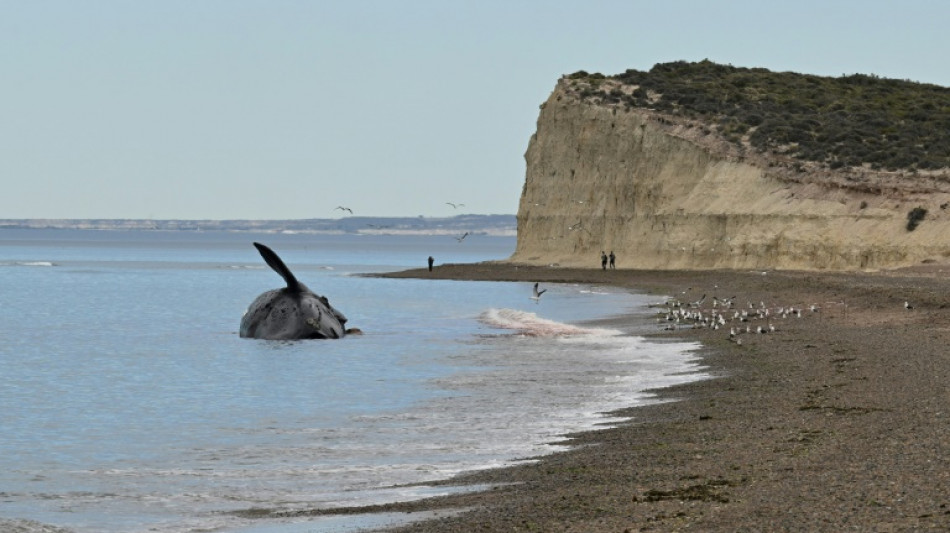
Argentine scientists worried after spate of whale deaths / Photo: Pablo PORCIUNCULA - AFP
 Microsoft Updates Xbox PC App with 60% Faster Startup and Redesigned Interface

 Early Polar Vortex Disruption Creates Uncertain Winter Outlook for Pennsylvania

 Pakistan Demands Grant-Based Climate Finance at COP31 to Avoid Debt Trap

 E Pellicci Pop-Up at Selfridges Brings Back Nostalgic School Cake

 Coronation Street's Debbie Webster Steps Down as Dementia Storyline Intensifies
A string of whale deaths in recent days in southern Argentina have worried scientists, who think a micro-algae could be to blame.
From September 24 to October 2, at least 13 southern right whales died in the Nuevo Gulf close to the Valdes Peninsula in Argentine Patagonia, an area that is a sanctuary and breeding ground for the huge mammals, the Whale Conservation Institute (ICB) said.
Authorities have started performing autopsies on the whales that have been recovered and have begun testing the water and mollusks "to determine the presence of possible biotoxins linked to the proliferation of harmful algal blooms known as red tides," said whale program coordinator Agustina Donini in an ICB statement released Monday.
None of the whales observed so far have displayed any signs of injuries or trauma, and all were well-fed, the ICB said.
The deaths come at a time when authorities have been celebrating a 50-year-high number of cetaceans for the season in an area that attracts whale watching tourists.
The large number of dead whales in such a short space of time suggests that "a local environmental variable" is to blame, said Marcella Uhart, another whale program director
Algal blooms produce natural toxins that can be harmful to other organisms living in the water.
Their pigment can make the surface of the water look red, giving the phenomenon the name "red tide."
Fabian Gandon, mayor of the nearby town of Puerto Piramides, told reporters there had been "an unusual increase in... red tides" in the Nuevo and San Jose gulfs.
The local population has been advised to avoid eating mollusks, which can store the toxins created by the algal blooms.
Despite the recent deaths, authorities have recorded more than 1,400 whales in the Nuevo and San Jose gulfs, the largest number in more than 50 years.
M.A.Colin--AMWN