Germany to start lifting Covid curbs as Omicron passes peak
 Watchdog finds no criminal misconduct over US Fed renovations despite Trump probe

 In Manchester, City fans 'devastated' while rival fans call for relegation

 UK-France Channel migrant exchange deal scrapped: London

 Portugal boss denies 'incident' with Ronaldo

 Israel PM says one of the pilots of rerouted flight tried to crash plane

 Manchester City: Main points of damning judgement and possible sanctions

 Italy looking for 'identity' under Mancini says Scalvini

 The voices of Spain's housing camp protesters

 Romanian parliament rejects pro-EU PM candidate

 Court halts Tennessee's first execution of woman in 200 years

 Israelis march between once-closed West Bank settlements
 'Welcome back,' says Macron, as UK PM opens door to EU return
 Israel PM says pilot of rerouted flight tried to crash plane
 Demuro hopes to deliver Japan a 'magical' Arc victory

 'Devastated' AI scandal author Orelien returns to Quebec

 US reports firm Q2 economic growth, inflation steady

 Energy costs spark inflation surge across Europe

 Parma appoint Italy World Cup winner Gilardino

 West Indies pile up record 405-7 in second ODI against India

 Romanian parliament rejects pro-EU PM candidate amid political deadlock

 Passenger on rerouted flydubai flight says pilot tried to crash plane

 Russia targets Kyiv power supply as freezing winter approaches

 Haze pushes Kuala Lumpur, Singapore into world's most polluted cities
 Dangote's $16bn Kenya refinery 'new chapter' for Africa

 Ireland coach Hallgrimsson confirms second Israel game will go ahead

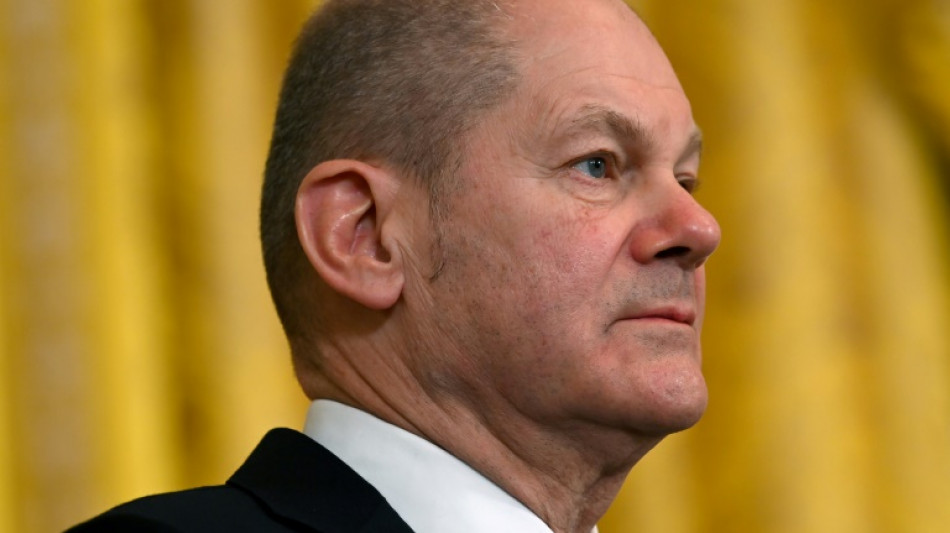
Germany will start rolling back most of its coronavirus restrictions as the country's falling infection rate suggests the Omicron-fuelled wave has peaked, Chancellor Olaf Scholz said Wednesday after talks with regional leaders.
The three-step plan -- which includes allowing unvaccinated people back into shops and restaurants -- will see Germany reach its "freedom day" on March 20, as media have dubbed it.
"After two years we deserve for things to be better again and it looks like that's happening now," Scholz told reporters.
But he urged Germans to remain cautious and said they would have to keep wearing face masks. "The pandemic is not over," he said.
Germany is the latest European nation to attempt a return to more normality, two years after the pandemic first emerged and upended people's daily lives and routines.
As a first step, Germany will immediately drop a 10-person cap on private gatherings of people who are vaccinated or have recovered from Covid-19.
For the unvaccinated however, the rule that they can only meet two people outside their household will remain in place for another month.
Access to non-essential shops will be open to all again, without checks on whether customers are vaccinated against the virus or not. Face masks will still be required, with high-protection FFP2 masks recommended.
From March 4, restaurants and hotels will be allowed to welcome the unvaccinated again, so long as they can provide a recent negative test -- a system known as 3G in Germany.
Nightclubs will reopen, but not for the unvaccinated. Everyone else will have to be boosted or provide a negative test -- the so-called 2G plus system.
The number of people allowed to attend large events including sports competitions, under 2G plus rules, will be increased.
In a final step, the remaining profound restrictions on social, cultural and economic life are to be gradually lifted by March 20.
That includes ditching the requirement for employees to work from home whenever possible.
After that date, Europe's top economy will rely on "basic protection measures", Scholz and regional leaders agreed, "in particular the wearing of medical masks" in indoor public venues and on public transport.
Social distancing is also set to be maintained.
- Europe unwinds curbs -
Germany recorded almost 220,000 new coronavirus cases over the past 24 hours, the Robert Koch Institute said Wednesday, and another 247 deaths.
While daily numbers remain high, Germany's weekly infection rate has fallen in recent days, with experts saying the coronavirus wave fuelled by the highly contagious Omicron variant has peaked.
Hospitals too have coped well, having been so far spared a surge in Omicron admissions.
Those elements, combined with a 75-percent vaccination rate among Germany's population, have led to calls for the authorities to lift curbs and give citizens back their freedoms.
The legislation that covers Germany's current infection protection measures runs out on March 19.
Britain, Ireland, Denmark and Norway have already dropped most of their Covid-19 restrictions.
The Netherlands, which imposed some of Europe's toughest measures in December, plans to follow suit. Dutch bars, restaurants and nightclubs will go back to pre-pandemic opening hours and health passes will be scrapped by February 25.
France aims to remove the last of its curbs in the coming weeks, including ending the requirement for face masks indoors by mid-March if the pandemic situation allows.
Germany too stressed that its path to a more normal daily life depended on the further evolution of the pandemic.
Scholz and regional leaders also reaffirmed their support for a general vaccine mandate, a controversial topic that has divided Germany's lawmakers who would have to approve the measure.
"Mandatory vaccination is necessary for the winter," said Scholz, adding that it has to be put in place so that "one new variant doesn't mess everything up".
X.Karnes--AMWN