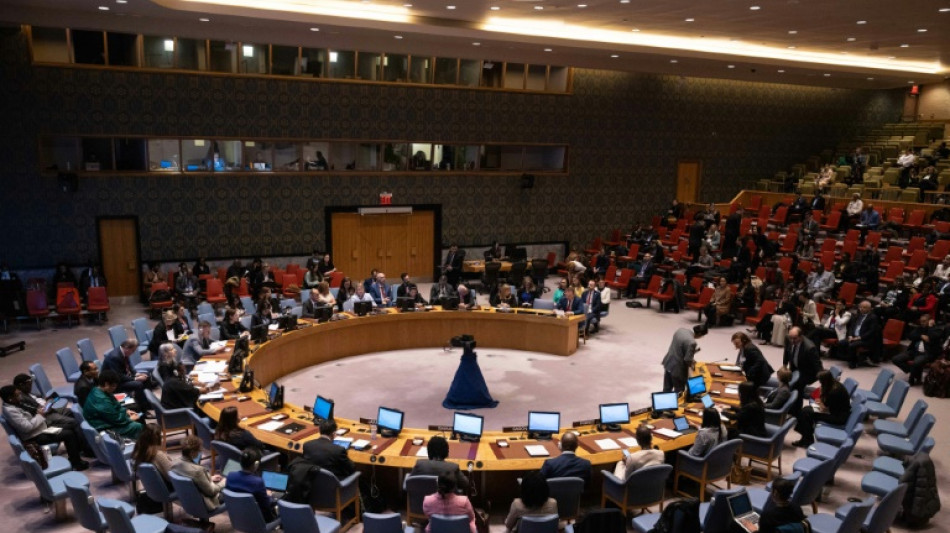
Women first to suffer, last to be heard: UN Security Council hears / Photo: Yuki IWAMURA - AFP
 West Midlands Shoppers Urged to Guard Against Black Friday Scams

 Surfshark Adds Real-Time Call Protection to iOS App in Version 5.3.0

 Saudi PIF Retains Top Sovereign Wealth Fund Brand Title for Third Year

 Professor Shahida Moosa Pioneers Medical Genomics in South Africa Amid Testing Shortages

 Texas Marijuana Decriminalization Faces Uncertain Future Under New Attorney General
 Early Black Friday Laptop Deals: MacBook Neo, IdeaPad Slim 5x, and Surface Laptop Prices Drop

 2026 East Bay Nosh Awards Voting Opens for Food and Drink Favorites
Women are the primary victims of wars and conflict, yet they remain severely underrepresented at diplomatic negotiations, officials told the United Nations Security Council on Tuesday.
On the eve of International Women's Day on March 8, Sima Bahous, executive director of UN Women, called on the international community to do more to protect the lives, health and rights of women around the world.
"We must recall that we have neither significantly changed the composition of peace tables, nor the impunity enjoyed by those who commit atrocities against women and girls," Bahous told a UN Security Council debate on women, peace and security.
Bahous called out what she said was a "gender apartheid" in Afghanistan, where women have effectively been squeezed out of public life since the Taliban swept back into power in August 2021, banning women from attending universities, going to parks and removing them from many jobs.
"Afghanistan is one of the most extreme examples of regression in women's rights, but it is far from being the only one," Bahous said.
Turning to Russia's war against Ukraine, which is now into its second year, Bahous said that women and their children represent about 90 percent of the 8 million Ukrainians who have had to flee the country, while women and girls constitute nearly 70 percent of the millions displaced within Ukraine.
"Peace is the only answer, with women's engagement in the process," Bahous said as she urged world leaders to do right by the landmark UN Security Council Resolution passed in 2000, which highlighted the role of women in preventing and resolving conflicts.
US Ambassador Linda Thomas-Greenfield echoed that sentiment.
"I will call attention to the violence and oppression of women and girls around the world and what they are facing -- in Iran, in Afghanistan, in areas of Ukraine occupied by Russia, and in so many other places around the world," she said.
French official Marlene Schiappa, who formerly served as her country's equality minister, said women pay the highest price in wars and crises.
"In all conflict and crisis situations, and, to take current examples, in Ukraine, Yemen and Somalia, women are particularly affected, even deliberately targeted, by sexual and gender-based violence," Schiappa said. "Those responsible must answer for their actions."
D.Cunningha--AMWN

