Biden meets Australian, British leaders in California on subs pact / Photo: SAUL LOEB - AFP/File
 Surge in Early Social Security Claims Linked to Agency Turmoil

 Panthers Seek NFC South Lead Against Ravens as Baltimore Ends Skid

 GIRLBAND! Headline Show at Rough Trade Marks National Breakthrough

 Samsung Galaxy Buds Active Leak Reveals ANC, Ear-Hook Design and One UI 9.5 Integration

 Egypt and Syria Sign Agreement to Restore Direct Flights After 14-Year Hiatus

 Van Gogh’s ‘Châtaigniers en Fleurs’ Sets $285m Record at Sotheby’s

 Anthropic Sets Record $81.3 Billion IPO Valuing AI Firm at $1.5 Trillion

 eThekwini Faces R6.5bn Flood Claim from Toyota’s Insurer
President Joe Biden meets Monday with the leaders of Australia and Britain at a California naval base for an expected announcement of a nuclear submarines deal aimed at stabilizing the Asia-Pacific region as it faces a rising China.
Australian Prime Minister Anthony Albanese and Britain's Prime Minister Rishi Sunak will join Biden at the base in San Diego 18 months after their countries formed an alliance called AUKUS with the principal goal of bringing Australia into the fold of navies possessing nuclear-powered submarines.
While Australia has ruled out deploying atomic weapons, its acquisition of the nuclear-powered vessels will transform its role in a US-led project to maintain the decades-old balance of power in the Pacific.
According to US media, Biden will announce a long-term, multi-stage plan destined to make Australia a full partner in fielding top-secret US nuclear technology previously only shared with historic ally Britain.
As many as five Virginia-class US nuclear-powered submarines will be sold to Australia over the next decade, The Washington Post reported. Australia and Britain would then both embark on building a new submarine model, using US propulsion technology and dubbed the SSN-AUKUS, with delivery in the 2040s.
While the plan will require years to come to fruition, it marks an ambitious shift from Australia and the United States as they contemplate the rapid expansion of Chinese military power, including Beijing's building up a sophisticated naval fleet and turning artificial islands into offshore bases.
- Diplomatic spat with France -
Australia had previously been on track to replace its aging current fleet of diesel-powered submarines with a $66-billion package of French vessels, also conventionally powered.
The abrupt announcement by Canberra that it was backing out of that deal and entering the AUKUS project sparked a brief but unusually furious row between all three countries and their close ally France.
Australia is now looking to wield the technologically superior US and, later, US-British underwater vessels, which will be able to stay submerged almost indefinitely and launch powerful cruise missiles.
Compared to the Collins-class submarines due to be retired by Australia, the Virginia-class is almost twice as long and carries 132 crew, not 48.
Although Australia rules out acquiring its own nuclear weapons, China warned that AUKUS risked setting off an arms race and accused the three countries of setting back nuclear nonproliferation efforts.
"We urge the US, the UK and Australia to abandon the Cold War mentality and zero-sum games, honor international obligations in good faith and do more things that are conducive to regional peace and stability," Chinese foreign ministry spokeswoman Mao Ning told reporters in Beijing.
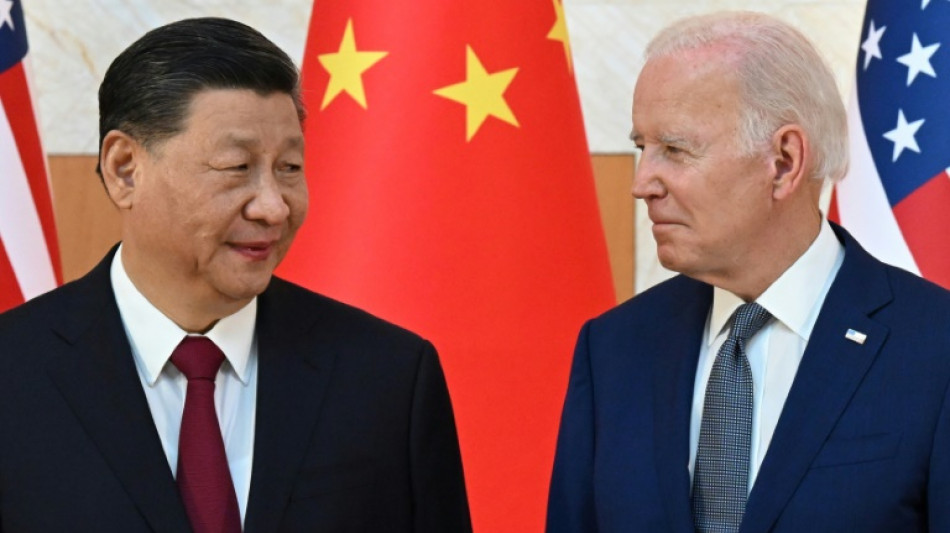
The communist country's leader Xi Jinping made a fiery statement last week accusing the United States of leading a Western effort at "all-round containment, encirclement and suppression of China."
But Washington says Beijing is alarming countries across the Asia-Pacific with its threats to invade the self-governing democracy of Taiwan, as well as highlighting the threat from nuclear-armed North Korea.
M.A.Colin--AMWN

