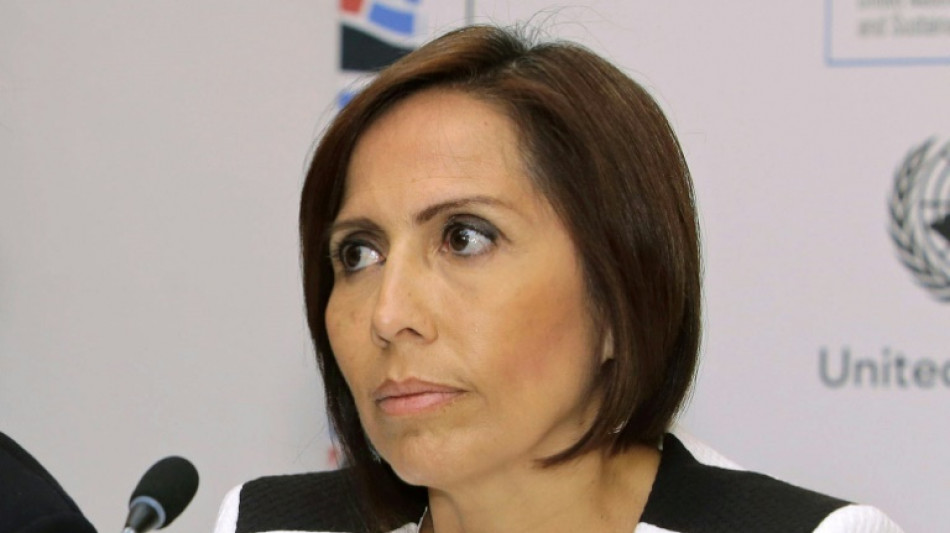
Ecuador, Argentina in diplomatic row over fugitive ex-minister / Photo: Juan CEVALLOS - AFP/File
 Surge in Early Social Security Claims Linked to Agency Turmoil

 Panthers Seek NFC South Lead Against Ravens as Baltimore Ends Skid

 GIRLBAND! Headline Show at Rough Trade Marks National Breakthrough

 Samsung Galaxy Buds Active Leak Reveals ANC, Ear-Hook Design and One UI 9.5 Integration

 Egypt and Syria Sign Agreement to Restore Direct Flights After 14-Year Hiatus

 Van Gogh’s ‘Châtaigniers en Fleurs’ Sets $285m Record at Sotheby’s

 Anthropic Sets Record $81.3 Billion IPO Valuing AI Firm at $1.5 Trillion

 eThekwini Faces R6.5bn Flood Claim from Toyota’s Insurer
A diplomatic spat between Ecuador and Argentina escalated Tuesday after it was revealed that a convicted former cabinet minister, who had been living in the Argentine embassy, had escaped Quito to Venezuela.
Maria de los Angeles Duarte, who served under former president Rafael Correa, was sentenced to eight years for bribery, but had been holed up in Argentina's embassy since August 2020 with her son, whose father is Argentine.
Argentina had offered Duarte asylum, but Ecuador refused to grant her free passage out of the country.
Duarte "was present in the Argentine embassy in Caracas" from 11:00 am on Tuesday, the Argentine foreign ministry said in a statement, without giving any details of how she had managed to escape to Venezuela.
Ecuador reacted angrily, summoning Argentina's ambassador Gabriel Fuks to explain what it called inconsistencies in the embassy's explanations of how Duarte had escaped and for refusing to hand over video surveillance footage from inside the compound.
Quito then declared Fuks persona non grata and recalled its own ambassador to Argentina for consultations.
Buenos Aires then followed suit, recalling its ambassador from Quito and saying it would also expel Ecuador's ambassador.
On Monday, Argentina's Foreign Minister Santiago Cafiero told his Ecuadoran counterpart that Duarte had "escaped" from the embassy "without the knowledge of staff" there.
Duarte then fled Quito, entered Venezuela and presented herself at the Argentine embassy in Caracas without saying how she had arrived there or whether she had been accompanied by her son, a statement by Argentina's foreign ministry said on Tuesday.
It added that Duarte "said she has no intention of traveling to Argentina in the short term", although she "made inquiries about documents" that the country could offer her.
- 'Incomprehensible decision' -
"We feel that good faith has been violated," said Ecuadoran foreign minister Juan Carlos Holguin at a press conference, calling his government's decision to expel Fuks "difficult and sad."
For its part, the Argentine foreign ministry said it received Ecuador's "incomprehensible decision" with "surprise and deep sadness."
Duarte was convicted alongside Correa, who was president from 2007 to 2017, and other former government officials for corruption in relation to a request for bribes worth almost $7.6 million in return for state contracts, according to the public prosecutor's office.
Correa, who has been granted asylum in Belgium, where his wife was born, claims to be the victim of political persecution.
Holguin told reporters that he was confident "relations can be rebuilt" between his country and Argentina through dialogue.
O.Karlsson--AMWN

