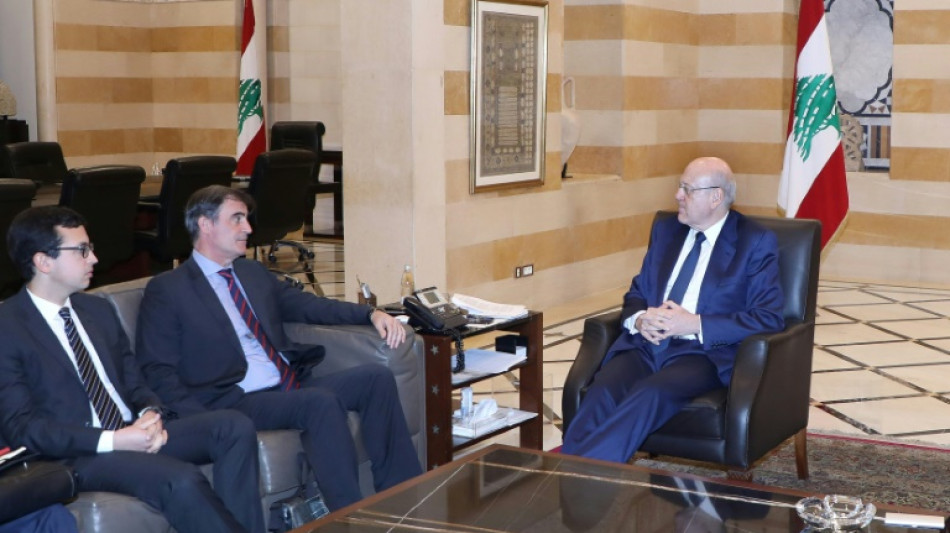
IMF warns Lebanon at 'very dangerous moment' / Photo: - - DALATI AND NOHRA/AFP
 Surge in Early Social Security Claims Linked to Agency Turmoil

 Panthers Seek NFC South Lead Against Ravens as Baltimore Ends Skid

 GIRLBAND! Headline Show at Rough Trade Marks National Breakthrough

 Samsung Galaxy Buds Active Leak Reveals ANC, Ear-Hook Design and One UI 9.5 Integration
 Egypt and Syria Sign Agreement to Restore Direct Flights After 14-Year Hiatus

 Van Gogh’s ‘Châtaigniers en Fleurs’ Sets $285m Record at Sotheby’s

 Anthropic Sets Record $81.3 Billion IPO Valuing AI Firm at $1.5 Trillion

 eThekwini Faces R6.5bn Flood Claim from Toyota’s Insurer
Crisis-hit Lebanon is "at a very dangerous moment", a visiting International Monetary Fund delegation said Thursday, criticising slow progress on reforms needed to unlock billions in loans.
Lebanon and the IMF reached a conditional agreement in April 2022 on a $3-billion-dollar loan needed to save the country's economy, in free fall since 2019.
But nearly a year after Beirut signed the agreement, officials have yet to enact the substantial changes required to kickstart the 46-month financing programme.
"We think Lebanon is at a very dangerous moment, at a crossroads," said Ernesto Ramirez Rigo, who headed the IMF delegation in Beirut, warning the continued "policy of inaction is going to leave Lebanon in a never-ending crisis".
"Time has a gone by. It's almost a year since we have reached an agreement," Rigo added, urging leaders to implement the reforms swiftly.
In September the IMF had already condemned Beirut's "very slow" progress on implementing these reforms.
"The country is in a significant crisis. One would have expected a lot more in terms of implementation," Rigo said.
Lebanon's meltdown has pushed most of the population into poverty while the political elite, widely blamed for the country's financial collapse, has failed to take action.
- 'Lack of intention' -
Since last year, the country has had no president and only a caretaker government, amid persistent deadlock between rival factions -- while the country plunges deeper into a crisis dubbed by the World Bank as one of the worst in recent global history.
The IMF had conditioned the funds on a series of measures, notably unifying the country's plethora of exchange rates, a reformed bank secrecy law as well as restructuring the banking sector and the implementation of formal capital controls.
He said any solution for Lebanon must include an adjustment of "fiscal policies", address "banking sector losses" and strengthen anti-corruption measures.
Lebanese banks have imposed draconian withdrawal restrictions -- essentially locking depositors out of their life savings.
As reforms drag, the market value of the Lebanese pound reached historic lows against the US dollar this month, prompting hundreds to take to the streets and protest deteriorating living conditions on Wednesday.
The pound has been fluctuating at more than 100,000 against the greenback -- a dizzying plunge from 1,507 before the economic crisis hit in 2019.
Lebanon defaulted on its foreign debt for the first time in 2020.
Activist group Kulluna Irada, which met with the IMF delegation, denounced "a lack of real intention to reform" on behalf of Lebanon's ruling class, in a statement Tuesday.
S.Gregor--AMWN

