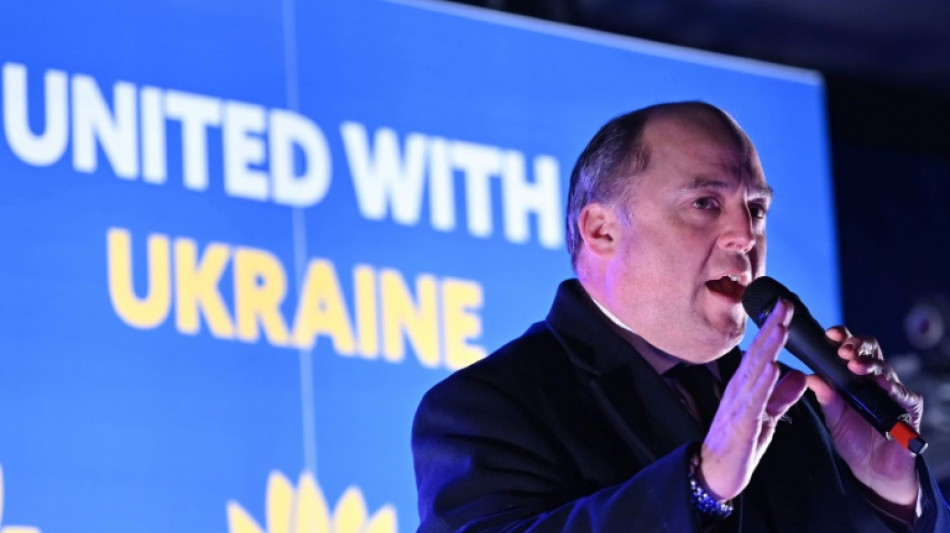
UK defence minister would 'love' return of conscription / Photo: JUSTIN TALLIS - AFP/File
 Kiss of Life Teases First Winter Single 'Greedy'

 Eight-Year-Old Georgia Wins Penrith Valley Public Speaking Competition

 5 Fun Date Night Ideas That Don't Cost a Fortune

 GIRLBAND! Headline Show at Rough Trade Marks National Breakthrough

 Samsung Galaxy Buds Active Leak Reveals ANC, Ear-Hook Design and One UI 9.5 Integration

 Egypt and Syria Sign Agreement to Restore Direct Flights After 14-Year Hiatus

 Van Gogh’s ‘Châtaigniers en Fleurs’ Sets $285m Record at Sotheby’s

 Anthropic Sets Record $81.3 Billion IPO Valuing AI Firm at $1.5 Trillion

UK Defence Secretary Ben Wallace said Wednesday he would "love" to see Britain emulate Finland and Sweden by bringing back military conscription.
Britain scrapped national service for all young men in 1960, and occasional calls for its return have been confined to right-wing politicians and media.
Wallace, a former army officer, was briefing reporters alongside Swedish Defence Minister Pal Jonson about Sweden and Finland's bids to join NATO after Russia invaded Ukraine.
He conceded that "a different cultural thing" was at play after both Nordic countries persisted with conscription in the decades since World War II, albeit with a seven-year break for Sweden.
But Wallace said: "I think we're all envious of both Sweden and Finland, in (their) reserves."
He said reservists were especially important given the reliance of modern armed forces on specialists, for example in cyberwarfare, who could be activated in time of need.
"And I think we've got to recognise that again the lesson of Ukraine is how do we work on our resilience, and part of that is about reserves," he said.
"I would love to have a model like that."
P.Mathewson--AMWN

