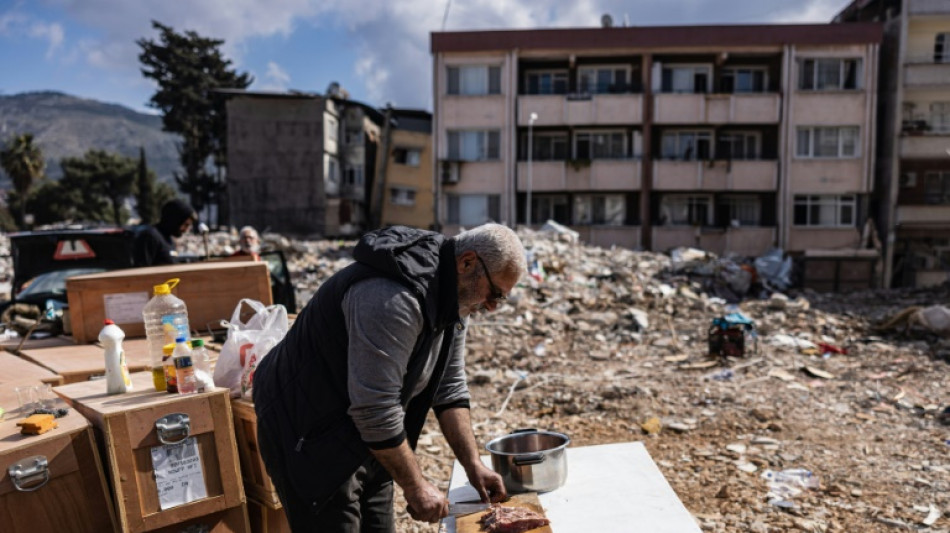
Quake hit one-fifth of Turkey's food production: UN / Photo: Sameer Al-DOUMY - AFP/File
 Kiss of Life Teases First Winter Single 'Greedy'

 Eight-Year-Old Georgia Wins Penrith Valley Public Speaking Competition

 5 Fun Date Night Ideas That Don't Cost a Fortune

 GIRLBAND! Headline Show at Rough Trade Marks National Breakthrough

 Samsung Galaxy Buds Active Leak Reveals ANC, Ear-Hook Design and One UI 9.5 Integration

 Egypt and Syria Sign Agreement to Restore Direct Flights After 14-Year Hiatus

 Van Gogh’s ‘Châtaigniers en Fleurs’ Sets $285m Record at Sotheby’s

 Anthropic Sets Record $81.3 Billion IPO Valuing AI Firm at $1.5 Trillion

The devastating earthquake that hit southern Turkey and neighbouring Syria in February damaged more than 20 percent of Turkey's agricultural production, the UN's food agency said Friday.
The 7.8-magnitude quake on February 6, and its aftershocks, killed more than 55,000 people and left many more in dire conditions.
The Food and Agriculture Organization (FAO) said initial assessments in Turkey revealed "severe damage to agriculture, including crops, livestock, fisheries and aquaculture, as well as rural infrastructure in affected areas".
"The earthquake severely impacted 11 key agricultural provinces affecting 15.73 million people and more than 20 percent of the country's food production," it said in a statement.
"The earthquake-affected region, known as Turkey's 'fertile crescent', accounts for nearly 15 percent of agricultural GDP and contributes to almost 20 percent of Turkey's agrifood exports."
It estimated the quake had caused $1.3 billion in damage, through the destruction of infrastructure, livestock and crops, and $5.1 billion in losses to the agricultural sector.
When the earthquake hit, buildings collapsed, crops were damaged and animals were killed, but the resulting devastation also created shortages of barns, food and vaccines for livestock that survived.
The shortage of workers is also having an impact, with particular concerns as the summer harvest season draws closer.
The FAO is appealing for $112 million to help quake-affected communities in Turkey, including $25 million under a wider UN appeal issued in February to provide cash, livestock and agricultural support to 900,000 people in rural areas.
"The planting season deadline is approaching. We need to urgently support our farmers by providing fertilisers and seeds," said FAO coordinator Viorel Gutu.
"This is our only chance to maintain crop production levels this year. We also need to provide animals with feed to maintain their health and productivity."
The FAO said more than one-third of the population in the hardest-hit areas relied on agriculture to survive.
F.Dubois--AMWN

