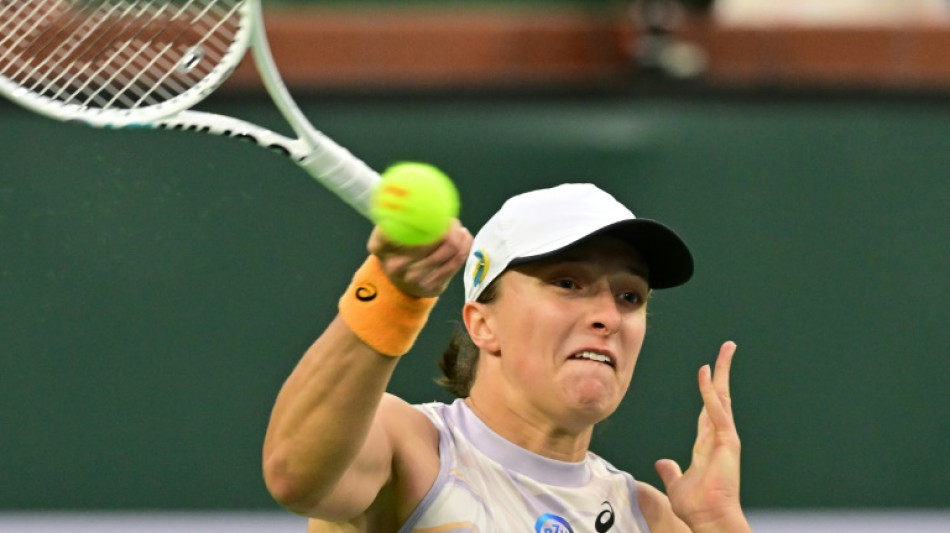
Tennis missed a chance to ban Russians and Belarusians: Swiatek / Photo: Frederic J. BROWN - AFP
 Student Activism Shifts Underground After University Crackdown on Gaza Encampments

 Surge in Early Social Security Claims Linked to Agency Turmoil
 Panthers Seek NFC South Lead Against Ravens as Baltimore Ends Skid

 Tosca's 2026 Sustainability Report Makes the Case for Packaging as Critical Supply Chain Infrastructure

 5 Fun Date Night Ideas That Don't Cost a Fortune

 GIRLBAND! Headline Show at Rough Trade Marks National Breakthrough

 Samsung Galaxy Buds Active Leak Reveals ANC, Ear-Hook Design and One UI 9.5 Integration

 Egypt and Syria Sign Agreement to Restore Direct Flights After 14-Year Hiatus

 Van Gogh’s ‘Châtaigniers en Fleurs’ Sets $285m Record at Sotheby’s

Women's world number one Iga Swiatek says tennis authorities missed an opportunity to ban Russian and Belarusian players outright after Moscow's invasion of Ukraine, but the moment has passed to do so now, she told the BBC.
The 21-year-old Pole has been a staunch supporter of her Ukrainian rivals criticising the WTA for not doing enough to support them.
Unlike other sports which imposed an outright ban following the invasion in February 2022, tennis officials permitted those from Russia and Belarus to continue playing, but as neutral athletes.
They were allowed to play three of the four Grand Slam tournaments, with Wimbledon the exception.
Authorities punished Wimbledon organisers by not awarding the tournament ranking points, but Russian and Belarusian players will be able to compete this year after the ban was lifted.
Both countries were also barred from team events like the Davis Cup, in which Russia were the defending champions.
"I heard that after World War Two, German players were not allowed as well as Japanese and Italian, and I feel like this kind of thing would show the Russian government that maybe it's not worth it," Swiatek told the BBC.
"I know it's a small thing because we are just athletes, a little piece in the world but I feel like sport is pretty important and sport has always been used in propaganda.
"This is something that was considered at the beginning, tennis didn't really go that way, but now it would be pretty unfair for Russian and Belarusian players to do that because this decision was supposed to be made a year ago."
Swiatek, who won her second French Open title in 2022 and added the US Open crown, said both the WTA and ATP had shown a "lack of leadership" following the invasion, and as a result tennis was in a "chaotic place".
"I feel like tennis, from the beginning, could do a bit better in showing everybody that tennis players are against the war," she said.
"I feel they could do more to make that point and tell their views, and help us cope a bit better in the locker room because the atmosphere there is pretty tense."
Last week Ukrainian tennis player Lesia Tsurenko slammed Belarus's Australian Open champion Aryna Sabalenka for claiming she had never felt so much hate in the locker room.
"I think this is another game they are starting, now they are the victims, we are not," Tsurenko said.
Swiatek says she has a certain amount of sympathy for the Russians and Belarusians.
"It's not their fault they have a passport like that," she said.
"I did shake hands, for example, with Daria Kasatkina -- she openly said that she's against the war at the beginning and it would be her dream for the war to finish.
"I really respect that because I feel it's brave for Russian athletes to say that because their situation is pretty complicated and sometimes it's hard for them to speak out loud about it."
P.Costa--AMWN

