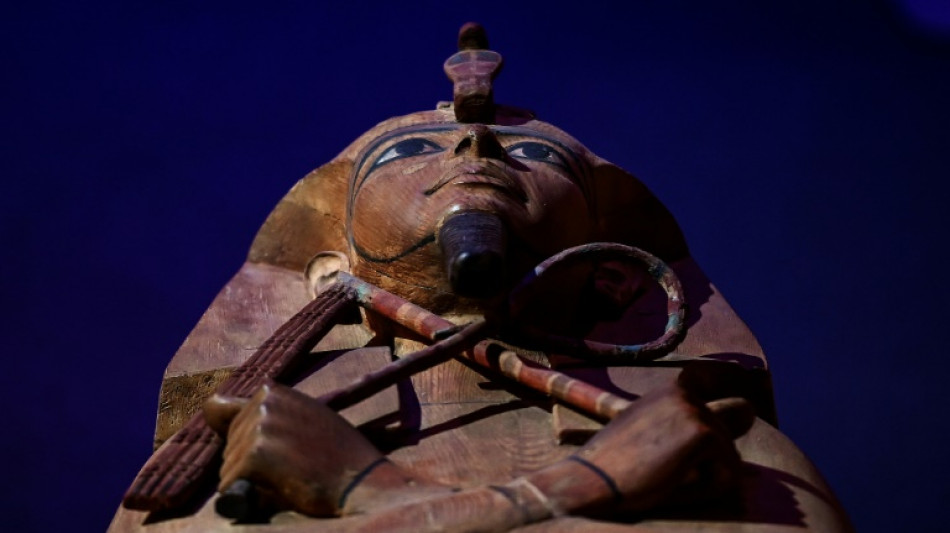
Sarcophagus of Pharaoh Ramses II unveiled in Paris
/ Photo: Christophe ARCHAMBAULT - AFP
 Student Activism Shifts Underground After University Crackdown on Gaza Encampments

 Surge in Early Social Security Claims Linked to Agency Turmoil

 Panthers Seek NFC South Lead Against Ravens as Baltimore Ends Skid

 Tosca's 2026 Sustainability Report Makes the Case for Packaging as Critical Supply Chain Infrastructure

 5 Fun Date Night Ideas That Don't Cost a Fortune

 GIRLBAND! Headline Show at Rough Trade Marks National Breakthrough

 Samsung Galaxy Buds Active Leak Reveals ANC, Ear-Hook Design and One UI 9.5 Integration

 Egypt and Syria Sign Agreement to Restore Direct Flights After 14-Year Hiatus

 Van Gogh’s ‘Châtaigniers en Fleurs’ Sets $285m Record at Sotheby’s

The sarcophagus of ancient Egyptian pharaoh Ramses II was unveiled to reporters in Paris on Thursday following its rare journey outside of Egypt.
The ornate coffin will be on show to the public in the French capital from April 7 to September 6.
Benedicte Lhoyer, scientific advisor to the exhibition, told AFP the "exceptional" loan was thanks to "an unprecedented cooperation between France and Egypt".
The Ramses II exhibition is on a tour that includes the United States and Australia this year, but only France is receiving the sarcophagus, in recognition of the assistance from French scientists, who helped save the mummy from decay following a previous visit to Paris in 1976.
The mummy itself has stayed behind this time, since Egyptian law now forbids transporting royal mummies abroad.
Ramses II, also known as Ramses the Great, ruled for more than 60 years during the 13th century BC and oversaw major military conquests and monumental construction projects, while also finding time to father more than 100 children.
"In short, he was an extraordinary king," said Lhoyer.
The yellow-painted cedar-wood sarcophagus, which depicts the recumbent king in bright colours with his arms crossed on his chest holding a sceptre and whip, was not actually Ramses II's original coffin.
Inscriptions on the sarcophagus' sides detail how his body was moved three times from 1070 BC, after his tomb in Luxor's Valley of the Kings was raided by grave-robbers.
Its final resting place was discovered almost three millenia later in 1881, just as it too was being pillaged.
The immersive exhibition in Paris also features an abundance of statues, masks and jewellery from the period -- more than 180 objects in total -- as well as a 3D recreation of one of the king's battles against the Hittite empire.
Egyptian relics have proved a hit in the past -- some 1.4 million people came to see an exhibition about Tutankhamun in Paris four years ago.
"Ramses II defeated time. Like Tutankhamun, he has become immortal," said Lhoyer.
P.Costa--AMWN

