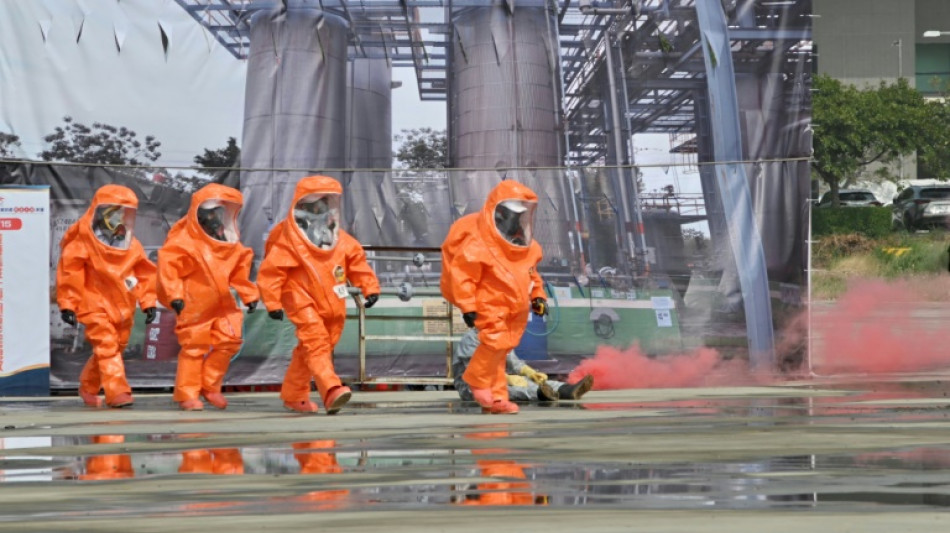
China would gain swift air superiority over Taiwan, US leaks show / Photo: Sam Yeh - AFP
 ALIX LASERS shareholders remove Michael Sobitsch as managing director in view of the circumstances

 Kiss of Life Teases First Winter Single 'Greedy'

 Eight-Year-Old Georgia Wins Penrith Valley Public Speaking Competition

 5 Fun Date Night Ideas That Don't Cost a Fortune

 Tosca's 2026 Sustainability Report Makes the Case for Packaging as Critical Supply Chain Infrastructure

 West Midlands Shoppers Urged to Guard Against Black Friday Scams

 Surfshark Adds Real-Time Call Protection to iOS App in Version 5.3.0

 Saudi PIF Retains Top Sovereign Wealth Fund Brand Title for Third Year

 Professor Shahida Moosa Pioneers Medical Genomics in South Africa Amid Testing Shortages

China would probably gain air superiority very quickly in any attack on Taiwan, something Russia crucially failed to do in its invasion of Ukraine last year, leaked US intelligence documents show, according to media reports Saturday.
The classified documents, allegedly leaked by a US national guardsman in the worst US security breach in a decade, reveal that Taiwan's military leaders doubt their air defenses can "accurately detect missile launches," while only about half of their aircraft are capable of effectively engaging the enemy.
China views democratic, self-ruled Taiwan as part of its territory to be retaken one day, by force if necessary. The island lives under the constant fear of a Chinese invasion, and Beijing has stepped up its rhetoric and military activity around it in recent years.
The intelligence reports said that Taiwan fears it could take up to a week to move its aircraft to shelters, leaving them vulnerable to Chinese missile strikes.
In addition, China's use of civilian shipping, including passenger ferries, for military purposes has hampered the US intelligence community's ability to predict when an invasion might be pending, the Washington Post reported.
The Pentagon criticized Taiwan's missile drills as too highly scripted, which could leave their armed forces and leadership unprepared for a "real-world event," the Post said.
President Xi Jinping has undertaken a huge overhaul of China's army to expand and modernize it. The People's Liberation Army is estimated to be 14 times the size of Taiwan's own armed forces.
Taiwan's defense ministry told the Post that its response to recent Chinese shows of force in the vicinity demonstrate that its military is "absolutely capable, determined and confident" it can defend the island.
Last week, Taiwan staged large-scale emergency response drills enacting a wide array of scenarios, including attacks by missiles and chemical weapons.
The drills came just days after China held its latest military exercise around the island, just 100 miles (160 kilometers) off the coast of the Chinese mainland.
Chinese jets and warships continued circling Taiwan even after the conclusion of the massive drills.
Taiwan's defense ministry detected seven Chinese naval vessels and 26 aircraft between Wednesday and Thursday morning.
It said 14 aircraft had crossed the unofficial median line that separates the island from mainland China.
On a visit to Beijing Friday, Germany's Foreign Minister Annalena Baerbock warned that "a military escalation in the Taiwan Strait... would be a horror scenario for the entire world."
O.M.Souza--AMWN


