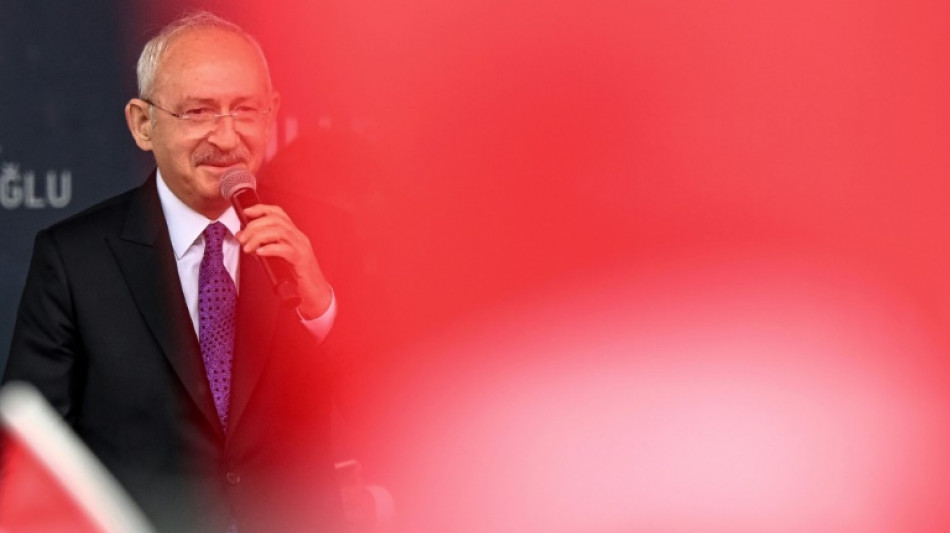
Erdogan's rival breaks taboo by talking about being an Alevi / Photo: OZAN KOSE - AFP
 ALIX LASERS shareholders remove Michael Sobitsch as managing director in view of the circumstances
 Kiss of Life Teases First Winter Single 'Greedy'
 Eight-Year-Old Georgia Wins Penrith Valley Public Speaking Competition

 The DEA Laid The Trap - And State Marijuana Operators Took The Bait

 Tosca's 2026 Sustainability Report Makes the Case for Packaging as Critical Supply Chain Infrastructure

 West Midlands Shoppers Urged to Guard Against Black Friday Scams

 Surfshark Adds Real-Time Call Protection to iOS App in Version 5.3.0

 Saudi PIF Retains Top Sovereign Wealth Fund Brand Title for Third Year

 Professor Shahida Moosa Pioneers Medical Genomics in South Africa Amid Testing Shortages
President Recep Tayyip Erdogan's rival in next month's election has confronted a Turkish political taboo by speaking out about being an Alevi -- a group targeted by decades of discrimination and violent attacks.
Kemal Kilicdaroglu's video message to young voters late on Wednesday addresses the unspoken worry that voters in the predominantly Sunni country are not ready to elect an Alevi president on May 14.
Alevis follow a heterodox Islamic tradition that separates them from Sunni and Shiite Muslims. Some view it as a cultural identity as much as a religious faith.
They have faced decades of persecution and have tended to keep their identity private because of discrimination and attacks on their houses of worship.
Erdogan once accused Alevis of inventing a "new religion".
The outgoing head of state has since used speeches to declare he will not be using Kilicdaroglu's identity against him.
"Kilicdaroglu, you can be an Alevi. I respect you," Erdogan said in 2014.
Kilicdaroglu has never hidden his Alevi identity but has rarely talked about it in detail.
But polls show the 74-year-old former civil servant on the verge of winning the knife-edge vote and ending two decades of Erdogan's socially conservative rule.
Kilicdaroglu turned to Twitter -- his preferred platform for reaching voters in a country where most media follow the government's line -- to publicly assert his identity.
"My dear children who will cast their first vote," he told five million young Turks who grew up under Erdogan and will be voting for the first time.
"I am an Alevi. I am a Muslim... God gave me my life. I am not sinful."
"Our identities are the assets that make us who we are."
- 'Historic speech' -
Kilicdaroglu's message created a sensation less than a month before Turks vote in what is widely viewed as the most important election in the strategic country's post-Ottoman history.
His tweet had racked up nearly 50 million views by early Thursday and forced Erdogan's government to strike back.
"Why is he saying this now?" Interior Minister Suleyman Soylu demanded.
"We're not the ones saying Alevis can't win votes. It's society that questions that. We don't have a problem with it. He's trying to play the victim," Soylu said.
But others rushed to congratulate Kilicdaroglu for speaking out.
The opposition Duvar news site called it a "historic speech".
"Incredibly courageous video by opposition leader Kemal Kilicdaroglu talking about being Alevi -- almost breaking a political taboo in Turkey," Brookings Institution visiting fellow Asli Aydintasbas said on Twitter.
Saadet, a small Islamic-rooted party that broke ranks with Erdogan and joined Kilicdaroglu's opposition alliance, also tweeted its support.
"We can put an end to this distorted order by choosing morality, justice, fairness and sincerity over polarisation, marginalisation and identity politics," Saadet said above a repost of Kilicdaroglu's address.
S.Gregor--AMWN


