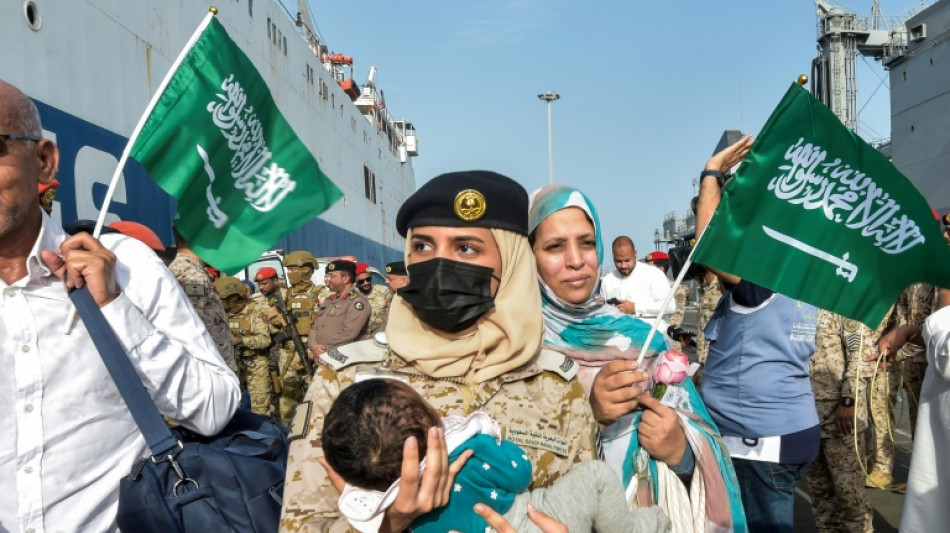
'Nightmare': Sudan evacuees fear for those left behind / Photo: Amer HILABI - AFP
 ALIX LASERS shareholders remove Michael Sobitsch as managing director in view of the circumstances
 Kiss of Life Teases First Winter Single 'Greedy'

 Eight-Year-Old Georgia Wins Penrith Valley Public Speaking Competition

 The DEA Laid The Trap - And State Marijuana Operators Took The Bait

 Tosca's 2026 Sustainability Report Makes the Case for Packaging as Critical Supply Chain Infrastructure

 West Midlands Shoppers Urged to Guard Against Black Friday Scams

 Surfshark Adds Real-Time Call Protection to iOS App in Version 5.3.0

 Saudi PIF Retains Top Sovereign Wealth Fund Brand Title for Third Year

 Professor Shahida Moosa Pioneers Medical Genomics in South Africa Amid Testing Shortages
Earlier this month, Wissam Moustafa travelled from the United States to Sudan to celebrate the Eid al-Fitr holiday with family, only to be caught up in fierce fighting between warring generals.
On Wednesday, after a harrowing overland journey and overnight boat trip across the Red Sea, she joined thousands of civilians who have fled to Saudi Arabia, grateful to have survived but wracked with guilt and worry for those she left behind.
"I had the chance to leave, not like my sisters," said a tearful Moustafa, who holds an American passport, as she disembarked a hulking commercial ship that transported more than 1,600 civilians to the coastal Saudi city of Jeddah.
"I don't know whether they will be able to get out."
The arrivals on Wednesday represented more than 50 countries, ranging from the Philippines to Zimbabwe and from Ireland to Nicaragua, according to a Saudi foreign ministry statement.
Whether they had spent only a short time in Sudan or built lives there over many years, they all voiced concern for what would become of friends, family and colleagues who remain in the country.
Conditions are harsh, amid urban combat and acute shortages of food, water, fuel and medicine.
Bilal Al Ayoubi, a 37-year-old Lebanese national, had only been in Sudan for a short time before he had to flee. He said he felt "very close to it".
Hadia Aladwani of Egypt spent 16 years in Sudan, where her husband ran a plastics factory, staying through previous periods of turmoil including the protests that led to the army toppling longtime dictator Omar al-Bashir in 2019.
This week, however, they decided that trying to ride out the current crisis was untenable.
"We left our houses, all our belongings, so for sure we feel as if we are in a nightmare", Aladwani said.
- Sleepless journey -
The fighting in Sudan pits forces loyal to army chief Abdel Fattah al-Burhan against those backing his deputy turned rival Mohamed Hamdan Daglo, who commands the powerful paramilitary Rapid Support Forces (RSF).
At least 459 people have been killed and more than 4,000 wounded, according to UN agencies.
Evacuees began arriving in Saudi Arabia on Saturday, with boats that reached Jeddah carrying 150 people including foreign diplomats and officials.
On Monday, a C-130 Hercules military plane flew dozens of South Korean civilians to Jeddah's King Abdullah Air Base, and a boat ferried nearly 200 people from 14 countries across the Red Sea from Port Sudan.
Wednesday's operation was by far the largest to date, and some passengers were crammed into stairwells for the 10-hour sea voyage.
After what many described as a sleepless night, the haggard-looking group was called country by country to retrieve their bags and go ashore, where they were greeted by Saudi soldiers who handed them plastic-wrapped pink and red roses.
The passengers included a number of Syrian nationals who told AFP they had fled to Sudan after civil war erupted in their country in 2011, and who described a sense of shock that they were fleeing conflict yet again.
"We left our country because of the war and we reached another country which is also facing war. This experience, which we have lived twice, is very difficult," said 35-year-old Batool.
As she spoke, her 17-year-old son Adham broke down crying.
"I left behind me so many dreams," he said, but was unable to speak further.
F.Dubois--AMWN


