Moscow stock market partially reopens after month-long closure
 Monaco Housing Project Wins International Sustainability Award at COP31
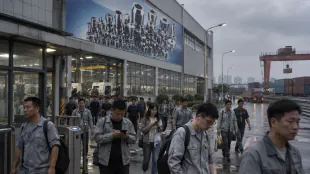 China's Factory Activity Contracts as Export Orders Weaken
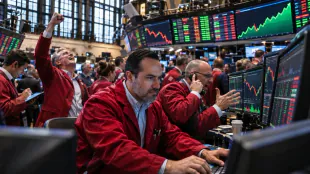
 US Retail Sales and Fed Minutes Set Up a Critical Test for Consumers
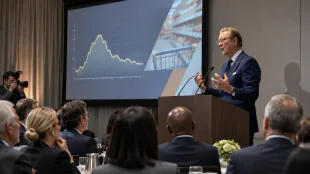
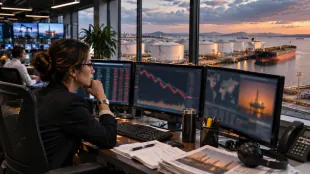 Oil Heads for Second Weekly Loss as Supply Surplus Emerges
 Brazil Faces Debt and Inflation Test as Lula Prepares Fourth Term
 Archive of Our Own Restores Service After Weeks-Long Security Shutdown
 US Mortgage Rate Falls for Fourth Week but Remains Above 7%
 Fire Erupts Near MetLife Stadium After Jets-Bills Game
 Euro-Area Growth Slows to 0.4% While Employment Stalls
 US Wholesale Inflation Eases Monthly but Hits a Four-Year Annual High
 India's Wholesale Inflation Jumps to 12.29% as Fuel Costs Surge
 Japan's Economy Edges Into Contraction as Costly Oil Weighs on Demand
 South Korea Launches Probe into NewJeans Contract Controversy
 UK Defence Secretary Warns Russia Nukes Not for Negotiation as HMS Vengeance Returns
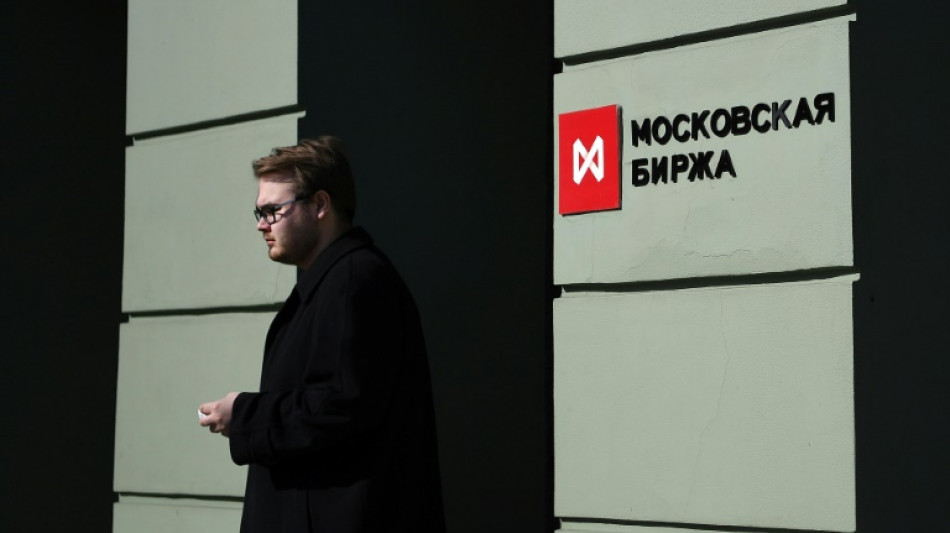
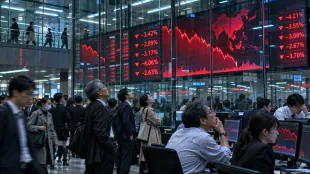
The Moscow Stock Exchange resumed trading of some shares Thursday, the second stage in a phased re-opening after being suspended for a month due to Russia's military operation in Ukraine.
Trading renewed for only 33 of the largest companies that make up the ruble-denominated MOEX Russia Index, which saw gains of 10 percent at opening but closed at 4.4 percent.
The RTS Index, which is calculated in US dollars, was down 9.0 percent as markets closed.
The companies trading on Thursday include Russian energy giants Gazprom and Rosneft, and the country's largest banks Sberbank and VTB, which are under US sanctions.
Other companies trading on the market included metals giants Nornickel and Rusal, several private companies and Russia's flag-carrier airline Aeroflot.
The Moscow exchange suspended trading hours after President Vladimir Putin sent thousands of troops into pro-Western Ukraine on February 24.
It started a phased re-opening on Monday with trading in federal government bonds, after the longest hiatus since the fall of the Soviet Union.
Russia's central bank said Wednesday that trading would be limited to just over four hours and short selling would be banned in an effort to prevent speculative deals.
Foreigners are not allowed to sell their shares, as part of measures taken by Russia to stem the flight of foreign currency and capital.
Timothy Ash, an emerging markets strategist at BlueBay Asset Management, said Russian authorities have made a "concerted effort" to stabilise the domestic market and "ease the feeling of panic which came with the market collapse" after the initial sanctions.
But he said this "deeply managed" reopening is "really only window dressing" as the sanctions are "proving really painful".
While the "Russian financial markets might stabilise in the short term," few foreigners will want to invest there, he said, since "Putin has made Russia like toxic waste".
Russia has been hit by Western sanctions that have pummelled the ruble and threatened to cause the government to default on its foreign debt.
- US sees 'charade' -
For analyst Mikhail Ganelin of investment company Aton, the gradual re-opening of the markets is an opportunity for Russians to protect their savings and hedge them against galloping inflation.
"Using the market as a long-term investment is the right thing to do," Ganelin told AFP, adding that "markets will recover sooner or later, sooner or later there will be some kind of political stabilisation."
"There are not many savings opportunities now. The stock market is one good tool for saving investments."
To aid recovery, the Russian government has pledged the equivalent of $10 billion to buy up shares of Russian companies and Putin said Wednesday Moscow will now only accept ruble payments from Europe for deliveries of Russian gas.
"What we're seeing is a charade: a Potemkin market opening," US Deputy National Security Advisor Daleep Singh said in a statement Thursday.
He said Russia will "only allow 15 percent of listed shares to trade".
"Russia has made it clear they are going to pour government resources into artificially propping up the shares of companies that are trading," he added.
In a bid to stabilise the ruble, the central bank last month more than doubled its key interest rate to 20 percent.
The sanctions also sparked an exodus of foreign companies from Russia, including H&M, McDonald's and IKEA.
Officials in Moscow have sought to downplay the gravity of the Western penalties, promising that Russia will adapt. Putin has said that the country will emerge stronger from the crisis.
M.Thompson--AMWN