Pakistan PM's future in doubt as coalition ally switches sides
 Monaco Housing Project Wins International Sustainability Award at COP31

 China's Factory Activity Contracts as Export Orders Weaken

 US Retail Sales and Fed Minutes Set Up a Critical Test for Consumers

 Oil Heads for Second Weekly Loss as Supply Surplus Emerges

 Brazil Faces Debt and Inflation Test as Lula Prepares Fourth Term
 Archive of Our Own Restores Service After Weeks-Long Security Shutdown
 US Mortgage Rate Falls for Fourth Week but Remains Above 7%

 Fire Erupts Near MetLife Stadium After Jets-Bills Game

 Euro-Area Growth Slows to 0.4% While Employment Stalls

 US Wholesale Inflation Eases Monthly but Hits a Four-Year Annual High

 India's Wholesale Inflation Jumps to 12.29% as Fuel Costs Surge

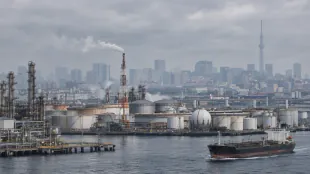 Japan's Economy Edges Into Contraction as Costly Oil Weighs on Demand
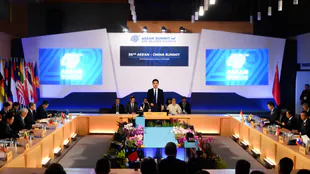
 South Korea Launches Probe into NewJeans Contract Controversy

 UK Defence Secretary Warns Russia Nukes Not for Negotiation as HMS Vengeance Returns
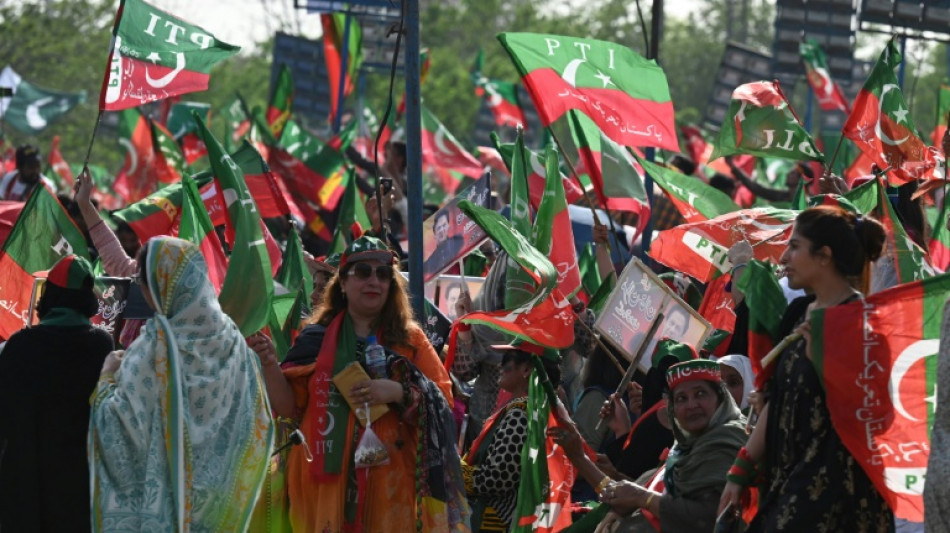
Pakistan Prime Minister Imran Khan's future looked increasingly in doubt Wednesday after a key coalition partner switched allegiance ahead of a parliamentary no-confidence vote that could be held as early as this weekend.
No prime minister in the country's history has seen out a full term, and Khan is facing the biggest challenge to his rule since being elected in 2018, with opponents accusing him of economic mismanagement and foreign-policy bungling.
Debate on the no-confidence motion is due to start Thursday, leaving Khan scrambling to keep his own Pakistan Tehreek-e-Insaf (PTI) members on side -- as well as a slew of minority parties.
On paper the PTI and coalition partners have 176 seats in the 342-member assembly, but on Wednesday the Muttahida Qaumi Movement (MQM-P) said its seven lawmakers would vote with the opposition, which has a combined 163 seats.
More than a dozen PTI lawmakers have also indicated they will cross the floor, although party leaders are trying to get the courts to prevent them from voting.
In the past, Pakistan parties have also resorted to physically preventing lawmakers from voting against key legislation by blocking access to the national assembly, leading to cat-and-mouse chases and even accusations of kidnapping.
Senior MQM-P leader Faisal Subzwari tweeted Wednesday that his party had finalised an agreement with the opposition, led by the Pakistan People Party (PPP) and Pakistan Muslim League (PML-N).
"Details will be formally announced today," he said.
- Feuding dynasties -
The PML-N and PPP dominated national politics for decades until Khan forged a coalition against the usually feuding dynastic groups.
He was elected after promising to sweep away decades of entrenched corruption and cronyism, but has struggled to maintain support with inflation skyrocketing, a feeble rupee and crippling debt.
Some analysts say Khan has also lost the crucial support of the military -- claims both sides deny -- and Pakistan's army is key to political power.
There have been four military coups -- and at least as many unsuccessful ones -- since independence in 1947, and the country has spent more than three decades under army rule.
If Khan loses next week's vote, a new government could be headed by PML-N's Shehbaz Sharif, the brother of former prime minister Nawaz Sharif, who has not returned since being released from jail in 2021 to get medical treatment abroad.
Also given a senior role will likely be the PPP's Bilawal Bhutto Zardari, son of assassinated former prime minister Benazir Bhutto and ex-President Asif Zardari.
One card up Khan's sleeve would be to call an early election -- the next one must be held before October 2023.
"The best option in this situation would have been fresh elections to enable the new government to handle economic, political and external problems faced by the country," said political analyst Talat Masood, a retired general.
"The country is heading towards something unpredictable... where there is going to be a lot of chaos and problems."
Hassan Askari, another political analyst, agreed.
"The long-term political repercussion of the evolving situation will be instability, continued conflict in politics and inability to cope with economic challenges that Pakistan is currently facing," he said.
O.M.Souza--AMWN