ECB's Lagarde sees living costs spiral with Ukraine war
 Monaco Housing Project Wins International Sustainability Award at COP31

 China's Factory Activity Contracts as Export Orders Weaken
 US Retail Sales and Fed Minutes Set Up a Critical Test for Consumers
 Oil Heads for Second Weekly Loss as Supply Surplus Emerges
 Brazil Faces Debt and Inflation Test as Lula Prepares Fourth Term
 Archive of Our Own Restores Service After Weeks-Long Security Shutdown
 US Mortgage Rate Falls for Fourth Week but Remains Above 7%

 Fire Erupts Near MetLife Stadium After Jets-Bills Game

 Euro-Area Growth Slows to 0.4% While Employment Stalls

 US Wholesale Inflation Eases Monthly but Hits a Four-Year Annual High

 India's Wholesale Inflation Jumps to 12.29% as Fuel Costs Surge

 Japan's Economy Edges Into Contraction as Costly Oil Weighs on Demand
 South Korea Launches Probe into NewJeans Contract Controversy

 UK Defence Secretary Warns Russia Nukes Not for Negotiation as HMS Vengeance Returns
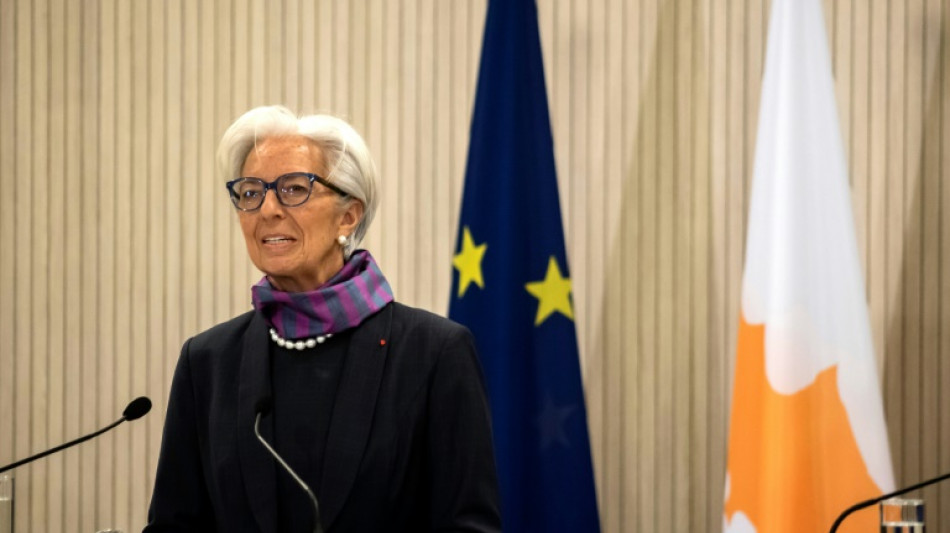
European Central Bank president Christine Lagarde warned Wednesday that a prolonged Ukraine conflict will keep energy prices and the cost of living spiralling, blighting a post-Covid recovery.
The Russia-Ukraine war has introduced “considerable uncertainty” into the outlook for the EU economy, she said during a visit to Cyprus.
The ECB chief said the war has stunted a quicker-than-expected rebound from the Covid-19 pandemic due to a job-rich recovery.
“The economic impact of the war is best captured by what economists call a “supply shock”, which is a shock that simultaneously pushes up inflation and reduces growth,” Lagarde told a news conference.
She said energy prices are expected to stay higher for longer, with gas prices already up by 52% since the start of the year and oil prices up 64%.
Pressure on food inflation is also likely to increase.
Russia and Ukraine account for nearly 30% of global wheat exports, while Belarus and Russia produce around a third of the world’s potash, a key ingredient in producing fertiliser, thereby exacerbating supply shortages.
“Global manufacturing bottlenecks are likely to persist in certain sectors,” she said.
Russia is the world’s top exporter of palladium, which is key for producing catalytic converters, while Ukraine supplies around 70% of the world’s neon gas, critical for semiconductor manufacturing.
“As the euro area is a net importer of energy, rising energy prices mean a loss in purchasing power for consumers,” said Lagarde.
She said households are becoming more pessimistic and could cut back further on spending.
“Consumer confidence this month has fallen to its lowest level since May 2020 and stands well below its long-term average.”
Lagarde said inflation levels and slowing growth would depend on how the conflict and Russian sanctions evolve.
“Clearly, the longer the war lasts, the higher the economic costs will be and the greater the likelihood we end up in more adverse scenarios."
The ECB boss said the Ukraine war had underlined the “deep strategic vulnerabilities in our security and trade relationships, which we can only address by being more united”.
Brussels has announced ambitious goals, such as doubling Europe’s global market share for semiconductor production to 20% by 2030.
Last week, Europe’s leaders agreed to reduce demand for Russian fossil fuels and bolster energy security by diversifying liquefied natural gas (LNG) supplies and investing more in clean energies.
Lagarde said Europe is entering a “difficult phase” in the short term with higher inflation and slower growth.
“The longer the war lasts, the greater the costs are likely to be.”
M.A.Colin--AMWN