Ukraine war fuels 'overlapping crises': World Bank's Malpass / Photo: Samuel Corum - GETTY/AFP/File
 Samsung Galaxy S27 Series Camera Design Leaked via Lens Protectors
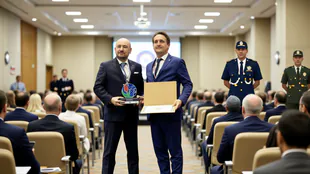
 French Economy Shrinks 0.1% as Consumer Confidence Slumps
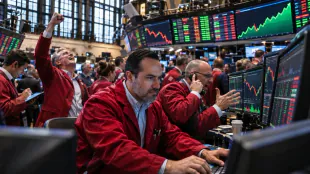 Wall Street Ends Turbulent Week Higher Despite Inflation and AI Jitters
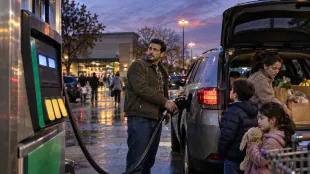
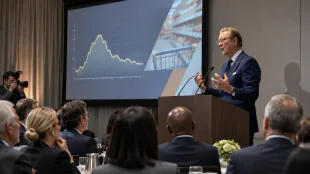 Kansas City Fed Chief Says Inflation Is Still Running Too Hot

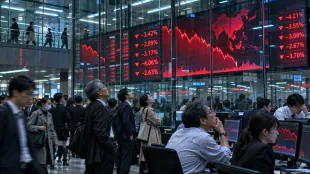 Asian Markets Slide as AI Concerns Hit Chip Stocks
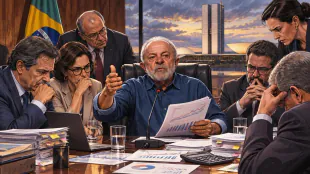
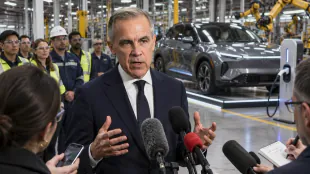 Canada Signals Openness to Chinese Automakers if US Trade Talks Fail

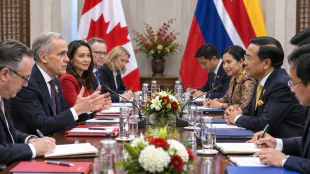 Canada Expands Asian Trade Push as US Negotiations Resume

 US Jobless Claims Rise to 200,000 but Layoffs Remain Historically Low

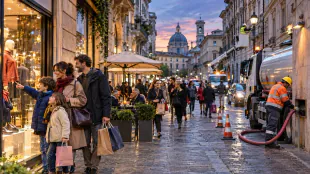 Italy Raises 2026 Growth View but Warns Energy Will Keep Inflation High

 UK Economy Grows 0.7% in Third Quarter as Services Lead Expansion
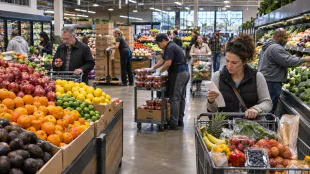
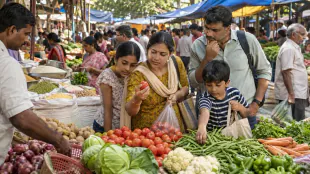 India's Retail Inflation Reaches 6.09% as Food Prices Accelerate
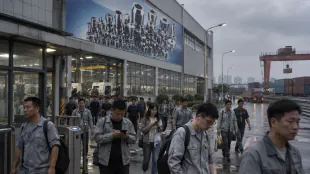
 China's October Activity Data Reveal a Weak Start to the Fourth Quarter
 Philippines Urges ASEAN and China to Accelerate South China Sea Code of Conduct

The Russian war on Ukraine has set off a chain reaction in the global economy with rising energy and food prices that will worsen poverty and hunger and exacerbate debt concerns, World Bank President David Malpass said Tuesday.
Faced with these "overlapping crises," the leader of the development lender urged advanced nations to keep markets open, removing trade barriers and reversing policies that concentrate wealth.
The war came as the global economy was trying to right itself following the Covid-19 pandemic, even as new lockdowns in China create uncertainty about the recovery.
"Never have so many countries experienced a recession at once, suffering lost capital, jobs, and livelihoods. At the same time, inflation continues to accelerate," Malpass said at an event in Warsaw.
Speaking ahead of annual meetings next week of the World Bank and International Monetary Fund, Malpass pledged to help Ukraine rebuild following the war.
The two global lenders have quickly rolled out aid for the country, and Malpass said the bank has secured donor support for $1 billion in funding under the concessional lending arm, as part of a $3 billion package, as well as $100 million for Moldova.
Beyond the immediate humanitarian crisis caused by the war that created a flood of refugees -- four million fleeing into neighboring countries like Poland -- "supply constraints and disruptions, have fueled price increases and worsened inequality around the globe."
Ukraine is a key source of grain while Russia is a major producer of energy and fertilizer, and the war is "creating sudden shortages of energy, fertilizer, and food, pitting people against each other and their governments," he said.
And an "intense drought" in South America is making the food situation worse.
"For every one percentage point increase in food prices, 10 million people are expected to fall into extreme poverty," he said, adding "Malnutrition is expected to grow."
Protestors in Peru have taken to the streets demand government action, as did people in Sri Lanka, where the government on Tuesday announced it was defaulting on its $51 billion in foreign debt.
Malpass has been sounding the warning about the growing debt burden in developing nations, and said the total "has risen sharply to a 50-year high."
"Most emerging market and developing economies are ill-prepared to face the coming debt shock," he warned.
The World Bank chief called on advanced countries to keep their markets open.
"Most of the trade barriers protect the privileged at the expense of the rest of society, worsening inequality."
Y.Kobayashi--AMWN