WHO experts insist Covid still a global emergency / Photo: Tolga Akmen - AFP
 Samsung Galaxy S27 Series Camera Design Leaked via Lens Protectors
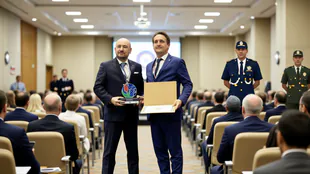
 French Economy Shrinks 0.1% as Consumer Confidence Slumps
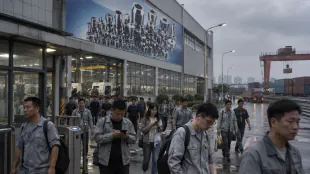
 Wall Street Ends Turbulent Week Higher Despite Inflation and AI Jitters

 Kansas City Fed Chief Says Inflation Is Still Running Too Hot

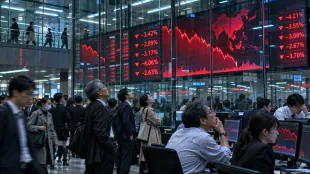 Asian Markets Slide as AI Concerns Hit Chip Stocks

 Canada Signals Openness to Chinese Automakers if US Trade Talks Fail

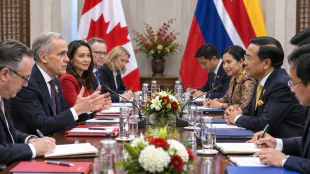 Canada Expands Asian Trade Push as US Negotiations Resume

 US Jobless Claims Rise to 200,000 but Layoffs Remain Historically Low

 Italy Raises 2026 Growth View but Warns Energy Will Keep Inflation High

 UK Economy Grows 0.7% in Third Quarter as Services Lead Expansion

 India's Retail Inflation Reaches 6.09% as Food Prices Accelerate

 China's October Activity Data Reveal a Weak Start to the Fourth Quarter

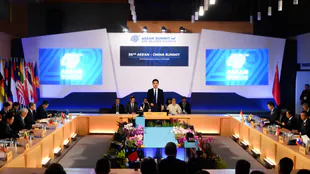 Philippines Urges ASEAN and China to Accelerate South China Sea Code of Conduct

The WHO's emergency committee on Covid-19 on Wednesday unanimously affirmed that the virus remains a major public health danger and insisted that countries must stop dropping their guard.
With many nations relaxing public health and social measures, and drastically reducing testing for the virus, the World Health Organization's group of experts said the pandemic was far from being at an end.
"Now is not the time to let our guard down -- on the contrary, and this is an extremely strong recommendation," committee chair Didier Houssin told a press conference.
"The situation is far from over with regard to the Covid-19 pandemic, the circulation of the virus is still very active, mortality remains high and the virus is evolving in an unpredictable way," the French doctor warned.
"Now is not the time for relaxation on this virus, nor weakness in surveillance, testing and reporting, nor laxity in public and social health measures and no resignation when it comes to vaccination."
The committee meets every three months to discuss the pandemic and reports to WHO chief Tedros Adhanom Ghebreyesus.
It concluded that the pandemic still constitutes a public health emergency of international concern (PHEIC) -- the highest level of alert that the WHO can sound.
- 'Middle' phase of pandemic -
The committee declared the Covid-19 outbreak a PHEIC on January 30, 2020, when, outside of China, fewer than 100 cases and no deaths had been reported.
Though it is the internationally-agreed mechanism for triggering an international response to such outbreaks, it was only Tedros after describing the worsening situation as a pandemic on March 11 that many countries woke up to the danger.
"The committee unanimously agreed that the Covid-19 pandemic still constitutes an extraordinary event that continues to adversely affect the health of populations around the world, poses an ongoing risk of international spread," it said in a statement Wednesday.
Globally, in the week to Sunday, the number of new Covid-19 cases and deaths continued to decline for a third consecutive week, with more than seven million cases and over 22,000 deaths reported.
This was the lowest number of Covid deaths since the early days of the pandemic.
However, some countries are still witnessing serious spikes in cases, which is putting pressure on hospitals, said Tedros, adding that the world is "still in the middle of the pandemic".
"This virus has over time become more transmissible and it remains deadly especially for the unprotected and unvaccinated that don't have access to health care and antivirals," he said.
Tedros urged people to get vaccinated and continue wearing masks, especially in crowded indoor spaces.
The WHO said the Omicron variant accounted for 99.2 percent of samples collected in the last 30 days that have been sequenced and uploaded to the GISAID global science initiative, with the previously-dominant Delta variant now less than 0.1 percent.
Ch.Havering--AMWN