Hong Kong outbreak exposes flaws in 21-day quarantine policy
 Dangote to launch $16bn refinery in Kenya
 North Korean leader 'extremely obese': Seoul spy agency
 Yankees and pope-backed White Sox start MLB playoffs with wins

 Malaysia's ex-PM Mahathir in hospital for observation
 'No limits': Marathon world record holder Sawe chasing history

 Countdown begins to biggest-ever Rugby World Cup

 Bangladesh women lose ground after quota reform

 Vietnam admits 'differing opinions' on Hanoi development

 Stocks temper gains as oil pares heavy losses, US data in focus
 New Zealand denies breaching climate commitments to EU

 Albert becomes youngest US scorer in 4-2 win over Chile
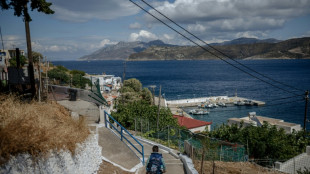 Pirate island's plunging population shows Greece's demographic decline
 With elections ahead, Latvia's Russian-speakers reject Moscow's help

 Brazil football clubs face massive sponsorship blow from betting ban
 ChatGPT maker wants to be the App Store for AI as safety concerns grow

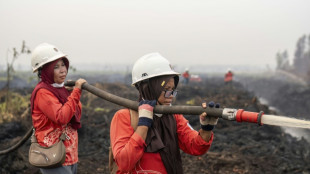 Women fight fires and sexism in Indonesian Borneo

 Forsling's OT blast lifts Florida over Carolina in NHL opener

 Alpha Growth Management Opens Rep Office in Japan

 NBA close to picking new $12-13bn Vegas team owners: report
 LA28 Olympics torch relay to visit all 50 states
 Spain brush aside Croatia in Nations League, England down Czechs
 Trump hails 'morally binding' AI self-regulation pledge

 Yamal inspires Spain to Croatia romp on World Cup homecoming

 UN to hold fourth informal poll of secretary-general candidates
 Who are the Emiratis behind crisis-hit Manchester City?

Hong Kong's U-turn on its mandatory three-week quarantine for arrivals follows growing scrutiny of the strict policy after a coronavirus outbreak was traced to a woman infected during her hotel stay.
Like mainland China, Hong Kong is one of the few places left in the world still pursuing a zero-Covid strategy that has largely kept the virus at bay but left the finance hub internationally isolated.
On Thursday, city leader Carrie Lam announced the 21-day quarantine period that most arrivals faced -- among the world's longest -- would be cut to two weeks because the increasingly dominant Omicron variant has a shorter incubation period.
The surprise move came after multiple recent outbreaks forced the reimposition of economically painful social-distancing measures and saw thousands of residents in one district confined to their homes.
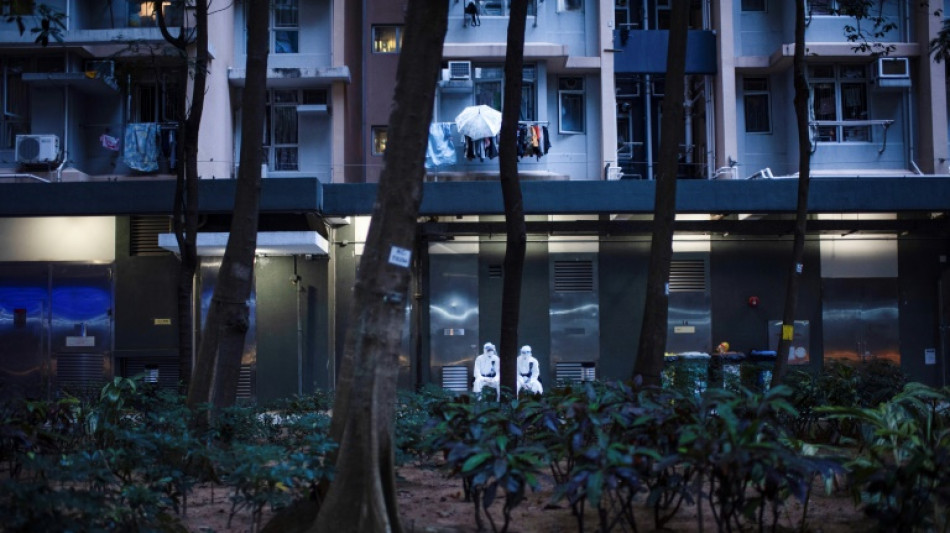
One large cluster tore through densely crowded public housing blocks and was traced to a 43-year-old woman from Pakistan who was infected in one of the city's 40 designated quarantine hotels during the latter stage of her stay.
Some Hong Kong health experts had been warning that the length of hotel quarantines could make people more vulnerable to cross-infections.
"The quarantine facilities in hotels are clearly failing travellers time and time again, and putting them at risk of catching Covid-19," Siddharth Sridhar, a microbiologist at the University of Hong Kong, told AFP before Lam's announcement.
- 'Luck ran out' -
Ben Cowling, an epidemiologist at HKU, had long argued that 21 days was without scientific merit and raised risks.
Multiple instances of hotel cross-infection had been recorded but spotted before people left quarantine.
"I don't think it's a surprise that we've had an outbreak... if anything, it's a surprise that we have six months with zero," Cowling told AFP, referring to low case numbers in the second half of last year.
"I think our luck's run out."
Hong Kong's government maintains its zero-Covid policy has strong support among locals, but there are signs public opinion is turning.
A survey by Hong Kong's Democratic Party in January found 65 percent of residents supported "living with the virus", up from 42 percent last November.
International businesses have sounded a growing alarm, warning of a talent drain and worsening recruiting issues as rival hubs are reopening.
But the government has so far given no indication of when, or even if, there will be a post-zero-Covid Hong Kong.
In a draft report obtained this week by Bloomberg News, the European Chamber of Commerce warned businesses that the city could remain internationally isolated until 2024.
"We anticipate an exodus of foreigners, probably the largest that Hong Kong has ever seen, and one of the largest in absolute terms from any city in the region," the draft report said.
The Financial Times reported this week that Bank of America is the latest blue-chip firm to examine relocating staff to Singapore.
- 'End of the beginning' -
Since 2019's huge and disruptive democracy protests, Hong Kong's government has increasingly acted in lockstep with Beijing on an array of issues, from coronavirus policy to an ongoing crackdown on political dissent.
Lam has said reopening travel with the mainland must come before the rest of the world, even as China faces its own outbreaks and shows no sign of wanting to open to Hong Kong any time soon.
"For the rest of the world, 2022 is the beginning of the end of the pandemic. For Hong Kong, it is just the end of the beginning," Sridhar wrote in a recent Facebook post.
Hong Kong's ability to live with Covid-19 has also been hampered by a woeful vaccination campaign.
Despite ample supplies, just over 70 percent of Hong Kong's eligible population has received two vaccine doses.
And less than half of those aged 70 or above -- the most vulnerable demographic -- have been jabbed.
Hong Kong experts, including Sridhar and Cowling, agree that the city's priority must be to vaccinate its elderly for it to have any chance to move away from zero-Covid policies.
But given the local government's reluctance to stake out a path different from the mainland's, there is scepticism within the business community that a higher vaccination rate would result in an international reopening unless China did the same.
P.Mathewson--AMWN