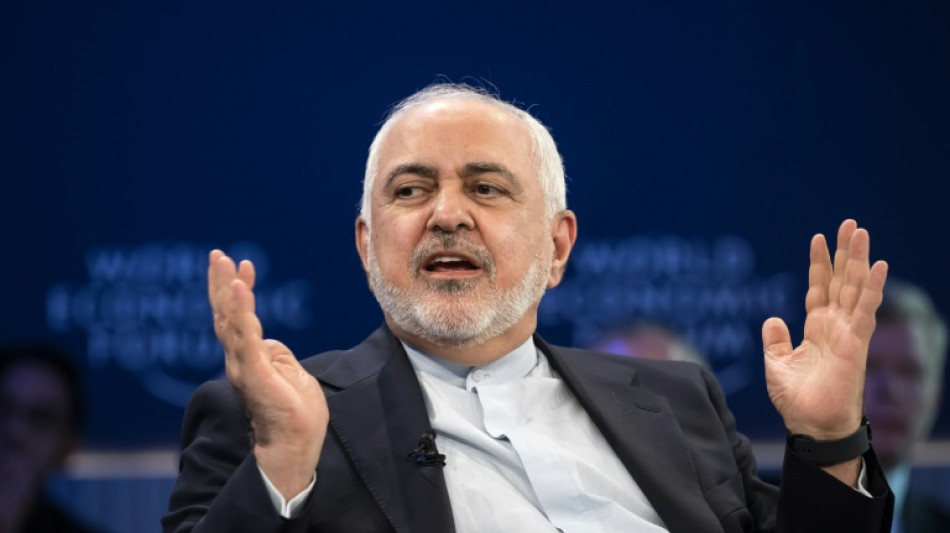
Iran VP says government put off enforcing strict dress code / Photo: FABRICE COFFRINI - AFP
 ALIX LASERS shareholders remove Michael Sobitsch as managing director in view of the circumstances
 Kiss of Life Teases First Winter Single 'Greedy'

 Eight-Year-Old Georgia Wins Penrith Valley Public Speaking Competition

 The DEA Laid The Trap - And State Marijuana Operators Took The Bait

 Tosca's 2026 Sustainability Report Makes the Case for Packaging as Critical Supply Chain Infrastructure

 West Midlands Shoppers Urged to Guard Against Black Friday Scams

 Surfshark Adds Real-Time Call Protection to iOS App in Version 5.3.0

 Saudi PIF Retains Top Sovereign Wealth Fund Brand Title for Third Year

 Professor Shahida Moosa Pioneers Medical Genomics in South Africa Amid Testing Shortages
Iranian Vice President Mohammad Javad Zarif said on Wednesday his government had put off enforcing the country's strict Islamic dress code in order "not to put women under pressure".
Covering the neck and head and dressing modestly became mandatory for women in Iran following the Islamic revolution that overthrew the US-backed Shah in 1979.
"If you go to the streets of Tehran, you will find women not covering their hair. It's against the law, but the government has decided not to put women under pressure," Zarif told the World Economic Forum in Davos.
He said President Masoud Pezeshkian "did not implement the law, with the consent of the head of parliament, the head of the judiciary and others in the National Security Council".
He said "we are moving in the right direction", acknowledging that "it is not enough, but it is a step in the right direction".
In September 2023, Tehran approved what is officially known as the "Law on Supporting the Family through the Promotion of the Culture of Chastity and Hijab".
It imposes tougher penalties on women who refuse to wear the mandatory hijab and significant fines and prison sentences for those deemed to be promoting "nudity" or "indecency".
The bill was initially meant to be referred in December to Pezeshkian, who has expressed "reservations" about the text, citing numerous "ambiguities".
Earlier this month, government spokeswoman Fatemeh Mohajerani said the bill had been "delayed" over some of its provisions, which "could have had serious social consequences".
In late 2022, Iran was rocked by a wave of mass protests following the death in custody of 22-year-old Iranian Kurd Mahsa Amini, who had been arrested for allegedly violating the dress code.
The months-long unrest resulted in hundreds of deaths, including many security personnel, and the arrest of thousands of demonstrators.
A.Rodriguezv--AMWN


