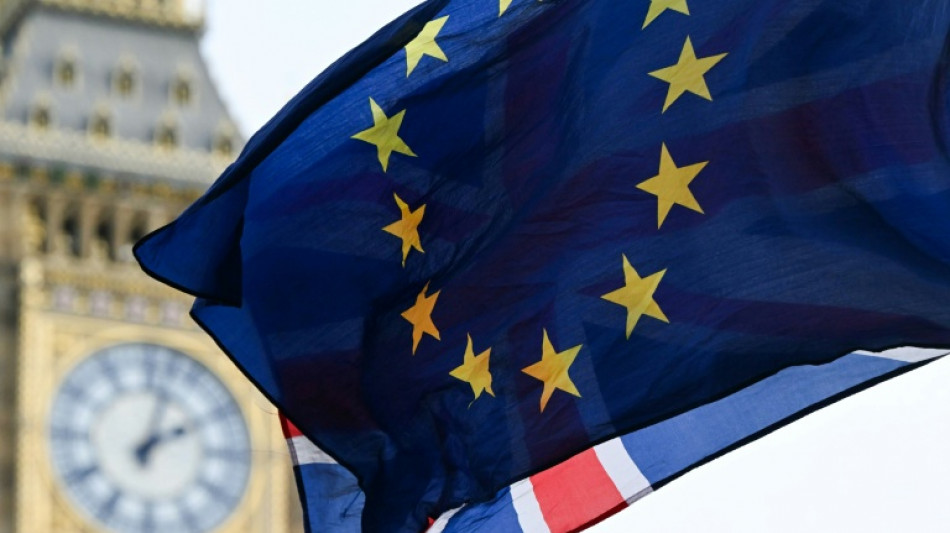
Support for Brexit sinks to lowest level in UK: poll / Photo: JUSTIN TALLIS - AFP
 ALIX LASERS shareholders remove Michael Sobitsch as managing director in view of the circumstances

 Kiss of Life Teases First Winter Single 'Greedy'

 Eight-Year-Old Georgia Wins Penrith Valley Public Speaking Competition

 The DEA Laid The Trap - And State Marijuana Operators Took The Bait

 Tosca's 2026 Sustainability Report Makes the Case for Packaging as Critical Supply Chain Infrastructure

 West Midlands Shoppers Urged to Guard Against Black Friday Scams

 Surfshark Adds Real-Time Call Protection to iOS App in Version 5.3.0

 Saudi PIF Retains Top Sovereign Wealth Fund Brand Title for Third Year

 Professor Shahida Moosa Pioneers Medical Genomics in South Africa Amid Testing Shortages
Only 30 percent of Britons still believe the UK made the right decision to leave the European Union, the lowest figure recorded by pollsters since shortly after the 2016 Brexit referendum, a YouGov poll showed on Wednesday.
Five years after Britain formally left the bloc on January 31, 2020, the number backing UK withdrawal compares to 46 percent in August 2016, five weeks after the vote.
Fifty-two percent of Britons voted to leave the EU in the referendum in June 2016.
Among those who supported Brexit in the vote, one in six (18 percent) now believes it was an error.
Overall, 55 percent of those questioned were in favour of rejoining, according to the poll of 2,225 people conducted this month.
A large majority (75 percent) of younger adults, who were unable to vote in the referendum, meanwhile disapproved of the leave vote compared to 10 percent who see it as the right choice.
Prime Minister Keir Starmer voted to remain in the EU when he was leader of the opposition Labour Party.
The party, elected to government last July, is seeking closer relations with the bloc but has ruled out returning to the European single market, customs union or free movement.
O.Karlsson--AMWN


