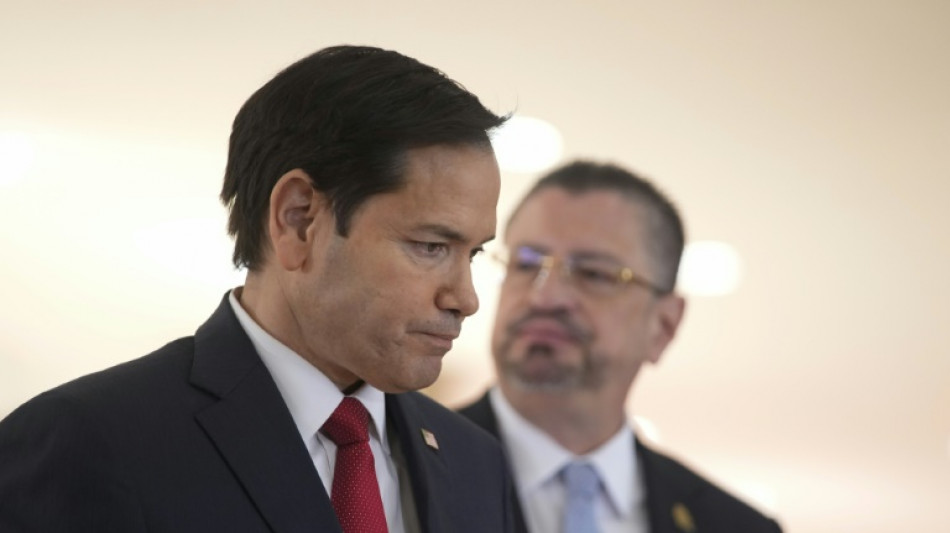
Rubio asks if aid groups 'sabotaging' projects over US fund freeze / Photo: Mark Schiefelbein - Pool AP/AFP
 ALIX LASERS shareholders remove Michael Sobitsch as managing director in view of the circumstances
 Kiss of Life Teases First Winter Single 'Greedy'

 Eight-Year-Old Georgia Wins Penrith Valley Public Speaking Competition

 5 Fun Date Night Ideas That Don't Cost a Fortune

 Tosca's 2026 Sustainability Report Makes the Case for Packaging as Critical Supply Chain Infrastructure

 West Midlands Shoppers Urged to Guard Against Black Friday Scams

 Surfshark Adds Real-Time Call Protection to iOS App in Version 5.3.0

 Saudi PIF Retains Top Sovereign Wealth Fund Brand Title for Third Year

 Professor Shahida Moosa Pioneers Medical Genomics in South Africa Amid Testing Shortages

Secretary of State Marco Rubio alleged Tuesday that some aid groups may have intentionally sabotaged projects to make a point after he froze most US assistance.
Rubio, currently on a Latin America tour, doubled down on President Donald Trump's 90-day suspension of assistance as reports emerge around the world of local aid groups curtailing or stopping life-saving aid.
"I issued a blanket waiver that said, if this is life-saving programs, OK; if it's providing food or medicine or anything that is saving lives and is immediate and urgent, you're not included in the freeze," Rubio told reporters in Costa Rica.
"I don't know how much more clear we can be than that," he said.
"I would say if some organization is receiving funds from the United States and does not know how to apply a waiver, then I have real questions about the competence of that organization, or I wonder whether they're deliberately sabotaging it for purposes of making a political point," said the former Republican senator.
A day earlier, Rubio said he had been made acting head of the US Agency for International Development (USAID) as Trump and his billionaire ally Elon Musk look at drastically scaling back aid and merging the organization under the State Department.
Non-governmental groups say they have heard multiple cases of aid groups that have struggled to operate, mostly smaller organizations that provide targeted services such as health care or education and did not have reserves.
Some schools have shuttered in Uganda, where USAID was backing a universal education program, and demining work has been disrupted in Cambodia, among other cases.
- Targeted support to allies -
Rubio announced that he was issuing new waivers to ensure the flow of assistance to Costa Rica, a major US partner on issues including migration and drug-trafficking.
US assistance includes biometric work to stop smugglers, which Rubio pointed out as an example of concrete American help that benefits its own interests.
"Under President Trump, we have a foreign policy in which we are strong in providing support to our allies," Rubio said as he met Costa Rican President Rodrigo Chaves.
The top US diplomat, on his third stop in his first trip, is a longtime China hawk who is also looking to push back on Beijing's influence in the region.
Costa Rica in 2007 switched recognition to China from Taiwan, the self-governing democracy claimed by Beijing -- a turning point as other Latin American countries followed suit.
But US officials also see hope in the example of Costa Rica, whose relations with China have turned rockier in recent years.
Chaves in 2023 effectively forbade Chinese tech titan Huawei from bidding for the nation's 5G network due to Beijing's refusal to sign an international agreement on cybercrime.
"When you confront companies that are not secure, they're backed by governments like the government of China that likes to threaten, that likes to sabotage, that likes to use economic coercion to punish you," Rubio said.
Costa Rica has been "very firm, and I think they deserve a lot of support in confronting that," Rubio said.
A.Rodriguezv--AMWN


