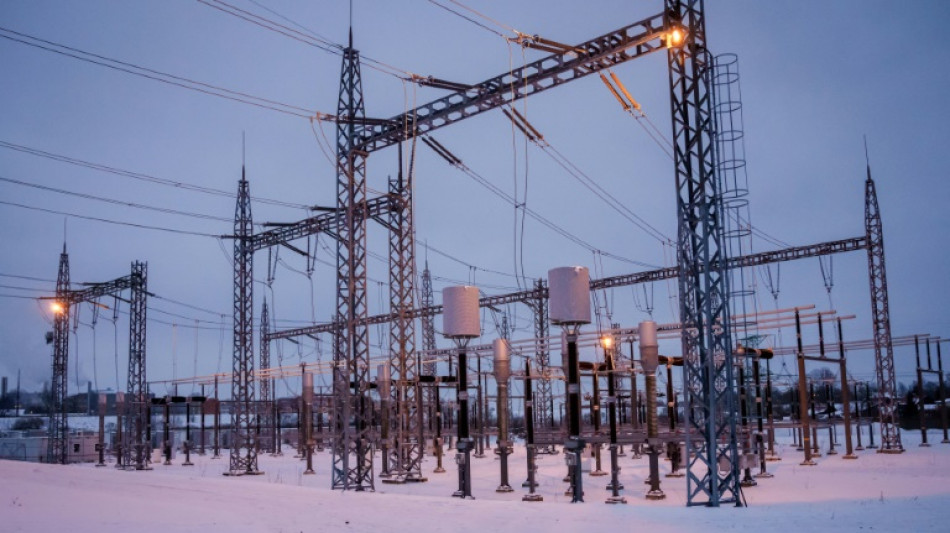
Baltic states 'successfully' link with European power grid / Photo: Gints Ivuskans - AFP
 Student Activism Shifts Underground After University Crackdown on Gaza Encampments

 Surge in Early Social Security Claims Linked to Agency Turmoil

 Panthers Seek NFC South Lead Against Ravens as Baltimore Ends Skid

 Tosca's 2026 Sustainability Report Makes the Case for Packaging as Critical Supply Chain Infrastructure

 5 Fun Date Night Ideas That Don't Cost a Fortune

 GIRLBAND! Headline Show at Rough Trade Marks National Breakthrough

 Samsung Galaxy Buds Active Leak Reveals ANC, Ear-Hook Design and One UI 9.5 Integration

 Egypt and Syria Sign Agreement to Restore Direct Flights After 14-Year Hiatus

 Van Gogh’s ‘Châtaigniers en Fleurs’ Sets $285m Record at Sotheby’s

Lithuanian President Gitanas Nauseda on Sunday announced that the three Baltic states had "successfully" joined the European power grid after severing ties with the Russian network.
Estonia, Latvia and Lithuania -- former Soviet states that are now European Union and NATO members -- have been working on making the change since Russia invaded Ukraine in 2022.
The small Baltic countries fear that they too could be targeted. The staunch Ukraine supporters are also worried that Russia would blackmail them using electricity supplies.
"Moments ago, I received great news. The synchronisation of the Baltic states' electricity system with the continental European system has been successfully completed," Nauseda told reporters in Vilnius.
"This is a historic moment marking the end of a long journey ... We have achieved full energy independence. The period of political pressure and blackmail is finally over," he said.
He spoke alongside his Estonian and Latvian counterparts as well as European Commission President Ursula von der Leyen and Poland's president.
The Baltic countries integrated into the European grid via Poland.
A total of 1.6 billion euros ($1.7 billion) -- mostly EU funds -- have been invested in the ending of power ties with Russia across the Baltic states and Poland.
Nauseda called for "substantial action at the European Union level" to improve the resilience of the Baltic states' critical infrastructure.
"Now is the time to secure our achievements. Russia's war against Ukraine has radically transformed the perception of the threats to the critical infrastructure in Europe," he said.
"Recent incidents involving undersea infrastructure in the Baltic Sea provide a matter of great concern. And a call for resolute action, as well," he added.
Several undersea telecom and power cables have been severed in the Baltic Sea in recent months.
Some experts and politicians have accused Russia of waging a "hybrid war", including the unconventional targeting of energy supplies, an allegation Moscow denies.
X.Karnes--AMWN

