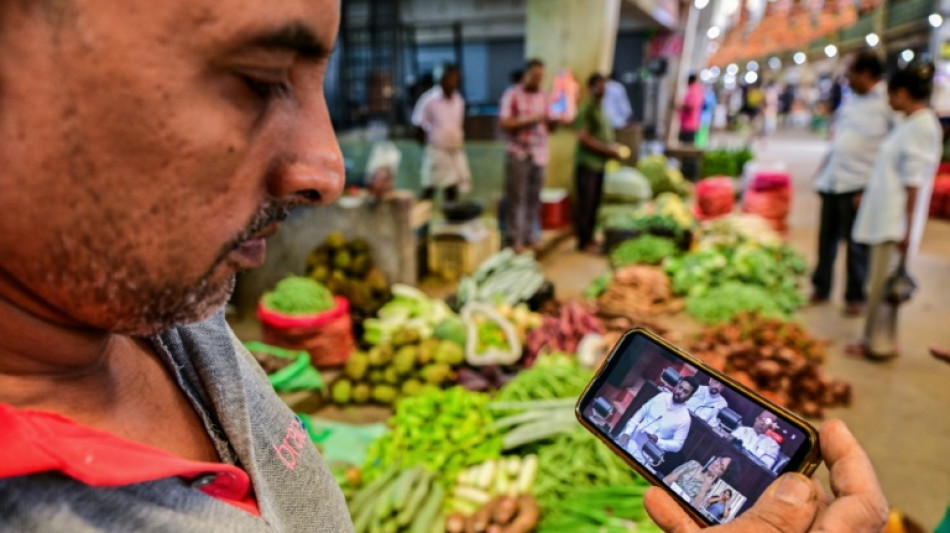
Sri Lanka budget banks on car taxes to boost coffers / Photo: Ishara S. KODIKARA - AFP
 Kiss of Life Teases First Winter Single 'Greedy'

 Eight-Year-Old Georgia Wins Penrith Valley Public Speaking Competition

 5 Fun Date Night Ideas That Don't Cost a Fortune

 GIRLBAND! Headline Show at Rough Trade Marks National Breakthrough

 Samsung Galaxy Buds Active Leak Reveals ANC, Ear-Hook Design and One UI 9.5 Integration

 Egypt and Syria Sign Agreement to Restore Direct Flights After 14-Year Hiatus

 Van Gogh’s ‘Châtaigniers en Fleurs’ Sets $285m Record at Sotheby’s

 Anthropic Sets Record $81.3 Billion IPO Valuing AI Firm at $1.5 Trillion

Sri Lanka is banking on vehicle import taxes to boost revenue and revive the island nation's battered economy, leftist President Anura Kumara Dissanayake's maiden budget showed on Monday.
Vehicle imports were banned in 2020 to save foreign exchange but the move deprived authorities of a lucrative revenue stream, as cars were taxed at about 300 percent.
Dissanayake said the ban's end would bolster state revenue to meet the tax target of 15 percent of GDP, which the country must achieve under the terms of an International Monetary Fund bailout agreement.
"For the year 2025, the bulk of revenue gains is expected to be delivered by the liberalisation of motor vehicle imports," the president told parliament.
"This process is being carefully monitored to ensure that the import of vehicles does not result in undue negative impacts on external sector stability."
The budget also doubled the entrance fee of the island's two casinos to $100 and raised the turnover tax on gaming establishments to 18 percent, up from 15 percent.
The IMF wants Sri Lanka to double its income from taxation compared to the 7.3 percent of GDP it took in 2022, when the country defaulted on its $46 billion foreign debt.
That year saw the island run out of foreign exchange to finance the import of food, fuel and other essentials, prompting months of street protests led to the toppling of then-president Gotabaya Rajapaksa.
Sri Lanka secured a $2.9 billion four-year loan from the IMF the following year.
Dissanayake, who was elected last year promising to end corruption and bring back stolen assets stashed abroad, said the economy was on the mend.
"We should be in a comfortable position to service our foreign debts from 2028," he said.
He also announced a hefty 65 percent increase in the minimum wage to 40,000 rupees ($133) and raised subsidies for low-income earners.
F.Pedersen--AMWN

