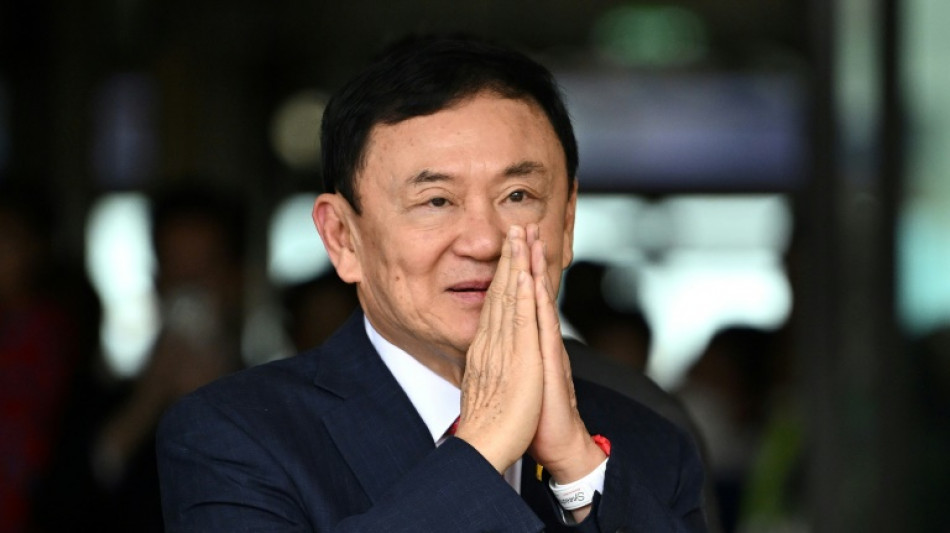
Ex-PM Thaksin apologises over massacre in southern Thailand / Photo: Manan VATSYAYANA - AFP/File
 Surge in Early Social Security Claims Linked to Agency Turmoil
 Panthers Seek NFC South Lead Against Ravens as Baltimore Ends Skid

 GIRLBAND! Headline Show at Rough Trade Marks National Breakthrough

 Samsung Galaxy Buds Active Leak Reveals ANC, Ear-Hook Design and One UI 9.5 Integration

 Egypt and Syria Sign Agreement to Restore Direct Flights After 14-Year Hiatus

 Van Gogh’s ‘Châtaigniers en Fleurs’ Sets $285m Record at Sotheby’s

 Anthropic Sets Record $81.3 Billion IPO Valuing AI Firm at $1.5 Trillion

 eThekwini Faces R6.5bn Flood Claim from Toyota’s Insurer
Former Thai prime minister Thaksin Shinawatra apologised Sunday over the deaths of scores of Muslim protesters who suffocated in army trucks two decades ago in the country's south.
The apology is believed to be the first he has made in public over the incident known as the "Tak Bai massacre", and comes nearly four months after the statute of limitations expired and murder charges against seven suspects were dropped.
The massacre has long stood as an emblem of state impunity in Thailand's Muslim-majority southernmost provinces, where an insurgency has rumbled for years between government forces and separatists seeking greater autonomy for a region that is culturally and religiously distinct from the Buddhist-majority country.
Thaksin, who was premier at the time of the massacre, said Sunday he wanted to apologise for any actions that may have made people "feel uneasy".
"When I was a prime minister, I had a strong intention to care for local people," he said, when asked about the massacre during his first visit to the area known as the "deep south" in 19 years.
"If there was any mistake or any discontent caused by me, I would like to apologise."
Anchana Heemmina, co-founder of Thai rights group Duay Jai, told AFP it was the first time Thaksin had apologised.
"If he is sincere (about the apology), he should (also) say sorry to the families... face to face," she said.
On October 25, 2004, security forces opened fire on a crowd protesting outside a police station in the town of Tak Bai in Narathiwat province, close to the Malaysian border, killing seven people.
Subsequently, 78 people suffocated after they were arrested and stacked on top of each other in the back of Thai military trucks, face down and with their hands tied behind their backs.
In August last year, a provincial court accepted a criminal case filed by victims' families against seven officials, including a former army commander elected to parliament for the Shinawatras' Pheu Thai party in 2023.
But the officials avoided appearing in court, preventing the case from progressing, and in October Prime Minister Paetongtarn Shinawatra -- Thaksin's daughter -- said it was not possible to extend the statute of limitations.
The case has become synonymous with a lack of accountability in a region governed by emergency laws and flooded with army and police units.
No member of the Thai security forces has ever been jailed for extrajudicial killings or torture in the "deep south", despite years of allegations of abuses across the region.
The conflict has seen more than 7,000 people killed since January 2004.
Th.Berger--AMWN

