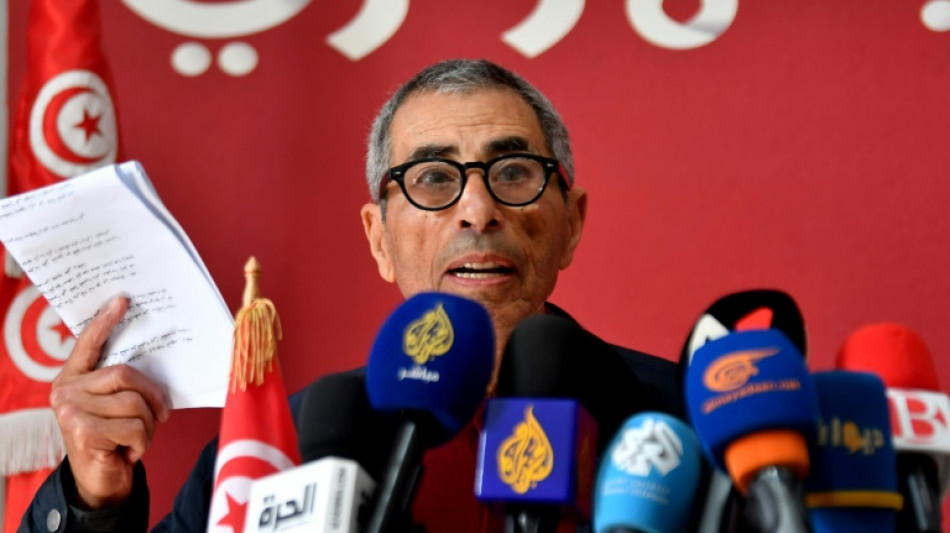
Tunisia opposition figures go on trial on state security charges / Photo: FETHI BELAID - AFP/File
 Surge in Early Social Security Claims Linked to Agency Turmoil
 Panthers Seek NFC South Lead Against Ravens as Baltimore Ends Skid

 GIRLBAND! Headline Show at Rough Trade Marks National Breakthrough
 Samsung Galaxy Buds Active Leak Reveals ANC, Ear-Hook Design and One UI 9.5 Integration

 Egypt and Syria Sign Agreement to Restore Direct Flights After 14-Year Hiatus
 Van Gogh’s ‘Châtaigniers en Fleurs’ Sets $285m Record at Sotheby’s

 Anthropic Sets Record $81.3 Billion IPO Valuing AI Firm at $1.5 Trillion

 eThekwini Faces R6.5bn Flood Claim from Toyota’s Insurer
The trial of several prominent Tunisian opposition figures accused of national security offences is set to begin Tuesday, with rights groups denouncing the case as politically motivated.
The around 40 high-profile defendants include former diplomats, politicians, lawyers and media figures, some of whom have been outspoken critics of President Kais Saied.
The charges against them are "plotting against the state security" and "belonging to a terrorist group", which could entail hefty sentences and even capital punishment, according to lawyers.
Saied was elected in 2019 after Tunisia emerged as the only democracy following the Arab Spring. But in 2021 he staged a sweeping power grab, and rights groups have since warned of a rollback on freedoms.
The defendants include politicians Jawhar Ben Mbarek, Abdelhamid Jelassi and Issam Chebbi, founder of the opposition National Salvation Front coalition -- all staunch critics of Saied.
In a letter from his cell, Ben Mbarek called the trial a form of "judicial harassment" aimed at "the methodical elimination of critical voices", claiming the accusations were baseless.
Activists Khayam Turki and Chaima Issa, businessman Kamel Eltaief, and Bochra Belhaj Hmida, a former member of parliament and human rights activist now living in France, have also been charged in the case.
Some of the defendants have been detained since a flurry of arrests in February 2023, after Saied dubbed them "terrorists".
Others remain free pending trial, as some have fled abroad, according to the defence committee.
On Sunday, during a visit to the streets of the capital Tunis, Saied told a woman who asked him to intervene for her imprisoned sons -- unrelated to the trial -- that he "never intervenes" in judicial matters.
"Let this be clear to everyone," he was heard telling her in a video posted on the presidency's official Facebook page.
Other critics of Saied have been detained and charged in different cases, including under a law to combat "false news".
In early February, the leader of Islamist-inspired Ennahdha party Rached Ghannouchi, 83, was sentenced to 22 years in prison for plotting against state security, though in a separate case.
The United Nations urged Tunisian authorities last month to bring "an end to the pattern of arrests, arbitrary detentions and imprisonment of dozens of human rights defenders, lawyers, journalists, activists and politicians".
Tunisia's foreign ministry dismissed the UN statement with "astonishment" and denounced its "inaccuracies".
"Tunisia can give lessons to those who think they are in a position to make statements," it said.
D.Moore--AMWN

