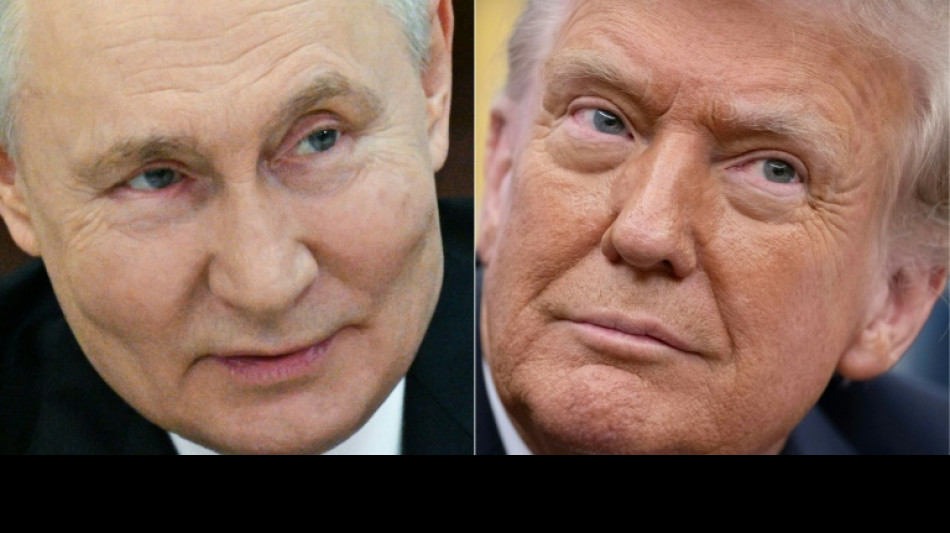
'Went through a hell of a lot with me': how Trump boasts about Putin ties / Photo: Ramil SITDIKOV, Jim WATSON - AFP/File
 West Midlands Shoppers Urged to Guard Against Black Friday Scams

 Surfshark Adds Real-Time Call Protection to iOS App in Version 5.3.0

 Saudi PIF Retains Top Sovereign Wealth Fund Brand Title for Third Year

 Professor Shahida Moosa Pioneers Medical Genomics in South Africa Amid Testing Shortages

 Texas Marijuana Decriminalization Faces Uncertain Future Under New Attorney General
 Early Black Friday Laptop Deals: MacBook Neo, IdeaPad Slim 5x, and Surface Laptop Prices Drop

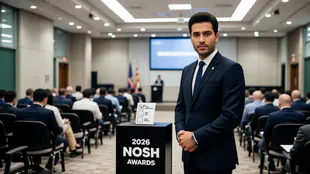 2026 East Bay Nosh Awards Voting Opens for Food and Drink Favorites
In the fiery spat between Donald Trump and Ukrainian President Volodymyr Zelensky, it was a sentence that went largely unnoticed, but said quite a lot about the closeness the US leader thinks he has with Russia's Vladimir Putin.
"Let me tell you, Putin went through a hell of a lot with me," Trump said on February 28 in the unprecedented and very public Oval Office clash.
"He went through a phony witch hunt," Trump added, referring to an investigation during his first term into whether his 2016 election campaign colluded with Moscow.
Even though that allegation was repeatedly denied by the Kremlin, the Republican president seems now to be saying the incident forged a sense of solidarity between the leaders.
The day before, in talks with British Prime Minister Keir Starmer, Trump said he believed Putin would "keep his word," adding: "I spoke to him, I've known him for a long time now."
For Sasha de Vogel, the associate director of the Authoritarian Politics Lab at the University of North Carolina at Chapel Hill, Trump "sees Putin as almost an aspirational figure."
"He sees Putin as a strong man, a leader who is the decider in the situations that he is involved in, who has made Russia a much stronger country on the global stage during his time in office -- and Trump wants to have that same kind of position."
The researcher however believes that Trump "overestimates their relationship."
"Putin is not a businessman who Trump can earn the trust of. Putin is a highly strategic, extremely experienced politician," she said, adding that the former KGB agent is "not operating on these same kinds of terms of personal like and dislike."
- 'Great-power politics' -
Other experts note a certain ideological convergence between the longtime Russian leader and the new US administration.
Putin hopes to "return to a model of great-power politics, where the United States and Russia can negotiate as equals and agree on spheres of influence," Natia Seskuria, an associate fellow at the Royal United Services Institute, wrote in Foreign Policy magazine.
According to Seskuria, the Russian leader believes that all territory of the former Soviet Union is his "rightful sphere of influence," while Trump has a similar "expansionist mindset" that extends to Greenland, Canada and even the Panama Canal.
After a long telephone conversation on February 12 with Putin, Trump said the Russian president wanted "peace" in Ukraine, adding: "I think he would tell me if he didn't."
On other occasions, he has called Putin "a very smart guy" and "a very cunning person," all the while refusing to call him a dictator -- a word he has used to describe Zelensky.
Trump "wants to be liked/respected by Putin, not understanding that... Trump's fawning over him will be greeted by scorn in the Kremlin," said Timothy Ash, a Russia specialist at the London-based think tank Chatham House.
- 'Erratic' -
De Vogel, however, said calling Trump a puppet of Putin, as some Democrats have done, is too reductive.
"He changes his mind quite quickly. He's very driven by emotion and by personal vengeance and things like this," she told AFP.
"And for that reason, he's also erratic as a partner to Russia."
During Trump's first term in the White House (2017-2021), the United States was not as favorable to Moscow as the Kremlin had hoped it would be.
Trump agreed to sell Javelin anti-tank missiles to Kyiv, and his administration imposed a series of sanctions on Russia.
The US leader sprung a surprise again on Friday, writing on his Truth Social platform: "Based on the fact that Russia is absolutely 'pounding' Ukraine on the battlefield right now, I am strongly considering large scale Banking Sanctions, Sanctions, and Tariffs on Russia."
Shortly afterward, in an exchange with reporters, Trump's tone became much more conciliatory, as he said it was "easier" to deal with Russia than with Ukraine.
"I've always had a good relationship with Putin. And you know, he wants to end the war," he said.
"I think he's going to be more generous than he has to be, and that's pretty good. That means a lot of good things."
A.Malone--AMWN

