'No rice, no sugar, no eggs': Bolivians despair as economy tanks / Photo: AIZAR RALDES - AFP
 Van Gogh’s ‘Châtaigniers en Fleurs’ Sets $285m Record at Sotheby’s

 Anthropic Sets Record $81.3 Billion IPO Valuing AI Firm at $1.5 Trillion

 eThekwini Faces R6.5bn Flood Claim from Toyota’s Insurer

 First Canadian Graphite Reports 43.9% Graphitic Carbon Sample and Encouraging Coarse-Flake Characteristics at Zone 13 at Lac Guéret South
 American Critical Minerals Reports High Grade Potash Intersection of 6.55m Grading 38.51 wt.% KCl at its Green River Project, Utah

 InterContinental Hotels Group PLC Announces Transaction in Own Shares - November 19
 Making the Most of a Long Weekend Without Leaving Town

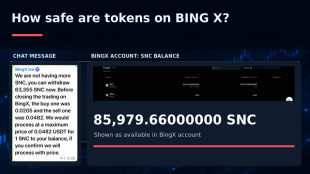 BING X: 22,624.66 SNC have disappeared at BingX – how safe are tokens on BingX? Will BingX’s MiCAR licence be suspended?

Waiting in line for hours, often in vain, for basics such as cooking oil has become a way of life in Bolivia, where anger over shortages and skyrocketing prices has exploded into violence.
Making matters worse: a campaign of roadblocks to protest the crisis has blocked major routes used for the delivery of food and medicine, fueling the scarcity.
"We never thought this situation would reach such an extreme, where we would have to stand in line for food or toilet paper," Rocio Perez, a 65-year-old pensioner told AFP at her home in La Paz.
She lives with her children and grandchildren, and the family has taken to rationing what they eat.
"We are staring into the abyss," said Perez.
At a nearby warehouse selling state-subsidized groceries, 40-year-old Sonia, who did not want to give her surname, queued in extreme cold from 5 am for cooking oil, only to leave empty-handed when stocks ran out some two hours later.
Only those who arrived at 4 am were in luck.
"I am a single mother, I have to work to support my six children... and on top of that, come and stand in this line," Sonia told AFP, clearly angry.
"I don't sleep well anymore."
Other irate customers banged on the store's metal doors and shouted at the state employees inside.
"There's no rice, no sugar, no eggs, there's nothing left," exclaimed 30-year-old Gisela Vargas, who also left with nothing.
Bolivia, home to 12 million people and an Indigenous majority, is one of the poorest countries in South America despite sitting on vast mineral resources such as gas and lithium.
In 2023, state oil company YPFB said Bolivia was running out of natural gas -- a crucial export product -- due to a lack of investment in new exploration.
A dramatic drop in gas exports led foreign currency reserves to plummet, making Bolivia unable to import sufficient fuel for its needs.
Inflation in May was 18.4 percent year-on-year, the highest in nearly two decades, and the local currency, the Boliviano, continues to lose value.
- 'I feel helpless' -
The crisis, which many Bolivians blame on President Luis Arce, has been compounded by a showdown between Arce and ex-leader Evo Morales, who retains a strong support base, especially among Indigenous people.
Morales supporters have been blockading roads since June 2.
At least four officers and one protester have been killed in clashes just weeks before elections in which Morales wants to seek a fourth term despite a two-term constitutional limit.
A survey by the Panterra consultancy in March found 89 percent of Bolivians want the country to take a "very different direction," with the rising cost of living by far the main concern.
"In terms of purchasing power, wages are deteriorating very strongly" with rising inflation, said economist Jose Luis Evia, a former member of the board of the Central Bank of Bolivia.
Francisca Flores, a 69-year-old street vendor, said she has had to cut back on chicken, formerly an affordable source of protein, after the price per kilogram doubled in just a few months.
She now eats omelets and other egg-based dishes instead.
"I feel helpless," Flores told AFP at La Garita de Lima, a busy commercial area of La Paz where hundreds of people formed a long queue as a truck started unloading chickens for sale.
"I go out with my little money... and if I can't buy anything, well, I just go home and endure it," she said.
Medicines, too, have become scarcer and more expensive.
- The left in trouble -
Bolivia saw what has been described as a short-lived "economic miracle" under the 2006-2019 presidency of Morales, with Arce as his economy minister.
Morales, Bolivia's first Indigenous president, nationalized hydrocarbons and invested the income in infrastructure and social programs.
The country experienced more than 4 percent annual growth while poverty rates tumbled from 60 percent to 37 percent, according to official figures at the time.
But critics say Morales' failure to implement structural economic reforms meant the growth was unsustainable.
Evia believes the resultant social unrest could be the undoing of the left, which has governed Bolivia for nearly two decades, in the August elections.
"There is growing consensus for change," he said.
L.Harper--AMWN