Russia takes lead at UN in crises around the world
 South Korea score late to reach Asian Games football final
 Tom Kim defies jet-lag, Kho cards ace as Asian Games golf begins
 Thai teen rocker Nene aims to tour, write music... and return to school
 Ivory Coast clamps down on harmful illegal gold rush
 Nagoya mayor says sorry for Asian Games 'inconveniences'
 G20 trade officials meet under shadow of tariffs, overcapacity
 India's fat dog vote goes viral
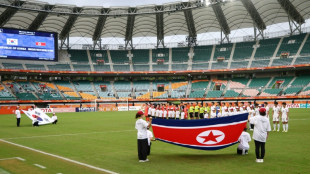 Asian Games crowds in spotlight as 998 see hosts in 50,000 stadium
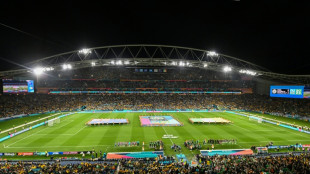 The eight stadiums for the 2027 Rugby World Cup
 Thieves swipe drugs under nose of Fiji police, swap with flour
 South Korea demands North apologise for DMZ mine blasts
 In Nepal's flood zone, teachers mourn students who never returned
 US Supreme Court lifts limits on third-country deportations
 Antonelli eager to 're-establish order' as F1 returns to Malaysia
 Paw-fect candidate: Australia finds new koala rescue dog
 One third of world population exposed to harmful air pollution: monitor

 North Korea denies South's claim it was apparently behind DMZ mine blasts
 West Bank's violent settlers part of a new generation fuelled by ideology
 US-led coalition ends mission in Iraq
 Pope-backed White Sox join Braves with MLB playoff wins
 Psychology Software Tools Builds on Early Bioz Success to Expand Access to Publication-Backed Product Evidence
 Alpha Growth Management Opens Rep Office in Japan
 NBA close to picking new $12-13bn Vegas team owners: report
 LA28 Olympics torch relay to visit all 50 states
 Spain brush aside Croatia in Nations League, England down Czechs
Russia has a stake in crises around the world from Ukraine to Syria, Sudan and Mali -- and that is reflected in the active role it takes at the UN Security Council on issues both big and small, contrasting with the relative detachment of the United States.
The paradox is that, by at least one measure, the former superpower's role at the Security Council is outsized: Moscow does not carry much weight in the global economy, and its financial contribution to the United Nations is far below that of Washington, the European Union or China.
"Russia's greatest strength is that it feels no shame about blowing up UN diplomacy when it wants to," says Richard Gowan, a UN specialist at the International Crisis Group think tank in New York.
"In contrast to China, which still tries to avoid getting into big fights in New York, Russia will use its veto at the Security Council even when it offends most other UN members," he told AFP.
The Soviet Union, as a member of the victorious Allied Forces in World War II, was made a permanent member of the Security Council in 1945. Russia kept the seat after the Soviet Union collapsed in 1991.
The Cold War's legacy is that, with the Soviet Union's disintegration, "the old balancing act has disappeared in favor of a formidable asymmetry," says Bertrand Badie, professor of international relations in Paris.
"Russia suffers from a rapid and brutal power deficit that makes its international game uncertain," Badie said.
As in any asymmetrical conflict the Russians are using what tools they can to maintain power -- especially at the United Nations.
In recent months they have made their mark in a number of areas, often definitively steering debates or negotiations in the direction they want.
On Monday, Moscow was unable to prevent a Security Council meeting on growing fears that it will invade Ukraine, with 10 out of 15 countries voting in favor of the session.
But at the meeting the other Council members failed to unite against Russia, and US-Russian sniping only served to highlight the paralysis that recurs at the body responsible for global peace and security.
In December, Russia vetoed a resolution linking international security to global warming for the first time.
And on Monday, a Russian veto threat on Libya ended with the UN extending its mission in Tripoli by just three months, incorporating Moscow's demand that the UN advisor on the country -- an American diplomat -- be replaced soon by a new emissary.
- Cold War 2.0 -
Those are only the most recent incidents. When it comes to the veto, Moscow has used it on issues regarding Syria around 15 times since 2011, without qualms.
Being isolated, explained one diplomat, does not bother the Russians. "They don't care," the diplomat said, speaking on condition of anonymity.
Even so, Moscow's willingness to irritate the Council even on more regional issues is surprising.
Since August, Moscow has blocked the group of experts monitoring the arms embargo in the Central African Republic on the grounds that their nationality does not allow them to be impartial.
Several Western ambassadors who asked to speak on condition of anonymity blasted Moscow's foreign policy, pointing to its diplomatic and military interventions, often using mercenaries from the Wagner Group which is close to Vladimir Putin.
It is an "ideological", "very political" and deliberately "disruptive" strategy, they said.
But Moscow insists it is not permanently seeking confrontation, particularly against Washington.
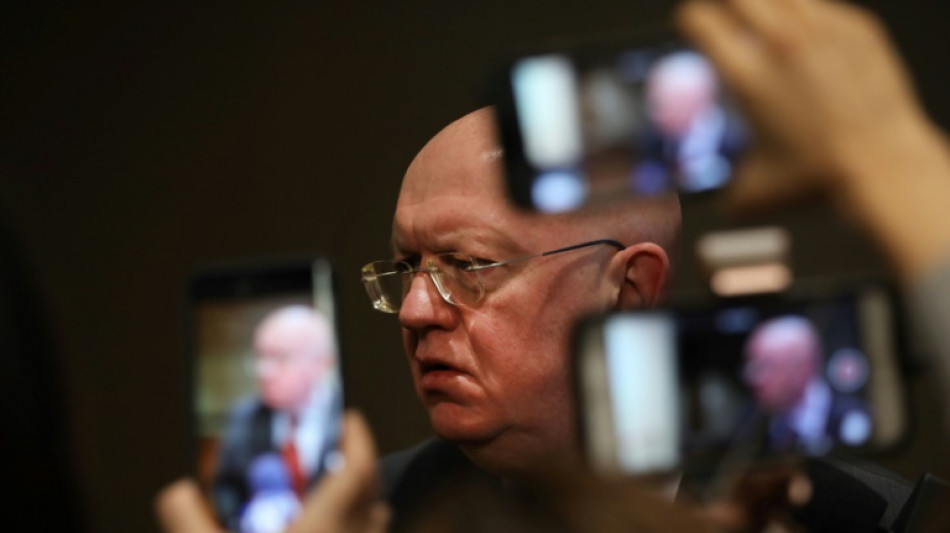
"We would like to have cooperation with (the) US on a much wider range of things," Russian UN ambassador Vasily Nebenzia told a news conference on Tuesday.
"It was not our choice to narrow this cooperation to only those areas where we either have joint interest or (the) US has an interest of its own," he continued.
The United States, firm against Russia elsewhere, often appears apathetic when confronted at the Security Council with Moscow -- which this month holds the body's rotating presidency.
For Badie, it's another paradox. He argues Washington has "every interest" in standing up to Russia -- even if it invokes an "outdated" and "dangerous" version of the Cold War.
The United States has suffered a "significant series of setbacks" since the Cold War -- most recently in its loss to the Taliban in Afghanistan after 20 years of conflict, but including interventions in Somalia, Iraq and Syria, among others.
Faced with a Russia that, even with its limited means is taking such a central role in global conflict, Washington must show that it "still has muscles," Badie said.
Y.Nakamura--AMWN